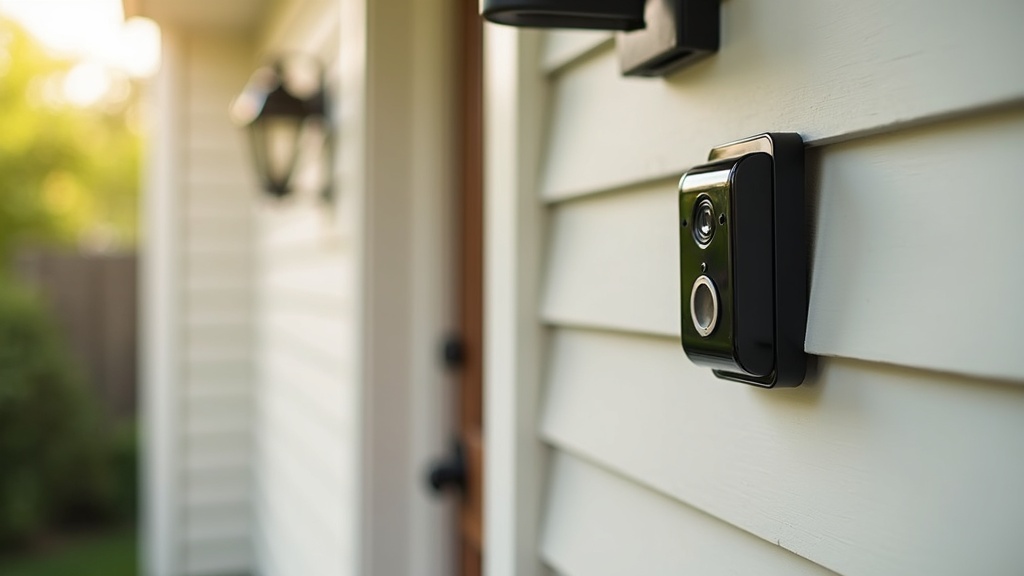
On March 25, 2026, Ring did something it has never done before: it looked at its entire battery-powered doorbell lineup, decided the whole thing was old news, and replaced every single model in one day. Pro, Plus, base, even the wired one — all of them, 2nd Gen, all at once. It was the most aggressive doorbell refresh Ring has ever pulled, and it happened faster than most of us change our smoke detector batteries.
The buying decision is whether you need 4K video, a removable battery, or a lower upfront price. This comparison uses Ring’s published specifications to separate those choices. For related coverage, see our Ring Video Doorbell 4 review and Ring vs. Blink comparison.
The new 2nd Gen lineup on Amazon
Check Ring Battery Doorbell Pro 2nd Gen on Amazon · Ring Battery Doorbell Plus 2nd Gen · Ring Battery Doorbell 2nd Gen
As an Amazon Associate, we earn from qualifying purchases.
TL;DR — Which Ring 2nd Gen Should You Buy?
- Want the best picture, money no object: The Battery Doorbell Pro 2nd Gen — Retinal 4K, 10x zoom, color night vision, and the bigger Quick Release Ultra Battery Pack, which pulls out for charging so the doorbell itself stays on the wall. This is the enthusiast pick.
- Most people, honestly: The Battery Doorbell Plus 2nd Gen — Retinal 2K and a removable Quick Release Battery Pack, which puts it in the middle of the lineup. The Pro’s bigger Ultra pack pulls out for charging too, with Retinal 4K and radar-based 3D Motion Detection on top, while the base model’s battery is built in. The head-to-toe view that shows you the package on your doorstep, not just the delivery driver’s forehead, isn’t a Plus-only extra: Ring lists Head-to-Toe Video on all three 2nd Gen battery models.
- Budget / first doorbell: The Battery Doorbell 2nd Gen (Retinal 2K, 6x zoom) does the core job — see who’s there, talk to them, get the alert — without the premium tax.
- Deal hunters: The 1st-gen Pro and Plus are still selling at a discount now that they’ve been “replaced.” Same great doorbells, lower price, mild feeling of buying the outgoing model. More on that below.
- The catch nobody advertises: Most of the smart features need a Ring Protect subscription. Yes, even the fancy 4K one. Budget for it.
What Actually Changed in the 2nd Gen Refresh
The headline is simple and kind of a big deal: Retinal 4K has come to a battery doorbell for the first time. Until now, if you wanted Ring’s sharpest resolution, you needed a wired doorbell and, ideally, an electrician’s phone number. The Battery Doorbell Pro 2nd Gen breaks that rule — you get 4K clarity with color night vision on a doorbell that runs on a rechargeable pack. No wiring, no drama, no explaining to your landlord why there’s a hole in the doorframe.
The Pro includes a Quick Release Ultra Battery Pack, while the Plus uses a Quick Release Battery Pack. The base model has a built-in rechargeable battery. With a compatible charged spare, the removable-pack models let you swap batteries instead of taking the entire doorbell inside to charge. A battery change still briefly interrupts operation; it does not guarantee uninterrupted recording. See Ring’s Pro specifications and Plus specifications, or the pack-by-pack table further down, before buying a spare.
Zoom got a real bump too. The Pro’s 10x and the base model’s 6x aren’t just spec-sheet bragging — they’re the difference between identifying the person on your porch and squinting at a beige blob. Pair that with the Pro’s color night vision and your 2 a.m. footage finally looks like a camera recorded it, not a haunted potato.
Ring also refreshed the entry-level Wired Doorbell 2nd Gen (bumped to Retinal 2K, still the cheap-and-cheerful option for people who already have doorbell wiring). And back at CES in January 2026, Ring showed off new fire and smoke alert features for its doorbells, per TechCrunch — your doorbell inching further into “tiny security guard that also smells danger” territory. Here’s how the battery lineup stacks up:
Ring Battery Doorbell 2nd Gen — Full Lineup Comparison
| Model | Resolution | Zoom | Night Vision | Battery |
|---|---|---|---|---|
| Battery Doorbell Pro 2nd Gen | Retinal 4K | 10x | Color | Quick Release Ultra Battery Pack |
| Battery Doorbell Plus 2nd Gen | Retinal 2K | 6x | Enhanced | Quick Release Battery Pack |
| Battery Doorbell 2nd Gen | Retinal 2K | 6x | Standard | Built-in rechargeable battery |
| Wired Doorbell 2nd Gen | Retinal 2K | 6x | Standard | Hardwired (no battery) |
Read that table left to right and the tiers pretty much explain themselves: only the Pro steps up to Retinal 4K and 10x zoom. The Plus and the base model share Retinal 2K and 6x zoom and differ in the battery, which comes out for charging on the Plus and is built into the base model. The interesting decision isn’t between these four — it’s between the shiny new ones and the discounted models they just dethroned.
The Money-Saving Play: 1st-Gen Pro and Plus at a Discount
Here’s the part your wallet wants you to read twice. When Ring replaced its entire battery lineup in one day, it didn’t vaporize the old ones — it left them on the shelf at a discount. The 1st-gen Battery Doorbell Pro and 1st-gen Battery Doorbell Plus are still excellent doorbells that did their jobs beautifully a week before the 2nd Gen launched. Physics didn’t change on March 25.
So who should grab a 1st-gen? If Retinal 4K and the bigger Quick Release Ultra Battery Pack don’t make your heart race, the previous Pro still delivers a sharp, clear picture and all the core Ring smarts. You save real money to skip features you may never notice at your front door. It’s the same logic as buying last year’s phone: 95% of the experience for a much friendlier price. The only downside is a faint “I bought the outgoing model” feeling, which fades the instant the savings hit your account.
Which Ring Battery Pack Fits Which Doorbell
Spare batteries are where Ring’s lineup gets confusing, and the renaming doesn’t help. Ring now sells the Battery Doorbell Pro 2nd Gen as the Battery Doorbell 4K Pro, the Plus 2nd Gen as the Battery Doorbell 2K Plus, and the base 2nd Gen as the Battery Doorbell 2K, and each product page answers the naming question the same way: “Nothing. We changed the name, but the features remain the same.” Ring’s compatibility lists use the new names, so the plain Battery Doorbell Plus and Battery Doorbell Pro on them are the 1st-gen models, the ones Ring’s support pages describe with Head-to-Toe HD+ video.
Ring makes two packs for these doorbells. The standard Quick Release Battery Pack is the older design: Ring lists it at 6,040 mAh with a Micro-USB charging port, and as compatible with the Ring Charging Station. The Quick Release Ultra Battery Pack is the newer one, rated at 10,000 mAh, which Ring describes as “up to 67% more battery capacity than our standard battery packs,” with fast charging built in over USB-C and four LEDs on the pack that show its charge. The trade-off is reach. Ring says the Ultra “is not backward compatible with all older Ring devices,” while the standard pack appears on the supported list for every Plus and Pro in this lineup, old and new.
| Doorbell | Battery in the box | Standard Quick Release pack | Quick Release Ultra pack |
|---|---|---|---|
| Battery Doorbell Pro 2nd Gen (now Battery Doorbell 4K Pro) | Quick Release Ultra Battery Pack | Fits | Fits |
| Battery Doorbell Plus 2nd Gen (now Battery Doorbell 2K Plus) | Quick Release Battery Pack | Fits | Fits |
| Battery Doorbell 2nd Gen (now Battery Doorbell 2K) | Built-in battery | Ring’s lists disagree (see below) | No |
| Battery Doorbell Pro (1st gen) | Quick Release Battery Pack | Fits | No |
| Battery Doorbell Plus (1st gen) | Quick Release Battery Pack | Fits | No |
Sources: Ring’s pages for both battery packs, the doorbells’ product and support pages, and Ring’s Device Compatibility List, all checked November 9, 2026.
Read the table as an upgrade story and the useful rows are the 1st-gen ones. If a 1st-gen Plus or Pro has left you with a charged spare in a drawer, that standard pack can go into either new removable-pack model: Ring’s 4K Pro page says the doorbell “is backward compatible with Quick Release Battery Packs from previous Ring doorbells,” and the standard pack’s supported list names both the Battery Doorbell 2K Plus (2nd Gen) and the Battery Doorbell 4K Pro (2nd Gen). The same list includes the Video Doorbell 2, 3, 3 Plus and 4, so a spare from one of those older doorbells moves over as well. It doesn’t work the other way around. Ring lists the Ultra as “Compatible only with” the newest Plus and Pro and a few newer cameras, so the Ultra pack that ships with the 4K Pro isn’t a spare for a 1st-gen doorbell.
The 2K Plus is where the two packs overlap, which is why Amazon’s listings can look contradictory. It ships with the standard Quick Release Battery Pack, and its Amazon title says so, while the Ultra pack’s own Amazon title names the Battery Doorbell Plus (newest model) as a fit. Both are right: Ring’s support page for the 2K Plus reads “Powered by included Quick Release Battery Pack. Compatible with Quick Release Ultra Battery Pack.” A spare Ultra means fewer charges on a 2K Plus; a spare standard pack keeps the option of moving it to an older Ring doorbell or charging it in the Ring Charging Station.
The base Battery Doorbell 2K is the one to read carefully. Its product page describes a built-in rechargeable battery, Ring’s support page calls it an “embedded battery doorbell,” and charging means using the included removal tool to take the doorbell off the wall. The supported-devices list on the standard pack’s ring.com page leaves it out. Two other Ring pages point the other way: the same pack page’s comparison chart calls the standard pack “Compatible with all battery-powered Ring Cameras and Ring Doorbells,” and the Device Compatibility List on Ring’s support site files the Battery Doorbell 2K under the Quick Release Battery Pack. Until Ring reconciles them, go by the doorbell’s own page and skip the spare pack for the base model. If taking it down to charge sounds tedious, Ring says it can be trickle-charged from existing doorbell wires or a Ring solar accessory, or the 2K Plus solves it with a removable pack.
If you do need a spare, match it to the table: the Quick Release Battery Pack fits every Plus and Pro above, both generations, and the Quick Release Ultra Battery Pack for the 2nd Gen Plus and Pro is the bigger option for those two alone.
Ring vs Blink — the Quick Take
Since both Ring and Blink are Amazon-owned, people constantly ask which family to buy into. Short version: Blink is the budget play. The Blink Outdoor 4 and the wider Blink lineup cost less, run forever on AA batteries, and cover the basics well — but you give up the polish, the higher resolutions, and the tighter ecosystem you get with Ring. If you want the nicest doorbell experience, Ring; if you want “good enough for the least money,” Blink deserves a look. We go deep on this in our Ring vs Blink comparison, where we break it down room by room and budget by budget.
Ring Battery Doorbell 2nd Gen FAQ
Do I need a subscription to use these doorbells?
Mostly, yes — and this is the part Ring’s shiny product pages whisper rather than shout. The doorbells work out of the box for live view and real-time alerts, but the genuinely useful stuff (recording and reviewing video history, smart notifications, and the fuller feature set) needs a Ring Protect plan. Even the 4K Pro leans on it. Think of the doorbell as the printer and the subscription as the ink: budget for both, and you won’t feel ambushed at checkout.
Can I use my existing doorbell wiring?
Depends on the model. The battery doorbells run on rechargeable batteries (a removable Quick Release Ultra Battery Pack in the Pro, a removable Quick Release Battery Pack in the Plus, a built-in battery in the base model), so they don’t need wiring — though many can connect to existing doorbell wires for trickle charging if you have them. The Wired Doorbell 2nd Gen is designed specifically for existing doorbell wiring and is the cheapest way in if your home is already set up for it. No wiring and don’t want any? Stick with a battery model.
Is Retinal 4K actually worth it?
If you obsess over crisp footage — reading a license plate at the curb, zooming into a face without it turning into abstract art — then yes, the Pro 2nd Gen’s 4K plus 10x zoom is the sharpest Ring has ever put on a battery doorbell. For most people watching their porch on a phone screen, Retinal 2K on the Plus 2nd Gen already looks great and costs less. 4K is a treat, not a necessity.
What happens to my 1st-gen Ring doorbell?
Nothing bad — it keeps working exactly as it did before March 25. Ring didn’t brick anything; the old models still record, alert, and integrate with the app just fine. “Replaced” means Ring stopped making it the headline act, not that your doorbell filed for retirement. You’re free to keep it until it dies of natural causes, then upgrade whenever you feel like it.
So, Which One?
If we had to hand you one box: for most people, the Battery Doorbell Plus 2nd Gen hits the sweet spot — sharp 2K, a Quick Release Battery Pack that pulls out for charging (so does the Pro’s bigger Ultra pack; the base model’s battery is built in), no wiring required. Camera nerds and 4K die-hards should spring for the Pro; budget-first buyers and renters will be perfectly happy with the base 2nd Gen or a discounted 1st-gen. Whatever you pick, remember to pencil in a Ring Protect plan, and check out our Ring Video Doorbell 4 review and our best video doorbells of 2026 guide to see how these stack up against Nest and eufy.
Ready to upgrade? The 2nd Gen lineup on Amazon
Battery Doorbell Pro 2nd Gen · Battery Doorbell Plus 2nd Gen · Battery Doorbell 2nd Gen
As an Amazon Associate, we earn from qualifying purchases.
Disclosure: As an Amazon Associate, The Home Picker earns from qualifying purchases. The lineup comparison draws on Ring’s official announcement and published product specifications. Subscription requirements, pricing, and availability may change.
You May Also Like
- Ring Battery Doorbell Pro (4K) vs Google Nest Doorbell (2026): Which Should You Buy?
- Aqara G400 vs Ring (2026): The No-Subscription Doorbell That Has Ring Worried?
- Ring Video Doorbell 4 vs Google Nest Doorbell 2026: 30-Day Test
- Ring Video Doorbell 4 Review 2026: What Worked After 4 Months
- Best Video Doorbell Cameras in 2026: Ring vs Nest vs Eufy
- Ring’s New 2K Spotlight & Floodlight Cams (2026): What Changed and Should You Upgrade?
- Arlo Pro 5S Review 2026: 2K HDR Security Without the Monthly Fee