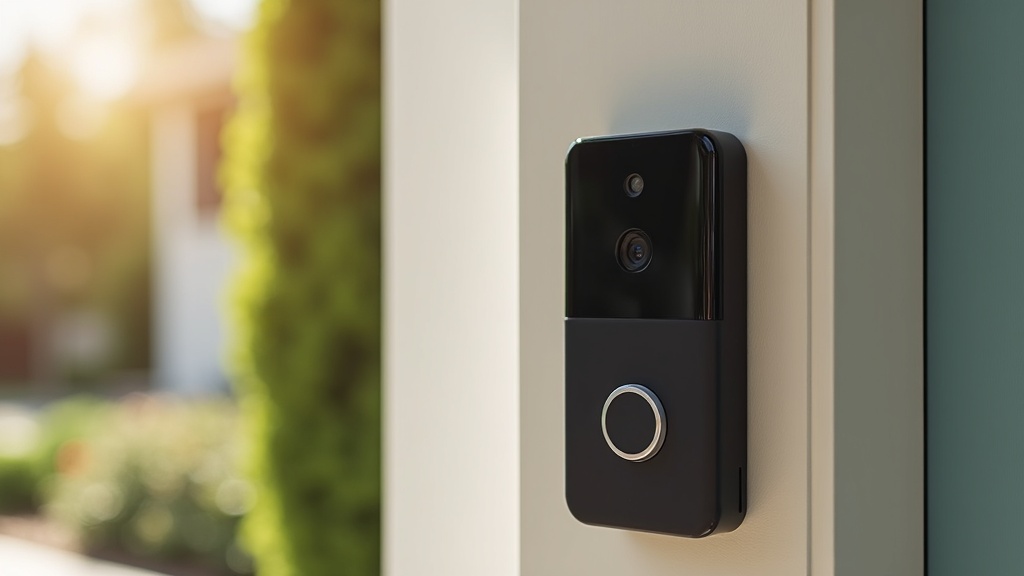
Here’s a fun exercise: buy a Ring doorbell, mount it, get it all set up, and then wait for the mail carrier to walk up your path. You’ll get a lovely little notification. You’ll open the app. You’ll see… a live feed, if you’re fast enough. And the recording of that moment? Gone. Vanished. Unless, of course, you’re paying Ring a monthly fee for the privilege of keeping your own footage. Welcome to the doorbell subscription trap, where the camera is cheap and the ransom is forever.
Enter the Aqara Doorbell Camera G400 — a roughly $100 video doorbell that records 24/7 to a microSD card, works with Apple HomeKit Secure Video, and asks you for exactly zero dollars per month. It’s the doorbell that has genuinely made me squint at my Ring app and ask, “wait, why am I paying for this?” Below I’ll break down what makes the G400 different, how it stacks up against Ring’s lineup, and — because I’m not here to sell you anything you don’t need — who should actually stick with Ring.
The no-subscription doorbell everyone’s talking about
Check Aqara G400 on Amazon · Ring Battery Doorbell · Ring Battery Doorbell Pro
As an Amazon Associate, we earn from qualifying purchases.
TL;DR — Aqara G400 vs Ring in One Breath
- The headline: The Aqara G400 records 24/7 to a local microSD card with no monthly subscription. Ring makes you pay to keep your recordings. That’s the whole ballgame.
- Price: G400 is around $100 — the same neighborhood as the basic Ring Battery Doorbell, and less than half a Ring Battery Doorbell Pro.
- Video: G400 shoots 2K HD with a tall 3:4 “head-to-toe” view and a 165° field of view, so you see the package on your porch, not just the delivery driver’s forehead.
- Ecosystems: HomeKit Secure Video, Alexa, Google Home, SmartThings, and Home Assistant. Apple users, this one’s for you — Ring famously snubs HomeKit.
- Power: Wired (existing 8–24V doorbell wiring) or Power over Ethernet. It’s a hardwired camera, not a battery unit — that’s a real trade-off we’ll get to.
- Who should still buy Ring? Renters, no-wiring homes, and people already deep in the Ring/Alexa ecosystem who don’t mind the fee. More on that below — I’m being honest here.
What Actually Makes the G400 Different
Most video doorbells are hardware businesses pretending to be software subscriptions. You buy the camera once, and then the useful part — saving and reviewing footage — quietly becomes a recurring charge. The Aqara G400 flips that model on its head, and it does it in four specific ways.
1. It records 24/7 — locally — for free
Drop a microSD card into the G400 and it records continuously to that card. No cloud, no fee, no “your clip has expired.” This is the single biggest reason the smart-home crowd is excited. According to reviewers at HowToGeek and other outlets who’ve spent hands-on time with it, the local 24/7 recording just works — and it’s the feature Ring reserves for its priciest hardware plus a Premium subscription. (I haven’t personally mounted a G400 on my own door yet, so everything here is based on the published specs and reviewer coverage — I’ll update this piece the moment I get one on the wall.)
2. HomeKit Secure Video, natively
If you live in Apple’s world, this is a big deal. The G400 supports HomeKit Secure Video, so recordings can flow into the Apple Home app with end-to-end encryption. Ring, meanwhile, has never supported HomeKit — after years of asking, Apple users basically gave up. One honest caveat: the HomeKit Secure Video route needs an iCloud+ plan and an Apple home hub. But here’s the thing — even if you skip HomeKit entirely, the free microSD recording is still there. You’re not forced into anyone’s subscription. That’s the whole point.
3. The 2K “head-to-toe” view actually sees your packages
The G400 shoots 2K HD in a 3:4 aspect ratio with a 165° field of view. In plain English: it’s a tall, portrait-shaped image that shows a visitor from head to toe — and, crucially, shows the package sitting on your doorstep. Standard wide-but-short doorbell views are great for faces and terrible for “did the box actually get left here?” The G400’s vertical framing is built for exactly that porch-pirate anxiety we all secretly have.
4. Local AI detection — the processing happens on your porch
The G400 runs person and motion detection locally, on the device, without phoning the cloud for every squirrel. That means faster alerts and less dependence on Aqara’s servers to tell you someone’s at the door. It’s the kind of privacy-forward design that, again, doesn’t come with a monthly invoice attached.
The Ring Subscription Reality (Let’s Be Honest About It)
I don’t want to strawman Ring — it makes genuinely good hardware and the app is polished. But the business model is exactly what you think it is. Without a paid Ring Home plan (the plan formerly known as Ring Protect), your Ring doorbell will let you see a live view and answer the door in real time… and that’s it. Your videos and photos are not saved. Miss the notification? The moment is gone.
To actually keep recordings, you’re looking at Ring Protect plans starting around $4.99/month for a single device, or roughly $9.99/month for a whole-home plan. That’s $72–$144 a year, every year, for as long as you own the camera. Over five years, that subscription can quietly cost more than the doorbell itself. The Ring Battery Doorbell may be cheap to buy, but it’s expensive to actually use.
Aqara G400 vs Ring Battery Doorbell vs Ring Battery Doorbell Pro
Here’s the head-to-head. Note the row that matters most — the subscription one — because that’s where the real money lives.
| Spec | Aqara G400 | Ring Battery Doorbell | Ring Battery Doorbell Pro |
|---|---|---|---|
| Approx. price | ~$100 | ~$100 | ~$250 |
| Resolution | 2K HD (head-to-toe 3:4) | 1080p HD | 1536p HD+ |
| Field of view | 165°, vertical head-to-toe | Wide FOV | Head-to-toe FOV |
| Subscription to save recordings? | No — free local microSD 24/7 | Yes — Ring Home plan required | Yes — Ring Home plan required |
| Local storage | Yes (microSD) | No native local storage | No native local storage |
| HomeKit Secure Video | Yes | No | No |
| Other ecosystems | Alexa, Google, SmartThings, Home Assistant | Alexa (Ring app) | Alexa (Ring app) |
| Power | Wired (8–24V) or PoE | Battery or wired | Battery or wired |
Notice the pattern: the G400 matches the entry-level Ring on price while beating both Ring models on the thing that costs you money forever. The Ring Pro is a lovely, feature-rich doorbell — 3D motion, color pre-roll, the works — but it’s $250 and it still holds your footage hostage behind a plan. If you want to see how Ring’s own models stack against each other first, our Ring Battery Doorbell 2nd Gen buyer’s guide lays that out.
The Honest Verdict — Who Should Buy What
I’m not going to pretend the G400 is perfect for everyone, because it isn’t. Here’s the real breakdown.
Buy the Aqara G400 if…
- You hate subscriptions and want to own your footage outright. This is the whole reason the G400 exists, and it nails it.
- You’re an Apple household. HomeKit Secure Video support is rare and genuinely useful, and Ring will never give it to you.
- You have doorbell wiring (or can run Ethernet). The G400 is a wired/PoE camera. If you’ve already got existing doorbell wires, installation is straightforward and you get continuous power for 24/7 recording.
- You want the tall head-to-toe view to actually watch your packages, not just your visitors’ chins.
Stick with Ring if…
- You rent or have no doorbell wiring. The G400 is hardwired/PoE — there’s no battery-only mode. A battery-powered Ring Battery Doorbell that peels off with adhesive is genuinely the better call for renters. This is the G400’s biggest real limitation, and I won’t pretend otherwise.
- You’re already all-in on Ring/Alexa with multiple cameras and don’t mind the whole-home plan. Ecosystem cohesion has value, and Ring’s app polish is real.
- You want the absolute simplest setup with a battery and an adhesive mount, no wiring, no microSD, no fuss.
For a wider look at how the whole doorbell field compares — Ring, Nest, and eufy included — see our best video doorbell cameras of 2026 guide. And if you’re weighing Ring’s ecosystem against the budget alternative, our Ring vs Blink comparison is a good companion read.
Ready to ditch the monthly fee? Compare current prices
Aqara G400 on Amazon · Ring Battery Doorbell · Ring Battery Doorbell Pro
As an Amazon Associate, we earn from qualifying purchases.
Aqara G400 vs Ring FAQ
Does the Aqara G400 really work with no subscription?
Yes. Pop in a microSD card and the G400 records 24/7 locally with no monthly fee. If you’re an Apple user, it also supports HomeKit Secure Video (which uses your iCloud+ storage), but the free local recording works regardless. That’s the core difference from Ring, which requires a paid Ring Home plan to save any recordings at all.
Is the Aqara G400 better than a Ring doorbell?
For no-subscription local recording, HomeKit support, and value, the G400 is hard to beat at around $100 (about $130 list). Ring still wins for renters and battery-only installs, since the G400 needs existing doorbell wiring or Power over Ethernet. It’s less “one is better” and more “which trade-off fits your home.”
Does the Aqara G400 need to be hardwired?
Yes. The G400 runs on existing low-voltage doorbell wiring (roughly 8–24V) or via Power over Ethernet. There’s no battery-only option, so if you rent or have no wiring, a battery-powered Ring or a wireless Aqara model may suit you better.
How much does a Ring subscription cost in 2026?
Ring Protect plans start around $4.99/month for a single device, with a whole-home plan around $9.99/month. Without a plan, Ring gives you live view only — your recordings aren’t saved. Over a few years, that fee can quietly exceed the cost of the doorbell itself.
Disclosure: As an Amazon Associate, The Home Picker earns from qualifying purchases. Aqara G400 details are based on the manufacturer’s published specifications and hands-on coverage from reviewers (including HowToGeek); we have not independently hands-on tested the G400 and will update this article when we do. Ring pricing and subscription details reflect publicly available information at the time of writing and may change.
You May Also Like
- Ring Battery Doorbell 2nd Gen (2026): Which One Should You Actually Buy?
- Ring Battery Doorbell Pro (4K) vs Google Nest Doorbell (2026): Which Should You Buy?
- Best Video Doorbell Cameras in 2026: Ring vs Nest vs Eufy
- Ring Video Doorbell 4 vs Google Nest Doorbell 2026: 30-Day Test
- Best Video Doorbell Under $100: Top Budget-Friendly Options 2026
- Best Smart Lock for Front Door 2026: 6 Locks Tested Over 4 Months