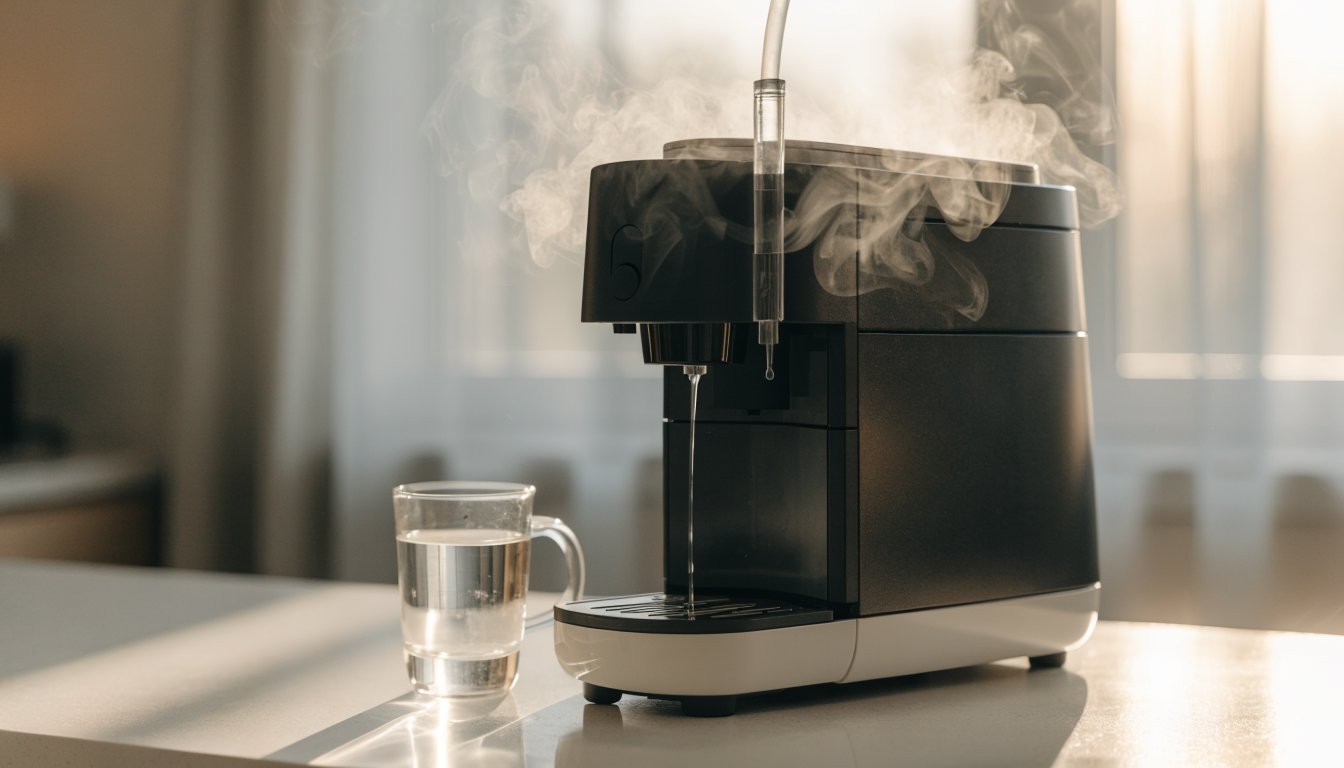
Quick answer: Descale a Keurig every 3–6 months (every 1–2 months if you have hard water or brew daily). Take out the water filter, fill the reservoir with either a bottle of Keurig Descaling Solution plus water or an equal-parts white vinegar and water mix, and run repeated large cups with no pod until the tank is empty. Let it sit about 30 minutes, then rinse with two to three full tanks of fresh water until there is no smell or taste left.
A Keurig that used to brew a full, hot cup in under a minute slowly turns into a sputtering machine that dribbles out lukewarm, half-filled mugs. Nine times out of ten the culprit is not a broken brewer — it is limescale, the chalky mineral crust that builds up inside the tank and heating element every time water is heated. The fix is descaling, and it takes about 45 minutes of mostly hands-off time. This guide walks through both the manufacturer method and the cheap vinegar method, how the steps differ by Keurig model, how often to do it, and the cleaning steps most people skip that keep a brewer running for years.
As an Amazon Associate, we earn from qualifying purchases. This does not affect our recommendations.
Why does a Keurig need descaling?
Tap water carries dissolved calcium and magnesium. Every time your Keurig heats water, a little of those minerals precipitates out and sticks to the inside of the tank, the tubing, and the heating element. Over weeks and months that coating — limescale, or simply “scale” — thickens and starts to choke the machine.
The symptoms show up gradually: brewing gets slower, cups come out short or only partly filled, the machine sputters, the coffee is no longer piping hot, it runs louder, and the taste turns flat or bitter. Left long enough, scale can clog the flow path completely and stop the brewer from working. Keurig notes that scale itself is non-toxic — the problem is what it does to performance and lifespan. Descaling dissolves that internal buildup and restores flow, temperature, and taste. It is a different job from cleaning (covered below), which removes coffee oils and grounds from the removable parts.
How do you descale a Keurig with descaling solution?
This is the method Keurig officially recommends. You will need a large mug and a bottle of descaling solution.
- Prep the machine. Turn it on, empty the water reservoir, and remove the water filter cartridge if your model has one — never descale with the filter installed. Take out any K-Cup pod and set a large (12 oz) mug on the drip tray.
- Add the solution. Pour the entire bottle of descaling solution into the reservoir, then fill the empty bottle with water and add that too (roughly a one-to-one mix, or fill to the max line).
- Run cleansing brews. With no pod in the machine, run the largest brew size into the mug, then dump it. Repeat until the “Add Water” light comes on and the tank is empty.
- Let it soak. Leave the brewer switched on and let it stand for about 30 minutes so the solution can dissolve the scale.
- Rinse the tank. Empty and rinse the reservoir thoroughly.
- Flush with fresh water. Refill with plain water and run repeated large brews (no pod), dumping each one, through at least two to three full tanks — roughly a dozen cups — until no descaler taste remains.
- Reset the descale light if your model shows one (see the model notes below).
A single bottle of solution usually covers about two descales. If you would rather buy everything at once, a maintenance kit bundles the solution with rinse pods and replacement filters.
Can you descale a Keurig with vinegar instead?
Yes. Plain white distilled vinegar dissolves scale just as effectively and costs a fraction of the price, which is why it is the go-to DIY method. The trade-off is smell: vinegar needs more rinsing afterward.
- Prep exactly as above — empty tank, remove the water filter, no pod, large mug on the tray.
- Fill the reservoir with roughly equal parts white vinegar and water. For heavy buildup you can go up to two-thirds vinegar.
- Run cleansing brews with no pod, dumping the mug each time, until the tank empties.
- Soak for 30 minutes to an hour.
- Rinse well — this is the critical part. Run at least two to three full tanks of fresh water through the machine until the vinegar smell and taste are completely gone. Under-rinsing is the number-one vinegar mistake and the reason people complain their coffee tastes sour afterward.
One caveat worth knowing: vinegar is fine for a Keurig, but do not use it in a pump espresso machine. Most espresso makers specifically warn against it because it can attack internal seals and void the warranty — use a proper descaler there instead. We cover that difference in our guide to espresso machine types.
Does the method change by Keurig model?
The descaling chemistry is identical across every Keurig; what differs is how you enter descale mode and reset the light. Button combinations vary by model and are easy to get wrong, so when in doubt follow the on-screen prompts or your model’s manual rather than a combo you saw online.
- K-Elite / K-Select and similar models with cup-size buttons: enter descale mode by holding the 8 oz and 10 oz buttons together for a few seconds until the DESCALE light flashes.
- K-Supreme / K-Supreme Plus: these run a guided descale cycle with a DESCALE light — follow the light prompts, then reset it afterward (usually a power cycle: unplug for about 30 seconds and plug back in).
- K-Duo / K-Duo Plus: have a descale mode, but the exact button combo varies — check the manual.
- K-Mini / K-Mini Plus: no descale button and only a single-cup tank, so you refill the small reservoir and run manual cycles several times over. Plan on about 45 minutes.
- Older Classic models (K-Classic, K55): no descale mode at all — just run the manual cleansing-and-rinse cycles described above.
How often should you descale a Keurig?
Keurig’s baseline is every three to six months, but your water and your habits move that number a lot.
| Your situation | How often to descale |
|---|---|
| Standard recommendation | Every 3–6 months |
| Hard water or heavy daily use | Every 1–2 months |
| Soft/filtered water, light use | Toward the 6-month end |
| Distilled or filtered water | Longest intervals — but still descale periodically |
One thing to understand: the DESCALE light is a timer, not a scale sensor. It fires after a set number of brews, so descale on schedule even if the light is off — and don’t assume the machine is scaled just because the light is on. Using filtered or distilled water slows buildup but never eliminates it. A filtered electric kettle and pitcher habit helps for tea and coffee alike.
How do you clean a Keurig (not just descale)?
Descaling handles the mineral scale you can’t see; cleaning handles the coffee residue you can. Do this roughly weekly — it takes about 20 minutes.
- The needles are the most overlooked clog. Unplug the machine, then use a straightened paper clip to clear the exit needle below the pod holder and the two entrance-needle holes in the top of the brew head. Clogged needles cause weak or partial brews even after a descale.
- Water reservoir and lid: wash in warm soapy water, rinse, and air-dry. Don’t put it in the dishwasher unless the manual says it’s safe — heat warps the plastic.
- Drip tray and pod holder: pop them out, wash in soapy water, dry. Many pod holders are top-rack dishwasher-safe (check first).
- Exterior: wipe with a damp cloth, then dry. A soft toothbrush handles stubborn spots.
A brewer maintenance kit bundles descaling solution with rinse pods and replacement charcoal filters, which is the simplest way to stay on schedule.
What about descaling your other appliances?
Once you’re in the habit, the same limescale builds up everywhere water is heated.
- Drip coffee makers: fill the tank with equal parts vinegar and water, start a brew, pause it halfway to soak for 30–60 minutes, then finish and rinse with two or three plain-water cycles. See our overview of coffee maker types for which brewers scale fastest.
- Espresso machines: use a dedicated descaler such as Urnex Dezcal or Durgol — never vinegar — and rinse thoroughly. Our espresso machine guide explains why.
- Humidifiers: the EPA advises emptying and wiping the tank daily and doing a deeper clean every third day, using a brush and white vinegar to lift scale, then rinsing well before use.
Common descaling mistakes to avoid
- Under-rinsing. Too few fresh-water cycles leave a chemical or vinegar taste in every cup that follows.
- Leaving the water filter in. It absorbs and interferes with the solution and can be ruined — always remove it first.
- Using vinegar in an espresso machine. It can damage seals and void the warranty.
- Waiting too long. Descaling only when the machine finally clogs is far harder on it than a routine every few months.
- Assuming descaling fixes everything. Weak or partial brews are often clogged needles, not scale — clean the needles too.
- Dishwashing the wrong parts. The reservoir and electronic components usually need hand-washing; the dishwasher warps them.
Frequently asked questions
Can I use vinegar instead of Keurig descaling solution?
Yes. White distilled vinegar mixed with equal parts water dissolves scale well and costs far less. Keurig officially recommends its own solution, and vinegar needs more rinsing to clear the smell, but it works. Just don’t use vinegar in an espresso machine.
Is descaling solution better than vinegar?
Both remove scale. Descaling solution is a purpose-made formula with less odor, no warranty concerns, and less rinsing required. Vinegar is cheaper and always on hand but smells stronger and needs more flushing. It comes down to convenience versus cost.
Why is my Keurig still slow or brewing partial cups after descaling?
Usually clogged needles or trapped air rather than scale. Clean the entrance and exit needles with a paper clip, and try a reset: remove the reservoir and run a few water-only cycles to clear air pockets. Very heavy buildup may need a second descale.
How long does descaling a Keurig take?
About 45 minutes to an hour of mostly hands-off time, including the roughly 30-minute soak. Extra rinse cycles add a little more.
Do I still need to descale if I use filtered or bottled water?
Yes. Filtered, bottled, or distilled water slows scale buildup but doesn’t stop it entirely, so keep descaling periodically — just less often.
My descale light won’t turn off. Is the machine still scaled?
Not necessarily. The light is a usage timer, not a scale sensor. After descaling you have to reset it, usually with a power cycle (unplug for about 30 seconds) or a model-specific button hold.
Is limescale in my Keurig harmful?
Keurig says scale is non-toxic, so it isn’t a health hazard. It does degrade taste, temperature, and performance, which is why removing it matters.
How much descaling solution do I need?
One bottle of Keurig descaling solution covers about two descales. If you descale every few months, a single bottle or a maintenance kit lasts most of a year.
Keep your kitchen running
Descaling is the single highest-return 45 minutes you can spend on a coffee machine. Put it on a calendar — every three months for most people, monthly if your water is hard — and your Keurig will keep brewing hot, full cups for years. For more on picking and maintaining brewers, see our guides to coffee maker types and the best coffee makers under $50.
Shopping for a new machine or upgrade? See our guides to the best single-serve coffee makers and best coffee grinders.
Descaling isn’t the only kitchen maintenance that pays off — see also how to clean a dishwasher to keep it washing well.
Related maintenance guides
Related: kitchen gadgets worth buying — our tested picks under $50, plus the viral ones that flopped.