As an Amazon Associate, TheHomePicker.com earns from qualifying purchases. We only recommend products we would evaluate ourselves; affiliate links never affect our rankings.
Quick answer: The four main coffee maker types suit different priorities. Drip (automatic) is the best all-around pick — convenient, makes pots, needs zero technique ($30–350). Pour-over gives you the brightest, clearest flavor and full control, one cup at a time, for very little money ($20–60). A French press makes a rich, full-bodied cup with a simple steep-and-press ($20–60). Cold brew is smooth and low-acid, perfect for iced coffee, but takes 12–24 hours ($20–40). For most people we suggest a drip machine for daily convenience, plus an inexpensive French press or pour-over if you want to chase flavor on weekends.
The four coffee maker types, explained
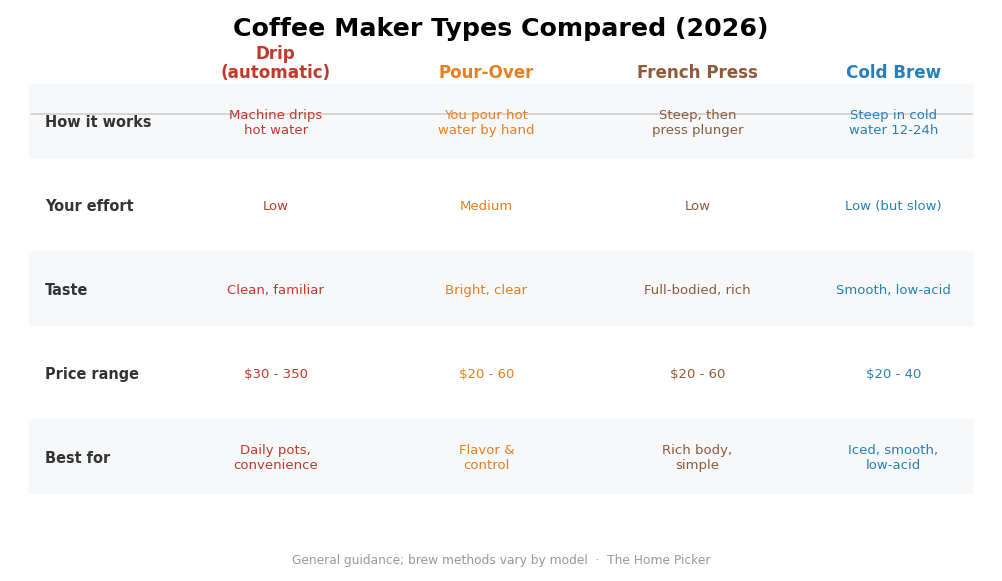
Before you shop by brand, it helps to pick the brewing method — because that decides the flavor, the effort, and the price far more than any single model does. Here is the quick comparison, then a plain breakdown of each type so you can match one to how you actually drink coffee.
| Type | Effort | Taste | Price | Best for |
|---|---|---|---|---|
| Drip (automatic) | Low | Clean, familiar | $30–350 | Daily pots, convenience |
| Pour-over | Medium | Bright, clear | $20–60 | Flavor & control |
| French press | Low | Full-bodied, rich | $20–60 | Rich body, simple |
| Cold brew | Low (slow) | Smooth, low-acid | $20–40 | Iced, low-acid |
Drip (automatic): best for everyday convenience
A drip machine heats water and pours it over the grounds for you, then keeps a pot warm. It is the most convenient type and the right default for households that want multiple cups every morning with zero technique. Cheaper models just make coffee; pricier ones add temperature control, thermal carafes, and presets that push the flavor closer to pour-over. If you want one machine that quietly makes good coffee every day, start here.
Pour-over: best for flavor and control
Pour-over is the manual cousin of drip: you pour hot water over the grounds yourself, controlling the rate and timing. That control produces a brighter, cleaner cup that coffee enthusiasts love, and the gear is cheap — a cone and filters cost very little (a gooseneck kettle helps). The trade-off is effort and that it makes one or two cups at a time. If flavor is the point and you enjoy the ritual, pour-over delivers the most taste per dollar.
French press: best for a rich body, simply
A French press steeps coarse grounds directly in hot water, then you press a metal plunger to separate them. Because there is no paper filter, more oils stay in the cup, giving a fuller, richer body. It is simple, cheap, and needs no electricity — just a coarse grind and a few minutes. If you like a bold, heavy cup and a fuss-free process, the French press is hard to beat.
Cold brew: best for smooth, iced coffee
Cold brew steeps grounds in cold water for 12–24 hours, producing a smooth, low-acid concentrate you dilute over ice. It is the friendliest type for sensitive stomachs and the best route to great iced coffee at home. The only catch is time — you brew ahead, not on demand. If iced coffee is your daily drink, a cold brew maker pays for itself fast.
Which coffee maker should you buy?
Pick by how you drink coffee. Want easy daily pots? Get a drip machine. Chasing flavor and enjoy the process? Pour-over. Love a bold, rich cup with no fuss? French press. Live on iced coffee? Cold brew. Many people end up with two — a drip machine for weekdays and a cheap French press or pour-over for weekends. And if you are really after espresso drinks, that is a different category; see our guide to espresso machine types.
Frequently Asked Questions
What is the difference between drip, pour-over, and French press coffee?
Drip machines pour hot water over grounds automatically for a clean, familiar cup and are the most convenient for daily pots. Pour-over is the manual version: you pour the water yourself for a brighter, clearer flavor, one cup at a time. A French press steeps grounds in hot water and you press a plunger to separate them, giving a fuller, richer body because no paper filter removes the oils.
Which coffee maker type is best for beginners?
A drip machine. It is set-and-forget, makes multiple cups at once, and needs no technique, so it is the easiest starting point. If you want to explore flavor without much cost, a French press is also very beginner-friendly. Pour-over rewards a little practice, and cold brew is easy but slow.
Which coffee maker makes the best-tasting coffee?
It depends on what you like. Pour-over is prized for bright, clear flavor; French press for a rich, full body; cold brew for a smooth, low-acid cup. Drip is the most consistent everyday option. There is no single winner; the best type is the one that matches your taste and how much effort you want to put in.
How much should you spend on a coffee maker?
Manual methods are cheap: a pour-over cone or French press runs about $20-60, plus a kettle. Automatic drip machines span roughly $30 to $350 depending on features like temperature control and thermal carafes. Cold brew makers are about $20-40. Spend up only in the category you will actually use most.