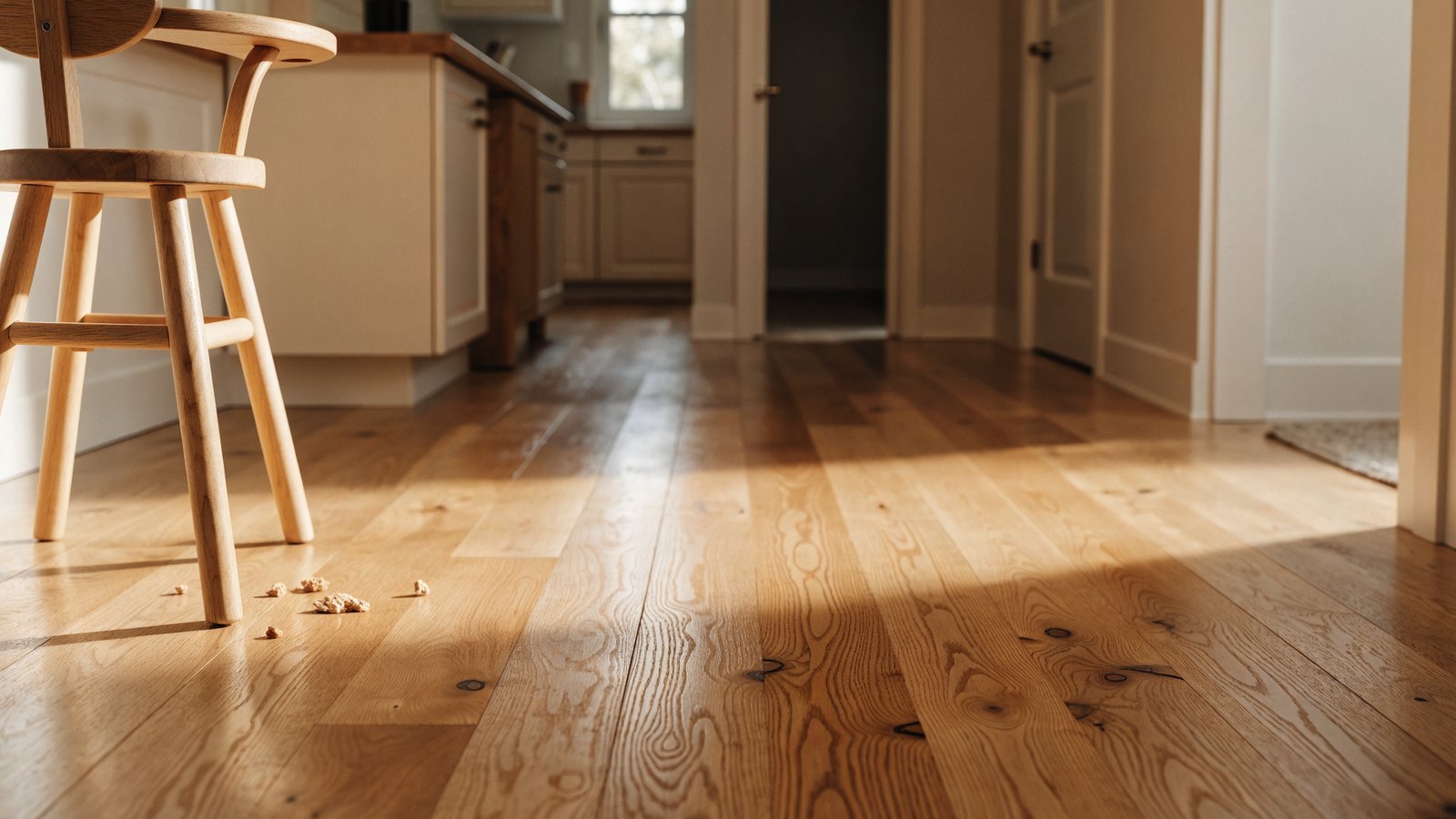
It is Saturday morning. There are cereal crumbs under the high chair, a trail of dog hair along the hallway runner, and a dried juice ring by the fridge. The box on the porch says “wet dry vacuum,” and the question that follows is a practical one: can this thing take over from the stick vacuum in the closet, or does the stick vacuum stay?
You are not the first to ask. Tineco, Shark and Dyson all print a version of that question on their own support pages, and for the models they cover, all three answer no. Bissell and Roborock answer it in other ways. Tineco’s US FAQ asks, “Can you just vacuum without using water?” Dyson asks whether its WashG1 replaces the need for a vacuum cleaner. Good Housekeeping’s Lab, in a vacuum-mop roundup published October 21, 2026, put its view plainly: its pros “don’t recommend them as a replacement for a regular vacuum.”
We did not run these machines. What follows is what each maker says about its own floor washer, sorted into three groups, with the places where a maker contradicts itself left in view.
Quick answer: “Wet dry” on the box usually describes the mess, not a mode. Tineco’s US FAQs for five Floor ONE models say not to use them without water, Shark’s FAQ for the HydroVac WD100 series says the unit needs cleaning solution to run, and Dyson says its WashG1 is not a vacuum. Bissell lists a dedicated dry mode on its CrossWave OmniForce models. Roborock’s F25 Combo adds a handheld vacuum, and Tineco’s Floor ONE Switch S6 Stretch moves its motor into a separate vacuum body. Which group fits depends on whether you need dry passes on rugs, or vacuuming above the floor. If most of your floors are carpet, Dyson says you will still need a vacuum for carpets with its WashG1, and Dreame says heavy carpet extraction needs a different machine; our guide to carpet cleaners covers that job.
Why “wet dry” does not mean “runs dry”
A floor washer pulls dirty water and debris into a separate tank while a wet roller scrubs, so a single pass picks up crumbs and the sticky ring at the same time. That is the “dry” in the name. Dyson describes its WashG1 as a dedicated wet floor cleaner “picking up both wet and dry debris,” and it uses counter-rotating motorized rollers “instead of vacuum suction.” On Dyson’s own page, the answer to “Is it a vacuum?” is no, and Dyson adds that you will need a vacuum cleaner for carpets, upholstery, mattresses, pet beds, countertops and the inside of your car.
Shark is just as direct about its HydroVac WD100 series (WD100, WD101, WD101C and WD160): it “can not be used for dry vacuuming,” there must be fluid in the Clean Solution Tank for the unit to run, and the unit turns off and tells you when the solution runs out. Tineco’s US FAQ pages for the Floor ONE S9 Artist Steam, S9 Master, S7 Stretch Steam, S6 Stretch Steam and S5 Combo give the same answer in the same words: the Floor ONE “can’t be used without water for dry vacuuming,” because it will damage the brush roller.
Then there is the button labeled Suction. It sounds like a dry mode, and on Tineco’s machines it is not. The US manual for the Floor ONE S7 Pro series says that in SUCTION mode “the appliance will absorb water,” and recommends the mode for wet surfaces. The European edition of Dreame’s H14 Pro user manual says the same of its suction mode: the appliance “will vacuum water only,” with no water dispensed and the roller not dampened. Both modes exist to lift a spill, not to replace a vacuum.
Which machines can run without water, by the makers’ own words
| Machine | Can the floor head be used without water? | What the maker says | How dry vacuuming gets done |
|---|---|---|---|
| Tineco Floor ONE (US FAQs: S9 Artist Steam, S9 Master, S7 Stretch Steam, S6 Stretch Steam, S5 Combo) | No – Tineco says not to use it dry | “can’t be used without water for dry vacuuming”; doing so damages the brush roller | A separate vacuum |
| Shark HydroVac WD100 series | No – the unit needs cleaning solution to run | “can not be used for dry vacuuming”; needs fluid in the Clean Solution Tank to run | A separate vacuum |
| Dyson WashG1 | Not a vacuum | Rollers “instead of vacuum suction”; a vacuum is still needed for carpets and upholstery | A separate vacuum |
| Dreame H14 Pro | Dreame’s statements conflict | European manual: suction mode vacuums “water only,” and the machine is for “non-carpeted floor surfaces.” Dreame forum FAQ: that mode is “essentially a ‘dry suction’ mode” for short-pile carpet about 1 cm high | Not settled by Dreame’s own sources |
| Bissell CrossWave OmniForce Edge (3930F) | Yes | “Industry-first dedicated Dry Clean Mode” | Built in |
| Bissell CrossWave OmniForce (3882) | Yes | Power Vac mode for “pet hair, crumbs, and dry debris” on hard floors and area rugs | Built in |
| Bissell CrossWave HydroSteam Plus (35151, corded) | Yes, per Bissell’s product-page FAQ | Can be used “in vacuum-only mode without engaging the mop or steam functions” | Built in |
| Roborock F25 Combo | Not stated by Roborock; the Combo adds a handheld vacuum module | Handheld vacuum module plus a Multi-Surface Brush, Motorized Mini-Brush and 2-in-1 Cleaning Head; the plain F25 “lacks vacuuming capability” | The vacuum module and brushes |
| Tineco Floor ONE Switch S6 Stretch | No dry mode described for the floor washer; its US manual says Suction mode absorbs water | The SwitchPro Motor moves from the floor washer into a separate vacuum body with a tube, an Anti-tangle Power Brush, a Mini Power Brush and a 2-in-1 Dusting Brush Crevice Tool | The separate vacuum body |
Sources are each maker’s support page, product page, forum FAQ or manual, read October 24–25, 2026; all are US pages except the Dreame manual noted above. The table tells you which machines their makers describe as running dry. It does not tell you which one picks up the most, and we have no comparable dry-pickup measurements to add.
Group 1: a wet-only washer, and the stick vacuum stays
The Tineco Floor ONE models whose US FAQs we checked, Shark’s HydroVac WD100 series and Dyson’s WashG1 land here. Tineco says those Floor ONE models should not be used without water, Shark says the WD100 series needs fluid in its tank to run, Dyson describes a roller cleaner rather than a vacuum, and Dyson spells out the jobs it leaves to a vacuum: carpets, upholstery, mattresses, pet beds, countertops and the car. In practice, by those descriptions, the crumbs under the high chair get picked up while the floor is being washed, and the dog hair on the hallway runner is a job for something else. We did not check Shark’s other HydroVac models or every Floor ONE model, so this group lists only the ones named.
Rugs are where the makers split. Shark says its HydroVac WD100 series can be used on sealed woods, tile and vinyl “as well as low pile area rugs,” which is wet cleaning, not a dry pass. Dyson sends carpets to a vacuum. If you already own a stick vacuum you like, this group asks the least of your closet: the floor washer takes the kitchen and the bathroom, and the vacuum keeps everything else. Our wet dry vacuum guide for hard floors compares five of these machines by maker specs, and the cordless stick vacuum guide covers the other half of the pair.
Group 2: a floor washer with its own dry mode
Among the makers here, Bissell is the one whose model pages name a dedicated dry mode for the floor head itself. On the CrossWave OmniForce Edge (model 3930F), Bissell calls it an “industry-first dedicated Dry Clean Mode,” and the Power Mop mode vacuums and mops together when you want both. Bissell lists area rugs, bare floors, sealed hard floors and sealed wood floors among its surface types, rates the cordless run time at up to 30 minutes (varying by mode and usage), and gives it a 12-inch cleaning path, a 620 ml clean tank, a 450 ml dirty tank and a weight of 10.6 pounds. Its ZeroGap edge design is meant to reach the baseboard.
The original CrossWave OmniForce (model 3882) shows how a dry mode behaves in practice, at least on paper. Bissell’s getting-started page rates it at 30 minutes in Power Vac mode, 30 minutes in Power Mop mode and 18 minutes in Turbo, and recommends dry cleaning before wet cleaning to cut down on debris buildup. It also carries two warnings worth knowing before you rely on the dry pass: the dirty tank “won’t detect when it is full” when it is picking up only dry debris, so you have to watch it, and if the clean tank runs out and is not refilled, the machine reverts to dry cleaning mode. On Amazon’s US store, the 3882 currently appears only through Amazon Resale, so we have not linked it.
The corded CrossWave HydroSteam Plus (35151) belongs in this group too. Bissell’s product-page FAQ says it can run in vacuum-only mode without the mop or steam functions. It trades the battery for a 25-foot cord and weighs 12.5 pounds, and it appears in our hard-floor comparison as well.
Group 3: a combo kit that brings its own vacuum
The third answer is to carry the vacuum inside the box. Roborock’s FAQ draws the line between two versions of the same machine: the F25 Combo includes a Motorized Mini-Brush, a Multi-Surface Brush and a 2-in-1 Cleaning Head that turn it from a wet and dry vacuum into a handheld vacuum, which Roborock says makes it suitable for vacuuming and carpet cleaning, while the plain F25 “lacks vacuuming capability and accessories for handheld use.” The trade is small but real: Roborock says the Combo does without the Intelligent Dirt Detection that the plain F25 has, and offers 5-minute and 30-minute drying options where the F25 has 5 and 20.
On its Amazon listing, the F25 Combo is described with 20,000 Pa of suction, up to 60 minutes of runtime in eco mode, a 180° lie-flat design and a self-cleaning cycle that uses high temperature, with the Multi-Surface Brush aimed at carpets and the Motorized Mini-Brush at upholstery.
Tineco’s Floor ONE Switch S6 Stretch, a different machine from the S6 Stretch Steam in the FAQ list above, gets to the same place by moving the motor. Tineco’s US manual calls it a smart cordless floor washer and shows the same SwitchPro Motor clicking into either the floor washer or a separate vacuum body. As a vacuum, it runs either with the tube and brush or with an accessory tool attached straight to the main body. The manual lists an Anti-tangle Power Brush, which Tineco calls ideal for both hard floors and carpets, a Mini Power Brush for upholstered furniture and mattresses, and a 2-in-1 Dusting Brush Crevice Tool for tight spots, corners and surfaces above the floor. The manual describes no dry mode for the floor washer itself: in Suction mode, Tineco says, the appliance will absorb water, and it recommends that mode for wet surfaces. So the floor head stays a washer, and the dry work moves to the vacuum body. The manual rates the running time at 25 to 40 minutes as a floor washer and 25 to 65 minutes as a vacuum cleaner.
Where the makers contradict themselves
Tineco answers the dry-vacuuming question one way in the US and another way elsewhere. Its US FAQ pages say no, in identical wording, for the five Floor ONE models cited above. Its Philippines FAQ for the iFloor line answers the same question with “The Floor one can be used without water for dry vacuuming.” Those are different markets and a different model line, so we follow each US model’s own FAQ and manual, and we would not carry the Philippines answer over to a US Floor ONE.
Dreame is harder to pin down. Its US collection page says a cordless wet dry vacuum “can only dry-vacuum your carpet” and tells shoppers to switch to dry mode on carpet and rugs, and it answers “yes” for sealed hard floors when asked whether one machine replaces a separate mop and vacuum. The H14 Pro’s own sources disagree with one another: the European edition of its manual says suction mode vacuums water only and limits the machine to non-carpeted floors, while Dreame’s forum FAQ says the same mode works as dry suction on short-pile carpet about 1 cm high. We did not find a US edition of the manual. If dry passes on a rug matter to you, that is a question to put to Dreame support about the exact model before you buy.
The same confusion shows up in shopping copy. The Amazon title for the Tineco Floor ONE S5 Combo uses the words “Wet Dry Vacuum Cleaners,” while Tineco’s US FAQ for that model rules out dry vacuuming with the floor head. Read the FAQ or the manual for the exact model number, not the title.
How to choose between the three setups
If your dry messes are crumbs and hair on sealed hard floors you would wash anyway, a wet-only washer picks them up during the wash, by Dyson’s description of its WashG1. What it will not do is run a quick dry pass without water, or vacuum a carpet, a sofa or a car seat. That is where the stick vacuum keeps its place.
If you want a dry pass on rugs or a quick crumb pickup without wetting the floor, among the models compared here, the ones whose makers name a dry mode are the CrossWave OmniForce Edge and OmniForce, and the corded HydroSteam Plus. Watch the dirty tank on dry-only runs, as Bissell advises for the OmniForce.
If the jobs are above the floor – stairs, upholstery, the car, a combo kit like the Roborock F25 Combo or the Tineco Floor ONE Switch S6 Stretch moves those jobs to a separate vacuum. On the Tineco, plan on the vacuum body for dry work: its manual describes the floor washer’s Suction mode as absorbing water, for wet surfaces.
For whole-room carpet, Dreame says heavy carpet extraction needs a different machine, and Dyson sends carpets to a vacuum. Roborock does describe the F25 Combo as suitable for carpet cleaning, and it ties that to the Combo’s added brushes and handheld vacuum. Our guide to carpet cleaners covers machines built for carpet. If you are weighing a wand-style vacuum-and-mop instead, our Shark AquaReach review looks at that design.
Frequently asked questions
Does “wet dry vacuum” mean it can vacuum without water?
Not necessarily. On most floor washers, “wet dry” means the machine picks up wet and dry messes together while it washes. Tineco’s US FAQs for five Floor ONE models and Shark’s FAQ for the HydroVac WD100 series say those machines cannot be used for dry vacuuming. Bissell’s CrossWave OmniForce models list a dedicated dry mode.
Is Tineco’s Suction mode a dry vacuum mode?
Not according to Tineco’s US manual for the Floor ONE S7 Pro series, which says the appliance will absorb water in SUCTION mode and recommends it for wet surfaces. Tineco’s US FAQs for five Floor ONE models also say the machine can’t be used without water for dry vacuuming.
Can a floor washer clean my area rugs?
It depends on the model, so check its manual. Shark says the HydroVac WD100 series can be used on low pile area rugs, Bissell lists area rugs among the surfaces for the CrossWave OmniForce Edge, and Dyson says you will need a vacuum cleaner for carpets with the WashG1.
Does a combo kit make the floor head run dry?
Not as Tineco describes the Floor ONE Switch S6 Stretch: its US manual describes no dry mode for the floor washer, says Suction mode absorbs water and recommends it for wet surfaces, and moves the dry work to a separate vacuum body that takes the same SwitchPro Motor. Roborock describes the F25 Combo’s extra brushes as turning the machine into a handheld vacuum.
How we put this together: We compare manufacturer specifications, manuals, support FAQs and verified US listings, and note what we could not confirm. We did not test dry pickup on any of these machines. Model availability was checked with Amazon’s product data on October 25, 2026.
As an Amazon Associate, TheHomePicker.com earns from qualifying purchases.