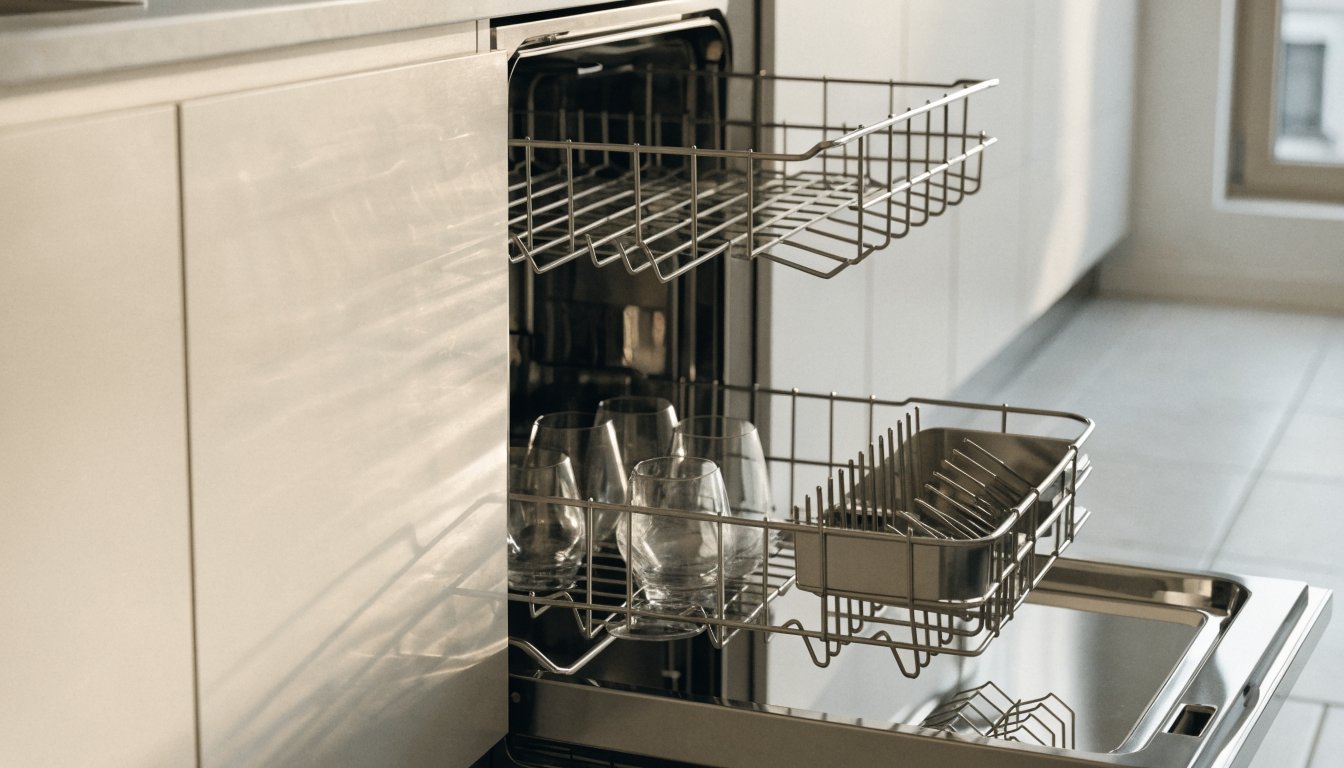
Quick answer: Clean your dishwasher on two schedules — rinse the filter at the bottom of the tub every week or two, and do a deep clean about once a month. The monthly routine: pull and scrub the filter under warm water, wipe the spray arms and door seal, then run an empty hot cycle with 1 cup of white vinegar in a bowl on the top rack, followed by a short hot cycle with 1 cup of baking soda sprinkled across the bottom. A dedicated cleaner like Affresh is a drop-in alternative to the vinegar step.
Here’s the thing most people don’t realize: a dirty dishwasher doesn’t just smell — it actively makes your dishes come out dirtier. Trapped food clogs the filter, grease films the spray arms, and hard-water scale coats the tub, all of which cut cleaning power until glasses come out gritty and cloudy. The good news is that a proper clean takes about 20 minutes of mostly hands-off work, no special skills required. This guide walks through the filter (the step almost everyone skips), the vinegar-and-baking-soda cycle, killing odor and hard-water spots, and the safety rules that actually matter.
As an Amazon Associate, we earn from qualifying purchases. This doesn’t affect which products we recommend.
Why does a dishwasher need cleaning?
Every cycle rinses food particles off your dishes, and much of that residue collects in the filter and around the drain — the primary source of worsening smells. Grease and soap scum coat the filter mesh and tub, and in hard-water homes, dissolved calcium and magnesium precipitate onto the tub, heating element, and glassware as cloudy limescale. The consequences are practical: a clogged filter or spray-arm shows up as weaker washing and dishes that “feel gritty,” while standing water plus food residue in a warm, humid tub breeds odor-causing bacteria and black mold along the rubber door seal. Skipping maintenance is why a machine that once sparkled starts leaving spots.
How to deep-clean a dishwasher, step by step
Step 1: Clean the filter (the step everyone skips)
This is the single most impactful thing most people never do — many owners don’t know their dishwasher even has a removable filter.
- Pull out the lower rack to expose the tub floor. The filter is a cylindrical assembly, usually near the base of the lower spray arm (some models put it in a rear corner).
- Twist the filter counterclockwise about a quarter turn and lift it straight out. Many dishwashers have two parts: a twist-lock upper cylinder and a flat lower disc — check your owner’s manual, since designs vary by brand.
- Rinse it under warm running water. For greasy buildup, soak it about 15 minutes in warm water with a squirt of dish soap first.
- Scrub gently with a soft brush, sponge, or old toothbrush. Do not use a wire brush or scouring pad — manufacturers warn these can damage and scratch the filter mesh.
- Wipe the filter housing in the tub with a damp cloth, then reinstall by twisting clockwise until it locks fully into place (if it doesn’t seat, water and food bypass it).
Step 2: Clear the spray arm holes
Inspect the small water-jet holes on the upper and lower spray arms. Food, seeds, and mineral scale plug them and kill water pressure. Most spray arms unscrew or lift off; poke out each clogged hole with a toothpick or a straightened paperclip, rinse the arm to flush debris, and spin it by hand after reinstalling to confirm it rotates freely.
Step 3: Run a vinegar cycle, then a baking soda rinse
- Empty the dishwasher completely.
- Fill a dishwasher-safe bowl with 1 cup of white vinegar and set it upright on the top rack.
- Run a complete cycle on the hottest setting with no detergent and no dishes. The vinegar disperses to help dissolve grease, soap scum, and light mineral film.
- Then sprinkle 1 cup of baking soda across the bottom of the tub and run a short, hot cycle to deodorize and gently freshen the interior.
- Leave the door open about an hour to air-dry, which prevents the damp-tub smell.
Run these two steps separately, never mixed. Prefer a drop-in option? Use a dedicated dishwasher cleaner on the hottest empty cycle instead of the vinegar step.
Step 4: Wipe the door, gasket, and dispenser by hand
Water barely reaches these areas during a normal cycle, so they must be cleaned by hand. Wipe the inner door panel, top edge, and sides with a damp microfiber cloth. Clean the rubber door gasket, working a soft toothbrush into the folds where black mold, food, and gunk hide (an equal-parts white-vinegar-and-water solution helps with mildew). Wipe out the detergent and rinse-aid cups so old caked detergent doesn’t block them. One safety wipe: if your detergent contains chlorine or bleach, clean the dispenser before any vinegar step (see the safety note below).
Step 5: Finish the edges and exterior
Wipe the tub-door edges and the strip of floor just inside the door lip, where splashes dry into crust. For the outside, clean stainless fronts with a damp cloth and stainless cleaner, always following the grain; plastic fronts take mild soapy water. Wipe the control panel and handle, then buff dry to avoid streaks.
How often should you clean a dishwasher?
| Task | How often |
|---|---|
| Quick filter rinse | Every 1–2 weeks (monthly at minimum) |
| Thorough filter scrub | Every other month, or more with heavy use |
| Full deep clean (vinegar/cleaner + wipe-down) | About once a month |
| Wipe door & gasket dry | After cycles / weekly |
Clean more often if you have hard water, run the dishwasher daily, or don’t scrape plates before loading. A useful trigger rule from appliance makers: clean the filter whenever there’s a drop in wash performance or dishes feel gritty.
Fixing odor, hard-water spots, and mold
Odor almost always traces to the filter (trapped food) or standing water in the drain, plus mold on the gasket. Clean the filter, run the 1-cup vinegar cycle on the hottest setting, wipe the gasket, and leave the door ajar about an hour to dry. Repeat every few months or whenever needed.
Cloudy glasses and a chalky tub are mineral deposits, not dirt. In order of ease: use a rinse aid (like Finish Jet-Dry) so water sheets off instead of drying into spots; run a monthly descaling cleaner — a tablet cleaner, or a citric-acid product like Lemi Shine, which uses food-safe citric acid to dissolve hard-water buildup; and add a hard-water detergent booster when cloudy marks appear. This is the same limescale that clogs your coffee maker — if you’re fighting spots on dishes and scale in the kettle, hard water is the common culprit.
Mold or pink film in the door-seal folds feeds on trapped moisture and food. Wipe the seal and folds with a cloth dipped in equal parts white vinegar and water, working into the crevices with a soft toothbrush, then rinse and dry. To prevent it, wipe the gasket dry and leave the door cracked open after cycles.
Common mistakes and safety
- ⚠️ Never mix bleach and vinegar (or vinegar with chlorine-detergent residue) — it creates toxic chlorine gas. If your detergent contains chlorine, wipe the dispenser clean before any vinegar step. This is a safety rule, not a suggestion.
- Don’t use bleach in a stainless-steel dishwasher. Chlorine bleach can damage and discolor stainless interiors and parts — use vinegar or a dedicated cleaner instead. (Bleach is only for machines with no stainless-steel parts.)
- Ignoring the filter. The most common mistake, and the one that drives odor and gritty dishes.
- Scrubbing the filter with a wire brush or scouring pad. It scratches the mesh — use only a soft brush.
- Overloading or blocking the spray arms. Tall items stop the arms from spinning, so dishes don’t get clean.
- Using hand dish soap, or too much detergent. Hand soap foams and floods the floor; overdosing leaves cloudy film that builds up inside the machine.
- Using vinegar too often. The occasional (roughly monthly) vinegar cycle is widely recommended and fine, but if you clean more frequently or want to be cautious about the rubber seals, use a purpose-made dishwasher cleaner instead.
Frequently asked questions
Can I clean my dishwasher with vinegar and baking soda?
Yes. Place 1 cup of white vinegar in a dishwasher-safe bowl on the top rack and run the hottest empty cycle, then sprinkle 1 cup of baking soda across the bottom and run a short hot cycle. Do the two steps separately, not mixed, and never combine vinegar with any chlorine or bleach product.
How often should I clean my dishwasher?
Rinse the filter every week or two (monthly at least), and do a full deep clean about once a month. Clean the filter more often if you have hard water, run it daily, or dishes come out gritty.
Why does my dishwasher smell bad?
Almost always trapped food in the filter or drain, plus mold on the door gasket. Clean the filter, run a vinegar cycle, wipe the gasket, and leave the door ajar to dry.
Where is the dishwasher filter and how do I remove it?
Pull out the bottom rack; the cylindrical filter sits on the tub floor near the base of the lower spray arm (some are in a rear corner). Twist it counterclockwise about a quarter turn and lift it out, then reinstall by twisting clockwise until it locks.
Can I use bleach to clean my dishwasher?
Only if your dishwasher has no stainless-steel interior or parts — bleach can damage stainless. Never mix bleach with vinegar, which creates toxic gas. For most modern stainless-tub machines, use vinegar or a dedicated cleaner instead.
Do I need a dishwasher cleaner like Affresh?
It’s optional but handy, especially in hard-water homes. These tablets are formulated to break down limescale and odor-causing residue in hidden parts (pump, filter, valve, hoses). Place one in the detergent tray and run an empty hot cycle — a convenient monthly alternative to the vinegar step.
How do I get rid of cloudy, spotty glasses?
That’s hard-water mineral film, not dirt. Add a rinse aid, run a monthly descaling cleaner (a tablet or a citric-acid product like Lemi Shine), and consider a hard-water detergent booster.
Should I rinse the filter or replace it?
Rinse and scrub it — the filter is reusable and cleaning restores performance. Replace it only if it’s cracked, torn, or warped, ordering the exact part by your dishwasher’s model number.
Keep it running
A dishwasher is one of the easiest appliances to keep in top shape: clean the filter often, run a monthly vinegar or cleaner cycle, wipe the gasket, and it’ll wash better and last longer. If hard water is your real enemy, it’s worth tackling everywhere — see our guide to descaling a coffee maker and the best electric kettles that resist limescale.
Related maintenance guides
Related: best kitchen gadgets under $50 — seven tools we tested that actually earn their counter space.