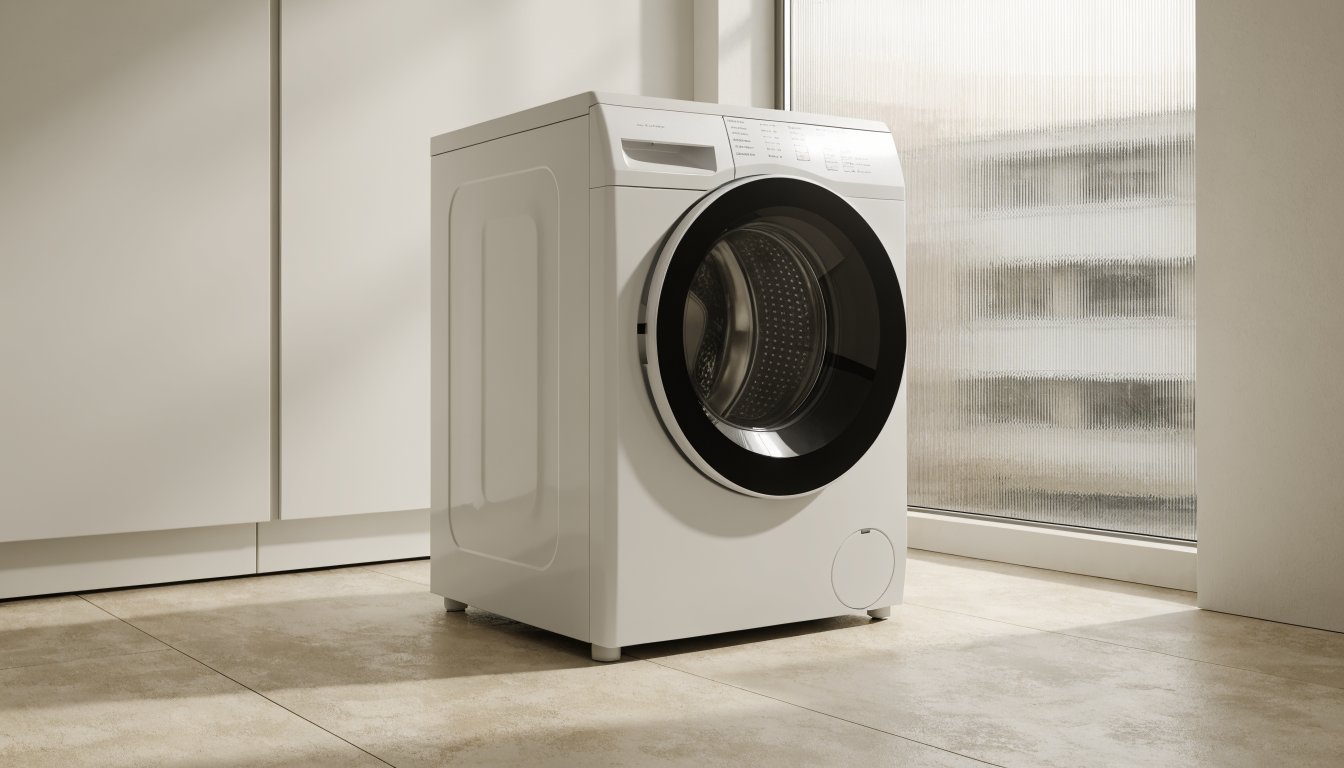
Quick answer: Once a month, run an empty hot “clean washer” cycle using a washing-machine cleaner tablet (Affresh or Tide) or 1–2 cups of distilled white vinegar. When it finishes, wipe the drum, the detergent dispenser, and — on a front-loader — the rubber door gasket, working into the folds where black mildew hides. Leave the door open between washes so the drum dries out. Front-loaders need the most attention: their sealed door traps moisture, so the gasket and the bottom drain-pump filter are where odor and gunk collect. Never mix bleach and vinegar — the combination makes toxic chlorine gas.
Your washing machine cleans your clothes, but it does not clean itself. Every load leaves behind a little detergent film, a little fabric-softener residue, and — in a front-loader especially — a pocket of trapped water in the rubber door seal. Give it a few months and that combination turns into the sour, musty “wet towel” smell that clings to supposedly clean laundry. The fix is a simple monthly routine plus one daily habit, and it is the same descaling-and-degunking logic you already know from our guides on descaling a Keurig and cleaning a dishwasher.
This guide covers both front-load and top-load machines, how often to do each task, and how to kill existing odor and mold. One rule matters more than any cleaning tip in it, so it comes first and gets repeated: never mix bleach and vinegar in your machine. The two react to release chlorine gas, which is genuinely dangerous. Use one or the other, never together.
Disclosure: As an Amazon Associate, TheHomePicker earns from qualifying purchases. If you buy through links on this page, we may earn a commission at no extra cost to you. This does not influence our recommendations, which follow manufacturer maintenance guidance from Affresh, Whirlpool, and Samsung.
Why does your washing machine need cleaning?
Four things build up inside a washer over months of use, and together they cause the odor and residue owners complain about:
- Detergent and fabric-softener residue. Liquid softener and excess detergent leave a sticky film on the drum, dispenser, and gasket — exactly what cleaner tablets are formulated to dissolve.
- Hard-water scale. In hard-water homes, minerals leave chalky deposits on the drum and heating element, the same way scale forms inside a kettle or coffee maker.
- Biofilm. Warm, damp, detergent-coated surfaces are ideal for a slimy bacterial layer — that is the source of the musty smell.
- Mold and mildew. The airtight rubber door gasket on a front-load washer traps water in its folds after every wash. That trapped moisture is the number-one cause of the black speckling and sour smell. Detergent drawers and the drain-pump filter collect the same gunk.
Top-loaders are not immune — they build up residue and scale too — but their looser lids dry out faster, so mold is less aggressive than in a sealed front-loader.
How do you clean a front-load washer?
Front-loaders reward a little discipline. Five steps, and the second one is the one everybody skips.
1. Run a cleaning cycle. With the drum empty, drop one Affresh tablet (or a Tide Washing Machine Cleaner packet) directly into the drum — not the dispenser drawer, per Affresh’s instructions. No tablet on hand? Add 1–2 cups of distilled white vinegar to the drum instead. Select the “Clean Washer,” “Self Clean,” or “Tub Clean” cycle if your machine has one; otherwise run Normal or Heavy on the hottest setting. Samsung’s front-load Self Clean runs about four hours, so start it when you won’t need the machine. If it has never been deep-cleaned or it has been more than six months, Affresh says you can run up to three cleaning cycles back-to-back.
2. Wipe the rubber door gasket — the single most important step. This is why front-loaders smell. Pull the flexible rubber boot back and wipe the entire surface, working deep into the folds at the bottom where black mildew and standing water collect. Use a damp microfiber cloth; for visible mildew, a 50/50 white-vinegar-and-water spray or a diluted bleach solution works — never both (see the safety section). While you are in there, check the folds for stray socks, coins, and bobby pins.
3. Clean the detergent dispenser drawer. Slide the drawer out (most release with a tab or a firm pull). Rinse it under warm water, and for crusted-on softener, soak it in 1 part vinegar to 3 parts hot water and scrub the crevices with an old toothbrush. Wipe out the empty cavity too, then dry and replace.
4. Clean the drain-pump filter. Front-loaders have a lint and debris filter behind a small access panel or kick-plate at the bottom front. Lay down towels and set a broad, shallow pan underneath first — it will release trapped water. Where fitted, unclip the small drain hose and pull its plug to empty it. Then twist the round filter counterclockwise to remove it, pull out lint clumps and coins by hand, rinse it under the tap, and screw it back clockwise until snug. Whirlpool and Samsung both recommend doing this roughly monthly or every 40 washes.
5. Leave the door ajar to dry. After every wash, prop the door and the detergent drawer open so the drum air-dries. This one habit prevents more mold than any cleaner.
How do you clean a top-load washer?
Top-loaders are more forgiving, but the routine is similar.
1. Run a hot clean cycle. With the drum empty, use a cleaner tablet, or pour in 1–2 cups of distilled white vinegar and run the hottest, largest cycle. For extra deodorizing, a proven method is to follow up by adding 1 cup of baking soda, running the hottest cycle again, pausing to let it soak for about an hour, then completing it.
2. Wipe the tub, lid, and rim. With the machine off, wipe the inside of the drum, under the lid, and the rim where residue splashes. A vinegar-dampened cloth cuts filmy buildup.
3. Clean the dispensers. Remove the bleach and softener cups if they lift out and soak them in a 1:3 vinegar-to-hot-water solution; scrub with a toothbrush and rinse.
4. Don’t forget the agitator. Wipe around the central agitator or impeller; if fabric-softener sludge has collected in the top ring, remove the cap (if it is designed to lift off) and clean underneath.
5. Leave the lid open between loads so the tub dries.
How often should you clean a washing machine?
| How often | Task |
|---|---|
| After every wash (front-load) | Wipe the gasket dry; leave the door and detergent drawer open. |
| Weekly | Wipe out the detergent dispenser. |
| Monthly | Run a full hot clean cycle with cleaner or vinegar. Many machines flash a Self-Clean reminder after 20–40 washes. |
| Monthly / every ~40 washes (front-load) | Check and clean the drain-pump filter. |
How do you fix odor, mold, and hard-water buildup?
Sour or musty smell. It is almost always biofilm and gasket mildew. Run a hot clean cycle, then physically wipe the gasket folds and the dispenser. For a stubborn existing mold smell, Samsung says you can run Self Clean with bleach. Repeat the clean cycle a second or third time if the odor lingers.
Visible black mold on the gasket. Wipe it with a diluted bleach solution or a vinegar solution, get into the folds, and from then on leave the door open. Persistent, deeply embedded mold sometimes means the gasket itself needs replacing.
Hard-water scale. The acid in a cleaner tablet or white vinegar dissolves mineral scale on a hot cycle — the same descaling chemistry we use on kettles and coffee makers.
⚠️ Critical safety rule: never mix bleach and vinegar.
Combining them releases toxic chlorine gas — burning eyes and throat, coughing, and breathing trouble. If you use vinegar for one cycle and want to use bleach later, run a plain rinse cycle in between and never pour them together. Do not mix bleach with ammonia-based cleaners either. (U.S. National Poison Control: 800-222-1222.)
What mistakes should you avoid?
- Using too much detergent, or non-HE detergent in an HE machine. High-efficiency (HE) washers use little water, so regular or overdosed detergent cannot rinse away and turns into the residue that feeds odor. Use an HE detergent and measure to the line.
- Closing the door right after a wash. A sealed, damp front-loader is a mold incubator. Leave it open.
- Ignoring the gasket and the drain-pump filter. These are the two dirtiest spots on a front-loader and the two most often skipped.
- Over-relying on bleach. Occasional bleach is fine for mold odor, but frequent heavy bleach is hard on rubber seals — and dangerous if it ever meets vinegar.
- Assuming vinegar is completely harmless to the machine. It is a great cleaner, but its acidity can degrade rubber hoses and seals over time, so alternate it with a purpose-made washer cleaner rather than using it every single time.
What should you buy to keep a washer clean?
Most of this job needs nothing exotic — a jug of distilled white vinegar (roughly $4–8 a gallon) and a microfiber cloth cover the basics. If you want the manufacturer-recommended route or you are fighting existing odor, these are the categories that help:
- Washing-machine cleaner tablets. Affresh is the Whirlpool-affiliated brand cited throughout manufacturer guidance; drop one in the empty drum monthly.
- Tide Washing Machine Cleaner. A named alternative in single-use packets, labeled for both front and top loaders.
- Microfiber cloths. For wiping the gasket folds, drum, and dispenser without leaving lint.
- Distilled white vinegar. The budget cleaning-cycle method and dispenser soak.
- HE laundry detergent. Switching to a high-efficiency formula and measuring to the line prevents the residue problem in the first place.
Frequently asked questions
Affresh vs. vinegar — which should I use?
Both work. A cleaner tablet like Affresh or Tide is formulated to break down detergent residue and is gentle on the machine, which is why manufacturers recommend it. White vinegar is cheaper and handles light residue and scale, but acid can wear on rubber parts over time — so a good compromise is a cleaner tablet monthly and vinegar occasionally.
Why does my front-loader smell?
Trapped water in the rubber door gasket grows mold and biofilm. Run a hot clean cycle, wipe the gasket folds, clean the dispenser and drain filter, and start leaving the door open after each wash.
How often should I clean my washer?
Run a full clean cycle monthly; wipe the dispenser weekly; wipe the gasket and leave the door open after every load; and check the front-loader drain filter about monthly.
Where is the drain filter on a front-load washer?
Behind a small access panel or kick-plate at the bottom front. Put a shallow pan and towels down first (water will spill), twist the filter counterclockwise to remove, clean out lint and coins, then screw it back clockwise until snug.
Can I use bleach to clean my washer?
Yes, occasionally — Samsung recommends bleach for an existing mold smell. But use it on its own, never with vinegar or ammonia, and don’t rely on it every month because it is hard on seals.
Can I mix vinegar and baking soda?
Yes — that is a common, safe deodorizing combo (they just fizz). What you must never mix is bleach and vinegar, which makes toxic chlorine gas.
Will vinegar damage my washing machine?
Used occasionally it is fine and effective. Used constantly, its acidity can degrade rubber hoses and seals, so don’t make it your only method.
Do top-loaders need cleaning as often as front-loaders?
Do the monthly clean cycle for both, but front-loaders need extra attention to the gasket and drain filter because their sealed door traps moisture.
The bottom line
A clean washer is mostly about habits, not products: run a hot clean cycle once a month, wipe the gasket and dispenser, and leave the door open so the drum dries between loads. Front-loaders demand the extra two minutes on the gasket and the occasional drain-filter cleanout; top-loaders are more forgiving. Whatever you use, pick one cleaning agent per cycle and rinse before switching — and never, ever combine bleach and vinegar. Do that, and the machine goes back to leaving your laundry actually smelling clean.
Sources: Affresh (Whirlpool) “How to Clean Your Washer”; Whirlpool “Cleaning the Drain Pump Filter”; Samsung US “How to clean your Samsung washer”; Bob Vila “How to Clean a Washing Machine”; Healthline on the bleach-and-vinegar chlorine-gas hazard. Maintenance steps follow these manufacturer and health sources.
Related maintenance guides