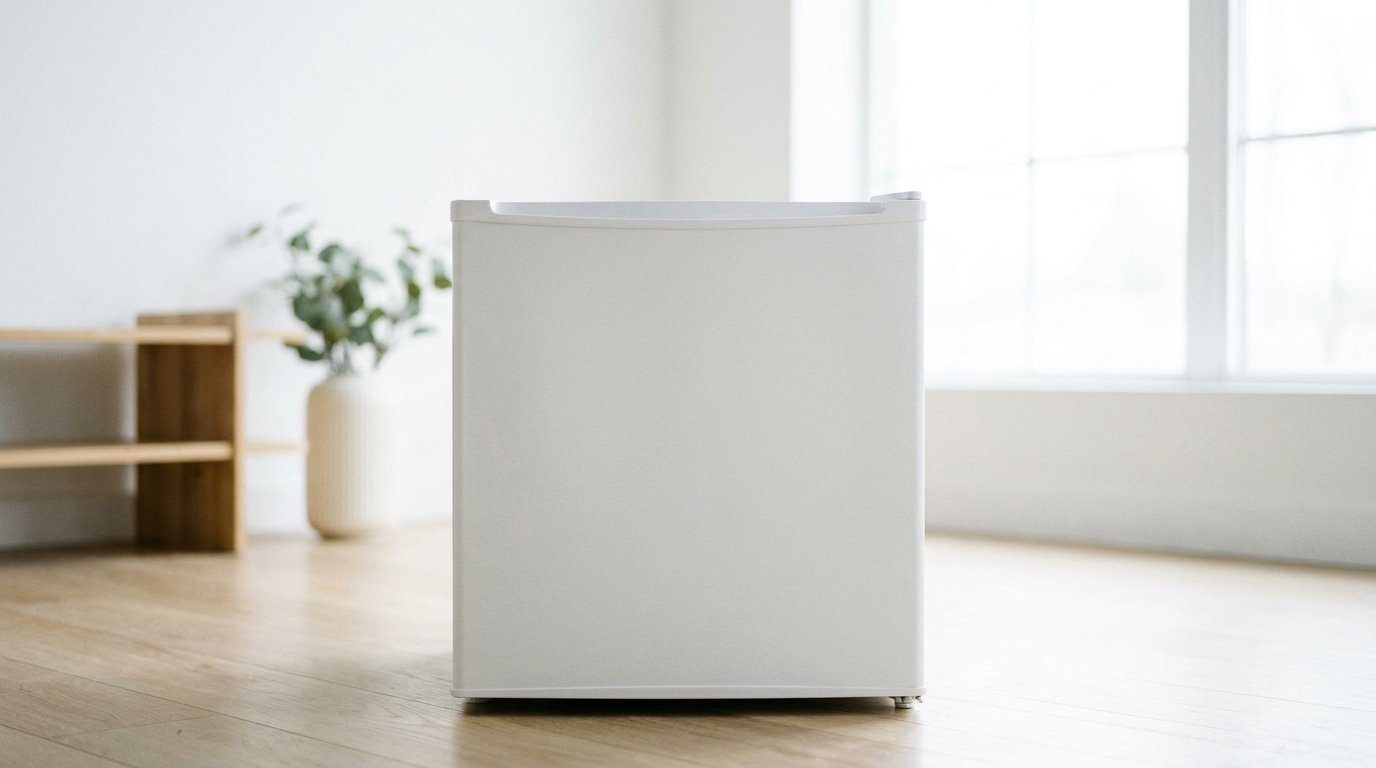
Quick answer: Our top overall pick is the Midea WHD-113FSS1 (3.1 cu ft, two-door) — one of the few affordable minis with a real, separate freezer, plus ENERGY STAR efficiency and a reversible door. That makes it a genuine small-apartment fridge rather than just a drink box.
Quick picks by use case: dorm on a budget — BLACK+DECKER BCRK17B (1.7 cu ft); best value with a real top freezer — Insignia 3.1 cu ft; retro style — Galanz Retro 3.3 cu ft; office all-fridge — Danby 2.6 cu ft; drinks only — hOmeLabs 120-Can cooler; skincare — Cooluli Classic 4L. Prices are approximate for 2026 and change often.
“Mini fridge” is really four different products wearing the same name, and matching the type to your job matters more than any single spec. A compact fridge with a real freezer, a single-door unit with a tiny chiller box, a glass-door beverage cooler, and a pint-sized skincare cooler all show up in the same search — and buying the wrong one is the single most common regret. This guide sorts the types first, then gives seven real, currently sold models for 2026, so you land on the one that fits your space and actually does what you need.
A note on how we pick: these are editorial recommendations drawn from manufacturer specifications and major-retailer listings, not lab tests, and every model below was confirmed as a real, in-market U.S. product. Prices move constantly, so treat every figure as an approximate 2026 range, not a quote.
Disclosure: As an Amazon Associate, TheHomePicker earns from qualifying purchases. If you buy through links on this page, we may earn a commission at no extra cost to you. This never changes which products we recommend or how we describe them.
⚠️ Safety note (updated August 2026)
The U.S. CPSC recently issued fire-hazard recalls for some mini-fridges — Cooluli’s 10-liter and 15-liter models (about 250,000 units) and Galanz’s 7.6 cu ft retro refrigerators (about 121,680 units, with one death reported). The models we recommend below — the Cooluli Classic 4L and the Galanz Retro 3.3 cu ft — are different, smaller models and are not part of those recalls. Always check an appliance’s current recall status before buying; see our home appliance recall index for the latest CPSC appliance recalls.
What are the different types of mini fridge?
Get this part right and everything else falls into place. There are four:
A. Single-door compact with an internal chiller box (~1.5–3.4 cu ft). One outer door, with a small enclosed compartment behind a plastic flap up top. It will freeze an ice tray and hold a couple of frozen items, but it frosts up fast, is manual-defrost, and is not a true freezer — it cannot keep ice cream rock-solid or reliably hold 0°F. Best for dorms, offices, and bedside drinks and snacks.
B. Two-door compact with a real freezer (~3.1–4.5 cu ft). Two separate doors (or a clearly partitioned top freezer) with its own insulated, genuinely sub-zero compartment, so it actually keeps food frozen and makes ice. Best for studio apartments, guest suites, and home offices used as a second kitchen.
C. Beverage cooler (glass door, no freezer). Built to chill cans and bottles to around 34–40°F, usually with a glass door, interior LED, and wire shelves. Excellent at that one job, useless for frozen food or ice.
D. Tiny thermoelectric (Peltier) cooler / skincare fridge (~4–10 L). No compressor — a solid-state chip and a small fan. Light, quiet-ish, often cools and warms, and many run on AC, 12V car, or USB. The key limitation: thermoelectric units cool relative to the room, not to a set temperature. Makers advertise up to ~35–40°F below ambient, but in a normal room the interior often settles in the mid-40s to mid-50s°F. That is fine for cosmetics, serums, and a few drinks, but it is not food-safe cold (below 40°F) and should not store perishable food.
How do we choose a mini fridge?
- Capacity vs. the actual space. Measure the nook first — width, depth, and door-swing clearance. Compacts run ~17–18″ wide; retro units are often ~21″ deep. For one person, 1.7–2.6 cu ft covers drinks and snacks; 3.1+ cu ft starts to hold real groceries.
- Real freezer vs. chiller box. The biggest source of disappointment. Need to freeze food? Buy Type B. Only need ice for drinks? A Type A chiller is fine.
- Energy use. Look for ENERGY STAR and the yellow EnergyGuide kWh/yr figure. A certified mini typically costs only a few dollars a month to run; a cheap non-certified unit can cost two to three times more. (Curious what your appliances cost to run? See our home-appliance running-cost guide.)
- Noise for a bedroom. Compressor units (Types A/B) hum and cycle on and off, so you notice the start-up; most makers do not publish a dBA figure. Beverage coolers add a fan; thermoelectric units run a fan continuously. Position matters as much as any rating.
- Reversible door. Lets the door hinge on either side to suit your layout — common on quality minis.
- Garage-ready? Most compact fridges are rated only for a standard indoor range (commonly ~50–90°F). In an unheated garage below ~50°F the thermostat may stop cycling and the freezer thaws; in extreme heat it struggles. True garage-ready minis are rare — verify the operating-temperature spec first.
The best mini fridges for 2026
Seven real, currently sold models. Prices are approximate 2026 ranges that fluctuate by retailer and sale.
Midea WHD-113FSS1 — Best Overall
Type: Two-door compact with a genuine freezer. Capacity: 3.1 cu ft (about 2.2 fridge + 0.9 freezer). ENERGY STAR, rated around 270 kWh/yr; the freezer holds roughly -11°F to 10°F (a real, manual-defrost freezer); reversible door; about 18.5″W × 33″H × 19.9″D and ~52 lb.
This is the rare affordable mini that actually freezes food and makes ice reliably, with a full-width freezer and a reversible door for any layout. The trade-offs: it is manual-defrost, and at ~52 lb and 33″ tall it is bigger than a desk-side cube, so the compressor is audible in a silent bedroom. Best for studios, in-law suites, first apartments, or a basement kitchenette where a true freezer matters. Approx. $200–260 (2026, subject to change).
BLACK+DECKER BCRK17B — Best for Dorms and Budgets
Type: Single-door compact with a small chiller box. Capacity: 1.7 cu ft. ENERGY STAR; reversible door; removable glass shelf; adjustable thermostat; about 17.5″W × 18.5″D × 19.7″H and ~34 lb.
Its small footprint slots under most dorm desks, it is energy-efficient, and it has can-and-bottle door storage at a low price. Be clear-eyed about the “freezer,” though: BLACK+DECKER describes it as a chiller compartment, not a true freezer — it frosts fast and won’t store frozen meals. Best for dorm rooms, offices, and a bedside drinks-and-snacks fridge. Approx. $140–180 (2026, subject to change).
Insignia NS-CF31TMSS26L — Best Value With a Real Top Freezer
Type: Compact with a real top freezer. Capacity: 3.1 cu ft. ENERGY STAR, with an estimated running cost around $38/yr; about 33.3″H × 18.5″W; stainless-steel look; tall-bottle door storage and a crisper drawer.
Best Buy’s house brand frequently goes on sale (seen around $155), and unlike the budget single-door units this one has a genuine freezer section plus a crisper for produce. Downsides: it is manual-defrost, the door bins are shallow, and availability rotates by SKU and color. Best for budget shoppers who want a real freezer in a small apartment without paying premium-brand prices. Approx. $155 (sale) to ~$220 (regular), 2026, subject to change.
Galanz Retro GLR33-Series — Best Retro Style
Type: Single-door compact with a full-width chiller. Capacity: 3.3 cu ft. ENERGY STAR; adjustable mechanical thermostat; slide-out glass shelf and crisper; reversible door; about 17.6″W × 35.43″H × 21.02″D. Colors include Hot Rod Red, Bebop Blue, and Surf Green.
The retro design genuinely doubles as decor, and at 3.3 cu ft it is roomy and efficient. Two caveats: the “freezer” is a chiller box, not true frozen storage, and at ~21″ it is deeper than a plain mini, so measure. Best for bedrooms, styled home offices, and game rooms where looks matter. Approx. $230–290 (2026, subject to change).
Danby DAR026A1BDD — Best All-Fridge for Offices
Type: All-refrigerator, no freezer at all. Capacity: 2.6 cu ft. ENERGY STAR; mechanical thermostat; reversible door; CanStor beverage dispenser; scratch-resistant worktop. (Danby does not publish full dimensions or a dBA figure in the listings we could access.)
Because it skips the ice box, all of the interior is usable fridge space and it never fights chiller frost. It is a sturdy, well-reviewed brand, and the flat top doubles as a stand surface. The obvious limitation: no freezer means zero ice or frozen capability, and it uses a mechanical dial rather than a digital readout. Best for offices, break rooms, or a dedicated drinks-and-lunch fridge. Approx. $200–250 (2026, subject to change).
hOmeLabs 120-Can Beverage Refrigerator — Best Beverage Cooler
Type: Glass-door beverage cooler, no freezer. Capacity: 3.2 cu ft, rated 120 cans. Digital temperature control cooling down to ~34°F; reinforced glass door; three adjustable chrome wire shelves; interior white LED. (Exact dimensions and reversibility are not clearly published.)
It gets drinks colder than most fridge doors and shows them off, with flexible shelves that fit cans, bottles, and wine. As a cooler, it has no freezer and the glass door is less insulated, so it works best indoors away from heat and sun, and it is not meant to be your primary food fridge. Best for home bars, game rooms, and offices. Approx. $200–260 (2026, subject to change).
Cooluli Classic 4L — Best Skincare / Personal Cooler
Type: Thermoelectric (Peltier) cooler and warmer. Capacity: 4 liters (~6 cans). No compressor or refrigerant; the maker claims cooling to ~35–40°F below ambient and warming up to 149°F; runs on AC, 12V car, and USB; about 8″W × 10.2″D × 11″H and ~4 lb.
It is tiny, light, near-silent, and doubles as a warmer — a perfect nightstand or vanity skincare fridge that also works in a car. Just hold the expectations that come with thermoelectric cooling: it is not a real refrigerator, its interior temperature tracks the room and won’t hold food-safe sub-40°F, the capacity is tiny, and the fan runs continuously. Best for skincare and cosmetics and a couple of drinks on a desk. Approx. $70 (2026, subject to change).
Compact fridge vs. beverage cooler vs. skincare fridge
| Compact fridge (A/B) | Beverage cooler (C) | Skincare / thermoelectric (D) | |
|---|---|---|---|
| Cooling | Compressor, ~34–40°F | Compressor, ~34–40°F | Peltier, tracks room (often mid-40s–50s°F) |
| Freezer? | Chiller box (A) or real freezer (B) | None | None |
| Food-safe (<40°F)? | Yes | Yes (drinks/short-term) | No — not for perishable food |
| Door | Solid, insulated | Glass, display | Solid, tiny |
| Buy it for | Real food + drinks | Cold drinks on display | Cosmetics, a few cans, portability |
One useful workaround: if you love the look of a single-door or beverage unit but still want ice, skip the chiller box and pair it with a dedicated countertop ice maker — you’ll get far more (and better) ice than any mini’s tiny freezer tray. And for a dorm or office setup, a mini fridge plus an electric kettle is the two-appliance combo that turns a desk corner into a functional kitchenette.
What mistakes should you avoid when buying?
- Expecting a real freezer from a chiller box. Most single-door minis have a small ice box, not a freezer. If you need to freeze food, buy a two-door or real-top-freezer model (Midea WHD-113FSS1, Insignia NS-CF31).
- Undersizing or oversizing. Right-size to the job: drinks and snacks = 1.7–2.6 cu ft; groceries plus freezing = 3.1+ cu ft. Always check door-swing clearance, not just the box footprint.
- Putting a compressor unit in a silent bedroom without planning for noise. Compressors cycle on and off, and the start-up is what wakes light sleepers. Give it airflow, don’t box it into a cabinet, or choose a thermoelectric unit for a nightstand.
- Using a standard mini in an unheated garage. Most are rated for ~50–90°F ambient; outside that range the freezer thaws or the unit can’t keep up. Verify the operating-temperature spec before garage use.
- Ignoring running cost. A non-certified bargain can cost two to three times an ENERGY STAR model to run — check the yellow EnergyGuide kWh/yr.
- Buying a beverage cooler expecting food storage. Glass-door coolers are for drinks; the glass is less insulated and there is no freezer or produce humidity control.
Frequently asked questions
Do mini fridges have a real freezer?
Some do, most don’t. Single-door minis usually have a small internal chiller box that makes ice and holds a couple of frozen items but frosts up and won’t stay truly frozen. For a real freezer, choose a two-door or real-top-freezer model such as the Midea WHD-113FSS1 or Insignia NS-CF31, whose freezers reach genuine sub-zero temperatures.
Are mini fridges loud?
Compressor models hum around a typical 38–45 dBA and cycle on and off, so the start-up click and hum are what you notice most; most makers don’t publish an exact figure. Beverage coolers add a fan, and thermoelectric units run a small fan continuously. For a bedroom, give any compressor unit airflow and don’t enclose it.
How much do mini fridges cost to run?
An ENERGY STAR mini typically uses roughly 200–300 kWh/yr — the Midea WHD-113FSS1 is rated about 270 kWh/yr, and Insignia estimates about $38/yr for its 3.1 cu ft model. That is usually just a few dollars a month; a cheap non-certified unit can cost noticeably more.
What’s the best mini fridge for a dorm?
A compact 1.7–2.6 cu ft single-door with ENERGY STAR and a reversible door, like the BLACK+DECKER BCRK17B, fits under most desks and covers drinks and snacks. If your dorm allows it and you want to freeze food, step up to a 3.1 cu ft two-door.
What’s the best mini fridge for a bedroom?
Prioritize quiet operation and looks. An all-fridge like the Danby DAR026A1BDD avoids chiller frost and freezer noise; a retro Galanz GLR33 adds style; and for a nightstand, a thermoelectric Cooluli is near-silent (but only for cosmetics and a few drinks, not food).
Can I use a mini fridge in a garage?
Usually not safely in an unheated one. Most minis are rated for about 50–90°F ambient; below ~50°F the compressor may not cycle and the freezer thaws, and in extreme heat it can’t hold temperature. Check the operating-temperature spec — true garage-ready minis are rare.
What’s the difference between a beverage cooler and a mini fridge?
A beverage cooler like the hOmeLabs 120-Can has a glass door and is optimized to chill drinks to ~34°F with no freezer; a mini fridge has a solid insulated door and often a chiller or real freezer, making it better for food. Coolers show off drinks; fridges store food.
Do skincare (thermoelectric) fridges actually get cold?
They cool relative to the room, not to a fixed temperature. Makers advertise up to ~35–40°F below ambient, but in a normal room the interior often settles in the mid-40s to 50s°F — great for serums, masks, and a couple of drinks, but not food-safe cold (below 40°F). Don’t store perishable food in one.
The bottom line
Pick the type before you pick the model. If you need to freeze food, the Midea WHD-113FSS1 and Insignia NS-CF31 are the two here with real freezers; for a dorm the BLACK+DECKER BCRK17B is the easy budget call; for looks the Galanz Retro; for an office the freezer-free Danby; for drinks the hOmeLabs cooler; and for skincare the Cooluli. Match capacity to your space, insist on ENERGY STAR, and remember that a “chiller box” is not a freezer and a thermoelectric cooler is not food-safe cold. Get those two facts right and you’ll avoid the mistake almost every disappointed mini-fridge buyer makes.
About our picks: These are editorial recommendations based on manufacturer specifications (Midea, BLACK+DECKER, Insignia/Best Buy, Galanz, Danby, hOmeLabs, Cooluli) and major-retailer listings, verified as currently sold in 2026. We do not lab-test appliances; where a maker does not publish a spec such as exact dimensions or noise level, we say so rather than estimate. Prices are approximate and change frequently.
Before you buy, or before you plug in an old one: five separate mini-fridge recalls since 2023 cover about 1.49 million units, all for fire hazards. Our mini-fridge recall analysis lists every affected model, serial and batch range, so you can check a unit in about a minute.