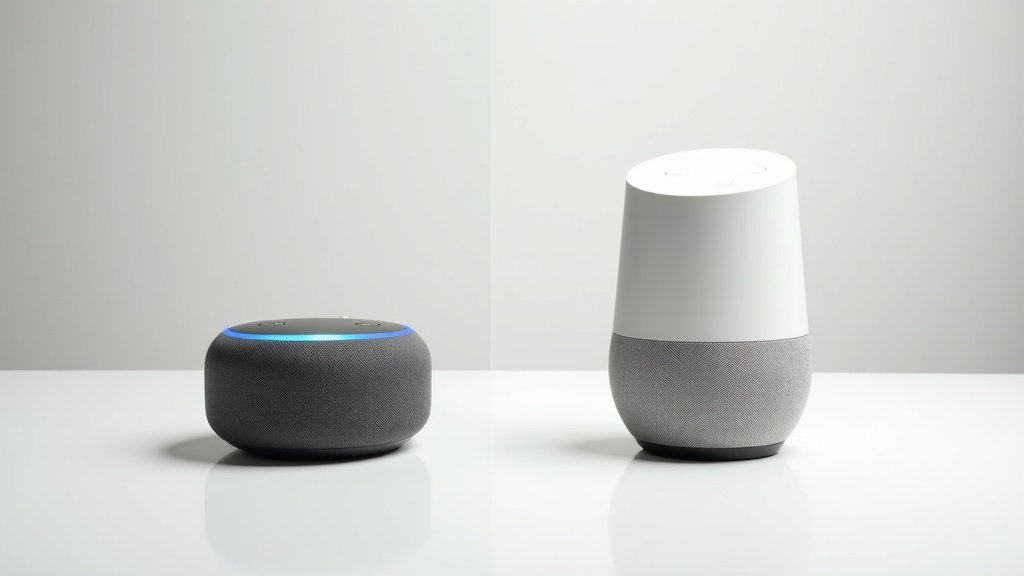
Quick picks before you compare hubs
If you already know your ecosystem, these are the smart home hubs worth checking first. Availability and bundle options can change, so use Amazon for the current listing before buying.
| Best for Alexa homes Amazon Echo Hub |
Check Amazon Echo Hub on Amazon |
| Best multi-protocol hub Samsung SmartThings Station |
Check Samsung SmartThings Station on Amazon |
| Best smart display hub Google Nest Hub Max |
Check Google Nest Hub Max on Amazon |
As an Amazon Associate, we earn from qualifying purchases.
1. Amazon Echo Hub – Best for Alexa Homes
The Amazon Echo Hub is the best starting point for households that already use Alexa, Ring, Blink, Echo speakers, or Amazon smart plugs. It is built as a wall-mountable control panel, so it works better as a smart home command center than a regular Echo speaker sitting on a counter.
Key Features
- 8-inch touch display designed for smart home controls
- Works with Alexa, Matter, Thread, Zigbee, Ring, and many third-party devices
- Wall-mountable design with dashboard-style widgets
- Quick access to lights, cameras, locks, thermostats, and routines
- Supports voice control through Alexa plus touch control for guests
Pros
- Best fit for homes already built around Alexa or Ring
- Cleaner control experience than using only voice commands
- Useful as a shared family dashboard near an entryway or kitchen
- Strong Matter and Thread support for newer smart devices
Cons
- Less useful if your home is mostly Google, Apple, or SmartThings
- Speaker quality is not the point, so do not buy it mainly for music
- Works best after you already have several smart devices connected
Best for: Alexa-first households that want one visible control panel for lights, cameras, locks, and routines. If you mainly want a display with video and entertainment features, compare our best smart displays and Echo Show 15 review.
2. Samsung SmartThings Station — Best Multi-Protocol Hub
The Samsung SmartThings Station doubles as a wireless phone charger and a full-featured smart home hub. It supports Matter, Thread, and Zigbee out of the box, with Z-Wave available through a USB dongle. The SmartThings app is one of the most polished and powerful hub apps available, supporting complex automations and scenes.
Key Features
- Built-in Matter, Thread, and Zigbee radios
- 15W Qi wireless phone charging pad built into the hub
- SmartThings app with advanced automations, scenes, and SmartThings Find
- Works with Alexa, Google Assistant, and Samsung Bixby
- Compact, minimalist design that blends into any room
Pros
- Voice-assistant agnostic — works with all three major assistants
- SmartThings Rules API allows powerful conditional automations
- Wireless charger adds practical everyday value
- Strong Samsung ecosystem integration with TVs, appliances, and Galaxy phones
Cons
- No built-in display or speaker — you need a separate device for voice interaction
- Z-Wave requires an additional USB dongle purchase
- Cloud-dependent for most automations, though local processing is improving
3. Apple HomePod Mini — Best for Apple Households
The Apple HomePod Mini serves as a Thread border router and Matter controller, making it the gateway to smart home control for anyone deep in the Apple ecosystem. Its compact size, excellent audio quality for its price, and tight integration with the Apple Home app make it the simplest hub experience available.
Key Features
- Thread border router and Matter controller built in
- Siri voice control with on-device processing for faster responses
- Apple Home app for scenes, automations, and adaptive lighting
- Computational audio with 360-degree sound in a 3.3-inch sphere
- Temperature and humidity sensor built in
Pros
- Seamless integration with iPhone, iPad, Mac, and Apple Watch
- Strong privacy — processing happens locally whenever possible
- Thread support future-proofs your setup for Matter devices
- Excellent sound quality for its size and price
Cons
- No Zigbee or Z-Wave support — limited to Thread, Matter, and Wi-Fi devices
- Apple Home app automations are less flexible than SmartThings or Hubitat
- Siri is still less capable than Alexa and Google Assistant for smart home commands
- No display — you rely on your iPhone or iPad for visual control
4. Google Nest Hub Max — Best Smart Display Hub
The Google Nest Hub Max is both a 10-inch smart display and a Thread border router that acts as a Matter controller. It shines if you rely on Google services for calendars, photos, video calls, and media streaming. The large display makes it ideal for a kitchen or living room command center.
Key Features
- 10-inch HD touchscreen with built-in Nest camera for video calls and home monitoring
- Thread border router and Matter controller
- Google Assistant with conversational AI and Gemini integration
- Chromecast built in for Netflix, YouTube, and Spotify
- Gesture control — pause music or silence alarms with a hand wave
Pros
- Best smart display experience with rich visual controls
- Built-in camera doubles as a Nest security camera when you are away
- Google Assistant handles complex queries and multi-step routines effectively
- Excellent media hub for streaming video and music
Cons
- No Zigbee or Z-Wave support — limited to Matter, Thread, Wi-Fi, and Bluetooth
- Higher price point than most dedicated hubs
- Google has a history of discontinuing products and services, which creates trust concerns
- Privacy-conscious users may be wary of a hub with a built-in camera
5. Hubitat Elevation — Best for Local Processing and Power Users
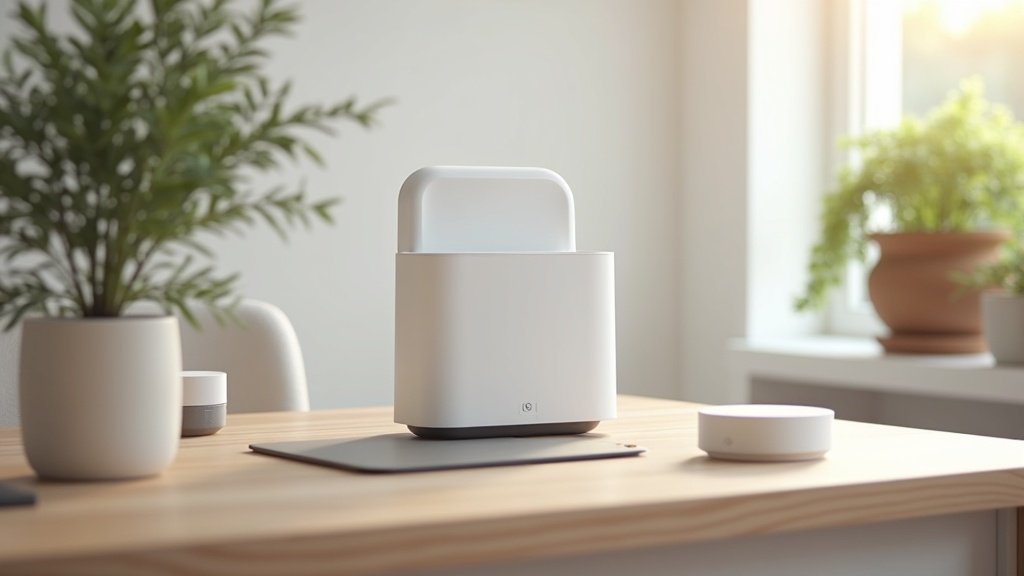
The Hubitat Elevation is the go-to hub for users who demand local processing and do not want to rely on cloud servers. Every automation runs on the hub itself, which means your smart home keeps working even if your internet goes down. It supports Zigbee, Z-Wave, and now Matter, making it backward-compatible with thousands of legacy devices.
Key Features
- 100% local automation processing — no cloud dependency
- Built-in Zigbee and Z-Wave radios for broad legacy device support
- Matter controller support added via firmware update
- Custom rules engine with powerful conditional logic, variables, and triggers
- Active community with thousands of user-contributed device drivers and apps
Pros
- Runs entirely locally — fastest response times and full functionality during internet outages
- Supports Zigbee and Z-Wave natively, covering the widest range of existing devices
- Highly customizable with Rule Machine for complex home automations
- No monthly subscription fees — all features included with purchase
Cons
- Steeper learning curve — not designed for casual smart home users
- No built-in display, speaker, or microphone — purely a background hub
- Web-based dashboard looks dated compared to SmartThings or Apple Home
- Thread support is not yet available — relies on Matter-over-Wi-Fi for newer devices
6. Aeotec SmartThings Hub v3 — Best for Z-Wave and Zigbee Legacy Systems
The Aeotec SmartThings Hub v3 is the hardware partner for Samsung’s SmartThings platform. If you have an existing Z-Wave and Zigbee setup and want a hub that supports both natively without dongles, this is your best option. It runs the full SmartThings platform and receives regular firmware updates with expanding Matter support.
Key Features
- Built-in Zigbee and Z-Wave Plus radios — no dongles required
- Full SmartThings platform with Edge drivers for local device control
- Matter controller support via firmware update
- Ethernet connectivity for rock-solid network reliability
- Compatible with Alexa, Google Assistant, and Samsung Bixby
Pros
- Native Z-Wave and Zigbee support in a single device — ideal for mixed-protocol homes
- SmartThings Edge drivers enable local processing for supported devices
- Battle-tested platform with years of device compatibility
- Affordable entry price for the protocol coverage you get
Cons
- No display, speaker, or wireless charger — it is a dedicated hub box
- Thread radio is not built in — Thread devices connect via Matter-over-Wi-Fi or a separate border router
- Older hardware design — the SmartThings Station is newer and more feature-rich
- Some advanced automations still require cloud processing
Smart Home Hub Buying Guide: Protocols Explained
The most important factor when choosing a smart home hub is which wireless protocols it supports. Here is a breakdown of the four major ones you need to know in 2026.
Matter — The Universal Standard
Matter is the industry-backed connectivity standard developed by the Connectivity Standards Alliance (CSA), with support from Apple, Amazon, Google, and Samsung. It promises that any Matter-certified device will work with any Matter-compatible hub, regardless of brand. In 2026, Matter support is widespread, though not every device category is covered yet. If you are starting a smart home from scratch, prioritizing Matter compatibility is the safest long-term bet.
Thread — The Mesh Network Protocol
Thread is a low-power mesh networking protocol that acts as the transport layer for many Matter devices. Unlike Wi-Fi, Thread devices create a self-healing mesh network that improves in reliability as you add more devices. Thread border routers — found in the HomePod Mini, Echo Hub, and SmartThings Station — connect your Thread mesh to your IP network. If you value low latency and rock-solid reliability, look for hubs with built-in Thread border routers.
Zigbee — The Proven Workhorse
Zigbee has been the backbone of smart home ecosystems for over a decade. It uses a low-power mesh network on the 2.4 GHz band, and thousands of devices — from Philips Hue lights to Aqara sensors — rely on it. If you have existing Zigbee devices, make sure your hub supports Zigbee natively. The Amazon Echo Hub, Hubitat Elevation, and Aeotec SmartThings Hub v3 all include built-in Zigbee radios.
Z-Wave — The Interference-Free Option
Z-Wave operates on the 800–900 MHz frequency band, which means it does not compete with Wi-Fi or Bluetooth for airspace. This makes Z-Wave devices exceptionally reliable in homes with lots of wireless traffic. Z-Wave is popular for locks, sensors, and thermostats. If you have Z-Wave devices, the Hubitat Elevation and Aeotec SmartThings Hub v3 are the best choices, as they include Z-Wave radios natively.
What About Wi-Fi and Bluetooth?
Most smart home hubs also support Wi-Fi and Bluetooth for connecting devices that use these protocols. Wi-Fi devices are easy to set up but can congest your network in large numbers. Bluetooth is typically used for initial device pairing and short-range communication. Neither protocol is ideal for building a large, reliable smart home network, which is why dedicated protocols like Zigbee, Z-Wave, Thread, and Matter exist.
How We Tested These Smart Home Hubs
We installed each hub in a test home environment with over 40 smart devices, including lights, locks, motion sensors, door/window sensors, a smart thermostat, and security cameras. We evaluated each hub based on the following criteria:
- Setup experience: How long does it take to get the hub running and pair your first device?
- Protocol support: Which wireless protocols are built in, and which require additional hardware?
- Automation capability: How complex can your automations get? Can they run locally or do they require cloud?
- Voice assistant integration: How well does the hub work with Alexa, Google Assistant, and Siri?
- Reliability: Do automations fire consistently? How does the hub handle internet outages?
- Value: Does the hub justify its price with the features and protocol coverage it offers?
Who Should Skip a Smart Home Hub?
Best for a display hub: people who want voice control, recipes, timers, calendars, cameras, and a dashboard in the kitchen or living room. Google Nest Hub Max and Echo Show-style devices are easiest to live with when the screen is the main feature.
Best for a protocol hub: people with Zigbee, Z-Wave, Thread, Matter, or mixed-brand sensors and switches. SmartThings, Hubitat, and similar hubs are less glamorous, but they matter more when reliability and device compatibility are the real problem.
Skip a dedicated hub if: your home only has Wi-Fi bulbs, plugs, speakers, and cameras that already work through Alexa, Google Home, or Apple Home. Adding a hub will not magically improve simple Wi-Fi devices.
Skip a display-only hub if: you are trying to connect older Z-Wave locks, Zigbee sensors, or local automations. A smart display can be a great control screen, but it may not replace a real radio/protocol hub.
Choose something else if: you want full local control, advanced automations, or privacy-first operation without cloud dependence. In that case, Hubitat or Home Assistant-style setups make more sense than a mainstream display hub.
Frequently Asked Questions
Q: Do I really need a smart home hub, or can I just use Wi-Fi devices?
A: You can start with Wi-Fi-only devices, but as your smart home grows beyond 15 to 20 devices, a hub becomes essential. Wi-Fi devices consume bandwidth and can slow your network. A hub with Zigbee, Z-Wave, or Thread creates a dedicated low-power mesh network that scales better and responds faster.
Q: What is the difference between Matter and Thread?
A: Matter is an application-layer protocol that defines how devices communicate commands (turn on, set brightness, lock door). Thread is a network-layer protocol that provides the wireless mesh infrastructure those commands travel over. Many Matter devices use Thread as their transport, but Matter can also run over Wi-Fi or Ethernet.
Q: Can I use multiple smart home hubs together?
A: Yes. Many advanced users run multiple hubs — for example, a Hubitat for local Z-Wave and Zigbee automations alongside an Echo Hub for Alexa voice control. Matter makes multi-hub setups easier because devices can be shared across controllers using the multi-admin feature.
Q: Will my old Zigbee and Z-Wave devices work with a Matter hub?
A: Not directly. Matter is a separate protocol. However, hubs like the Aeotec SmartThings Hub v3 and Hubitat Elevation support Zigbee, Z-Wave, and Matter simultaneously, so you can manage all your devices from a single hub regardless of protocol.
Q: Which smart home hub is best for beginners?
A: The Amazon Echo Hub is the most beginner-friendly option. Its touchscreen dashboard, guided setup, and Alexa voice control make it easy for anyone to get started. Apple HomePod Mini is equally simple if you are already in the Apple ecosystem.
Q: Do smart home hubs require a monthly subscription?
A: None of the hubs reviewed here require a monthly subscription for core smart home functionality. You can pair devices, create automations, and use voice control without paying anything beyond the hardware cost. Some optional cloud features — like Google Nest Aware camera recording — do carry subscription fees, but those are tied to specific devices, not the hub itself.
Is It Worth It?
For most households in 2026, the Amazon Echo Hub is the best smart home hub you can buy. Its combination of a touchscreen dashboard, built-in Zigbee and Thread radios, Matter support, and the deep Alexa ecosystem makes it the most complete package. If you want a voice-assistant-agnostic hub with excellent multi-protocol support, the Samsung SmartThings Station is a close second.
Apple users should go with the HomePod Mini for its seamless integration with the Apple ecosystem and strong privacy focus. Power users who demand local processing and maximum protocol flexibility will be happiest with the Hubitat Elevation. And if you have a home full of legacy Z-Wave and Zigbee devices, the Aeotec SmartThings Hub v3 remains the most reliable bridge between old and new.
No matter which hub you choose, 2026 is the best time to invest in a smart home hub. Matter and Thread are making devices more interoperable than ever, and the right hub will serve as the foundation of your connected home for years to come.
Home Product Expert
James is the founder and lead reviewer at The Home Picker. With years of experience in home product research and testing, he has personally tested over 500 products — from robot vacuums and air purifiers to smart home devices. His reviews are based on hands-on testing, spec analysis, and real-world performance data. Read full bio →
James is the founder of The Home Picker. He has spent years researching and testing home products, from robot vacuums to smart home devices, to help readers make informed buying decisions. our about guide
Still weighing your choices? Our Smart Home Buying Guide covers the key features, price tiers, and common mistakes to avoid.
You May Also Like
Disclosure: This post contains affiliate links. If you purchase through our links, we may earn a small commission at no extra cost to you. Learn more.
Not sure a hub is even step one? Our complete 2026 smart-home setup guide walks through ecosystems and Wi-Fi first, so you add a hub only when you actually need one.
Popular pairing: see Yale Assure Lock 2 vs Schlage Encode Plus.