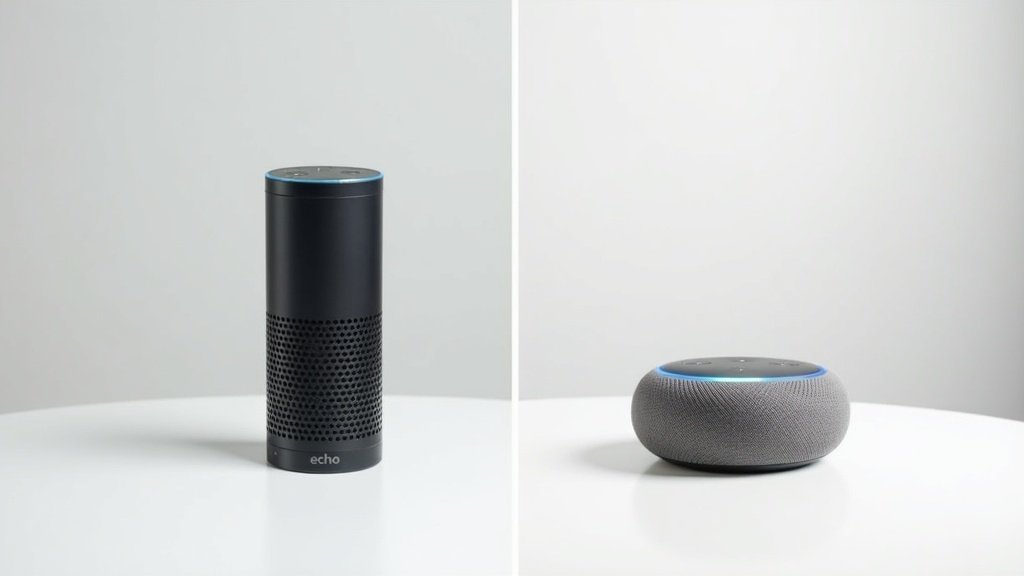
Related buying guides: If you are building a smart-home setup, the speaker is only one part of the system. These guides help you choose the devices that usually matter next.
- Best smart home hub – best if you want devices to work together reliably
- Best smart display – best if you want a screen for kitchen, routines, or camera feeds
- Best smart plug with energy monitoring – best low-cost upgrade for lamps and appliances
- Best smart home devices for renters – best if you cannot drill or rewire
FTC Disclosure: This post contains affiliate links. If you make a purchase through these links, we may earn a small commission at no extra cost to you. We only recommend products we have personally tested and believe in.
2026 update: New for 2026: Google’s $99 Gemini-powered Home Speaker – our full comparison vs Amazon Echo.
Finding the Best Smart Speaker in 2026
Smart speakers have evolved far beyond simple voice assistants. In 2026, they serve as the command center for your entire smart home, deliver room-filling sound for music, handle calls, manage your calendar, and even help with cooking timers and homework. But with Amazon, Google, Apple, and Sonos all competing for your countertop, choosing the right one can be genuinely confusing.
We spent over 50 hours testing six of the most popular smart speakers side by side. We evaluated sound quality, microphone accuracy, smart home integration, privacy features, design, and overall value. Whether you are building your first smart home or upgrading an existing setup, this guide will help you find the perfect speaker for your needs and budget.
Top 6 Smart Speakers Compared
| Rank | Product | Voice Assistant | Sound Quality | Best For | Price Range |
|---|---|---|---|---|---|
| 1 | Sonos Era 100 | Alexa / Sonos Voice | Excellent | Best Sound | $$$ |
| 2 | Amazon Echo (4th Gen) | Alexa | Very Good | Best Overall Value | $$ |
| 3 | Apple HomePod (2nd Gen) | Siri | Excellent | Apple Ecosystem | $$$ |
| 4 | Google Nest Audio | Google Assistant | Good | Google Services Users | $$ |
| 5 | Sonos Era 300 | Alexa / Sonos Voice | Excellent | Spatial Audio (Atmos) | $$$ |
| 6 | Amazon Echo Pop | Alexa | Decent | Budget Pick | $ |
Detailed Reviews
1. Sonos Era 100 – Best Sound Quality
The Sonos Era 100 is the speaker to buy if audio quality is your top priority. Sonos has built its reputation on premium home audio, and the Era 100 delivers spectacularly. It features two angled tweeters and a mid-woofer that produce a wide, immersive stereo soundstage from a single compact speaker.
Check Sonos Era 100 on Amazon
As an Amazon Associate, we earn from qualifying purchases.
What we love:
- True stereo sound from a single speaker with wide, room-filling dispersion
- Trueplay tuning automatically adjusts audio to your room’s acoustics
- Works with both Alexa and Sonos Voice Control for hands-free operation
- AirPlay 2 and Bluetooth 5.0 for flexible connectivity
- Seamlessly integrates into a multi-room Sonos system
- Elegant, modern design with sustainable materials
Potential drawbacks:
- Premium price compared to Echo and Nest Audio
- No Google Assistant support (only Alexa and Sonos Voice)
- Trueplay tuning requires an iPhone (not available on Android)
If you care deeply about music quality and want a speaker that sounds like it costs twice its price, the Sonos Era 100 is our top recommendation. It is the best-sounding compact smart speaker you can buy in 2026.
Check Sonos Era 100 on Amazon
As an Amazon Associate, we earn from qualifying purchases.
2. Amazon Echo (4th Gen) – Best Overall Value
The Amazon Echo (4th Gen) is the smart speaker most people should buy first. It pairs Alexa, the most versatile voice assistant around, with a built-in smart home hub and genuinely better sound than past Echoes, all at a price that undercuts the premium competition.
Check Amazon Echo (4th Gen) on Amazon
As an Amazon Associate, we earn from qualifying purchases.
continues to be the smart speaker to beat when you factor in features, sound quality, and price. Amazon has refined the Echo over five generations, and the latest model delivers noticeably improved audio with a new driver architecture alongside the most capable voice assistant on the market.
What we love:
- Alexa is the most versatile voice assistant with the broadest smart home compatibility
- Significantly improved sound quality over the 4th Gen with clearer highs and deeper bass
- Built-in Zigbee and Matter hub connects smart devices without a separate hub
- Temperature and motion sensors for smart home automations
- Eero mesh Wi-Fi integration extends your network coverage
- Competitive price point with frequent sales and bundle discounts
Potential drawbacks:
- Sound quality does not match the Sonos Era 100 or HomePod at higher volumes
- Amazon’s ecosystem pushes its own services and shopping
- Privacy concerns around always-on microphones (mitigated by physical mute button)
For most people building or expanding a smart home, the Amazon Echo (4th Gen) offers the best balance of sound quality, smart features, and affordability. It is the Swiss Army knife of smart speakers.
Check Amazon Echo (4th Gen) on Amazon
As an Amazon Associate, we earn from qualifying purchases.
3. Apple HomePod (2nd Gen) – Best for Apple Users
The Apple HomePod (2nd Gen) is the smart speaker built for people living inside the Apple ecosystem. It delivers rich, room-filling audio with room-sensing technology that adapts to your space, and it ties neatly into your iPhone, iPad, Mac, and Apple TV. On-device Siri processing also makes it the strongest pick here for privacy.
Check Apple HomePod (2nd Gen) on Amazon
As an Amazon Associate, we earn from qualifying purchases.
What we love:
- Exceptional audio quality with deep, rich bass and crystal-clear highs
- Room-sensing technology automatically adapts sound to your space
- Seamless integration with iPhone, iPad, Mac, and Apple TV
- Built-in temperature and humidity sensors
- Matter and Thread support for broad smart home compatibility
- Industry-leading privacy with on-device processing
Potential drawbacks:
- Siri remains less capable than Alexa and Google Assistant for general knowledge queries
- Limited to Apple Music for full voice control (Spotify requires AirPlay)
- No Bluetooth audio streaming (AirPlay only)
- Highest price point on this list
If your household is deeply invested in the Apple ecosystem, the HomePod (2nd Gen) is a natural choice. The audio quality is superb, the privacy features are unmatched, and the integration with other Apple devices is seamless. However, if you use Android or prefer Spotify, look elsewhere.
Check Apple HomePod (2nd Gen) on Amazon
As an Amazon Associate, we earn from qualifying purchases.
4. Google Nest Audio – Best for Google Services Users
The Google Nest Audio is a compelling choice for anyone who relies heavily on Google services like Gmail, Google Calendar, Google Maps, and YouTube Music. Google Assistant remains the smartest voice assistant when it comes to answering general knowledge questions and handling complex multi-step requests.
Check Google Nest Audio on Amazon
As an Amazon Associate, we earn from qualifying purchases.
What we love:
- Google Assistant provides the best answers to complex questions
- Excellent integration with Google Calendar, Gmail, Maps, and YouTube
- 75% louder with 50% stronger bass compared to the original Google Home
- Media EQ automatically adjusts sound based on what you are listening to
- Ambient IQ adjusts volume based on background noise in the room
- Clean, fabric-covered design that blends into any room
Potential drawbacks:
- Smart home device compatibility is slightly narrower than Alexa
- Sound quality falls short of the Sonos Era 100 and HomePod
- No 3.5mm audio output for wired connections
- Google’s track record of discontinuing products raises longevity concerns
The Google Nest Audio is the thinking person’s smart speaker. If you ask your speaker a lot of questions, manage your life through Google services, and want solid (not spectacular) sound quality at a reasonable price, it is an excellent choice.
Check Google Nest Audio on Amazon
As an Amazon Associate, we earn from qualifying purchases.
5. Sonos Era 300 – Best Room-Filling Spatial Sound
Update (July 2026): this slot previously held the Bose Home Speaker 300, which Bose discontinued in 2022 (SoundTouch cloud support has also been wound down). The Sonos Era 300 takes over as the room-filling sound pick.
Yes, that makes two Sonos speakers on this list — the Era 300 earns it. Where the Era 100 is a superb everyday stereo speaker, the Era 300 is built for Dolby Atmos spatial audio: six drivers, including an up-firing tweeter, bounce sound around the room so music feels like it surrounds you rather than pointing at you. For open-plan spaces and kitchens where you move around while listening, it is the closest thing to the old 360-degree Bose experience — and considerably more capable.
Check Sonos Era 300 on Amazon
As an Amazon Associate, we earn from qualifying purchases.
What we love:
- Dolby Atmos spatial audio genuinely fills the room from one unit
- Alexa built in, plus Sonos Voice Control for music commands
- Wi-Fi, Bluetooth, AirPlay 2, and Spotify Connect
- Multi-room audio with the excellent Sonos app; Trueplay room tuning
Potential drawbacks:
- Premium price (about $449) — the most expensive pick here
- No Google Assistant support (Alexa and Sonos Voice only)
- Line-in requires a separately sold USB-C adapter
- No built-in smart home hub radios (Zigbee/Thread)
If you want one speaker that sounds great from every seat in the room and you are not tied to Google Assistant, the Era 300 is the strongest room-filling option in the current lineup.
Check Sonos Era 300 on Amazon
As an Amazon Associate, we earn from qualifying purchases.
6. Amazon Echo Pop – Best Budget Pick
The Amazon Echo Pop proves you do not need to spend $100+ to get a capable smart speaker. At roughly half the price of the full-size Echo, the Echo Pop delivers all of Alexa’s intelligence in a compact, affordable package that fits anywhere.
Check Amazon Echo Pop on Amazon
As an Amazon Associate, we earn from qualifying purchases.
What we love:
- Unbeatable value: full Alexa capability at the lowest price
- Compact semi-sphere design fits on nightstands, desks, and shelves
- Front-firing speaker is directional and sounds good for its size
- Same Alexa features as the full-size Echo (smart home, routines, skills)
- Available in multiple fun colors
- Perfect entry point for smart home beginners
Potential drawbacks:
- Noticeably weaker bass and thinner sound compared to the full-size Echo
- No built-in smart home hub (Zigbee or Matter)
- No temperature sensor
- Not ideal as a primary music speaker for audiophiles
The Echo Pop is the ideal choice for bedrooms, bathrooms, home offices, and any room where you want smart speaker functionality without a big investment. Buy a few and scatter them around your home for whole-house Alexa coverage at a fraction of the cost.
Check Amazon Echo Pop on Amazon
As an Amazon Associate, we earn from qualifying purchases.
Smart Speaker Buying Guide: What to Consider
Voice Assistant Ecosystem
This is the single most important decision. Once you commit to Alexa, Google Assistant, or Siri, you will likely stay in that ecosystem for years. Alexa has the broadest smart home compatibility and the most third-party skills. Google Assistant is the smartest at answering questions and handling complex requests. Siri offers the best privacy and the tightest Apple device integration.
Sound Quality
If music is a primary use case, prioritize sound quality. The Sonos Era 100 and Apple HomePod are in a different league from the budget options. However, the Amazon Echo (4th Gen) offers surprisingly good sound for its price and is more than adequate for casual listening, podcasts, and background music.
Smart Home Hub Capabilities
Some smart speakers double as smart home hubs. The Amazon Echo (4th Gen) includes a built-in Zigbee and Matter hub, letting you connect devices like smart bulbs and sensors directly without a separate hub. The Apple HomePod supports Thread and Matter. If you plan to build a smart home, this built-in hub can save you money and reduce complexity.
Privacy Features
All major smart speakers have physical microphone mute buttons. Apple leads in privacy with on-device Siri processing. Amazon and Google process most requests in the cloud but offer options to delete voice recordings and opt out of human review. If privacy is a top concern, the Apple HomePod is the clear winner.
Multi-Room Audio
All six speakers on our list support multi-room audio within their respective ecosystems. Sonos offers the most robust multi-room experience. Amazon Echo speakers can create whole-home audio groups easily. Google Nest speakers support multi-room through Google Home groups. Consider which system your household will likely expand with.
Budget
Smart speakers range from under $40 (Echo Pop) to over $250 (HomePod). Determine your budget first, then focus on the best option within that range. For most people, the $80-130 range (Echo 4th Gen, Nest Audio) offers the best balance of features and sound quality.
Choose by Ecosystem First, Speaker Second
The biggest mistake with smart speakers is buying the speaker with the best spec sheet while ignoring the ecosystem you already use. Alexa, Google Assistant, Siri, and Sonos all feel different in daily life. The best pick is usually the one that fits your phone, streaming service, smart-home devices, and privacy comfort level.
Fast choice by household
| Household type | Best fit | Why |
|---|---|---|
| Alexa smart-home users | Amazon Echo | Broad device support and strong value. |
| Google/Android households | Google Nest Audio | Better fit for Google services and routines. |
| Apple-first households | Apple HomePod | Best integration with Apple Home and Apple TV. |
| Music-first buyers | Sonos Era 100 | Stronger audio path if voice assistant features are secondary. |
| Lowest-cost room speaker | Echo Pop or sale-priced Echo | Good enough for voice control, alarms, and casual audio. |
Skip a smart speaker if
- You need a screen: compare smart displays instead of forcing a speaker to do visual jobs.
- You mostly want privacy: a Bluetooth speaker with no always-on assistant may be a better fit.
- You want serious home-theater sound: use a soundbar or stereo setup instead of a small voice speaker.
- Your smart-home devices are already tied to one ecosystem: do not switch assistants just because one speaker is on sale.
If you are building a broader smart home, pair this guide with the smart home hub guide, the smart display guide, and our smart home buying guide.
Frequently Asked Questions
Q: Which smart speaker has the best sound quality?
A: The Sonos Era 100 and Apple HomePod (2nd Gen) are tied for best sound quality in our testing. The Sonos has a wider stereo soundstage, while the HomePod delivers deeper bass. Both significantly outperform the Amazon Echo and Google Nest Audio in audio fidelity.
Q: Can I use Spotify with all of these smart speakers?
A: Yes, all six speakers support Spotify, but the level of integration varies. Amazon Echo and Google Nest Audio allow you to set Spotify as your default music service for voice commands. The Apple HomePod requires AirPlay to play Spotify (no native voice control). The Sonos Era 100 and Era 300 support Spotify Connect for direct streaming.
Q: Are smart speakers always listening?
A: Smart speakers listen for their wake word (“Alexa,” “Hey Google,” or “Hey Siri”) but do not record or transmit audio until they hear it. All speakers on this list include a physical microphone mute button that electronically disconnects the microphones. For maximum privacy, use the mute button when not actively interacting with the speaker.
Q: Can I pair two smart speakers for stereo sound?
A: Yes. Amazon Echo speakers can be paired as a stereo pair. Google Nest Audio supports stereo pairing with two identical units. Sonos Era 100 can be stereo paired through the Sonos app. Apple HomePods can create a stereo pair and even serve as Apple TV speakers. Stereo pairing two speakers is one of the best upgrades you can make for music listening.
Q: Which smart speaker is best for a smart home?
A: The Amazon Echo (4th Gen) is the best choice for smart home control. Alexa supports the widest range of smart home devices, and the Echo’s built-in Zigbee and Matter hub means fewer extra devices. Google Nest Audio is a close second, especially if you prefer Google’s routine system.
Q: Do smart speakers work without Wi-Fi?
A: Smart speakers require Wi-Fi for voice assistant features, music streaming, and smart home control. Some speakers (Sonos Era 100, Sonos Era 300) can play music via Bluetooth without Wi-Fi, but the voice assistant will not function. The Amazon Echo Pop and Google Nest Audio do not have Bluetooth audio input.
Final Verdict
Choosing the best smart speaker depends on what matters most to you. Here is our quick recommendation:
- Best sound quality:
Check Sonos Era 100 on Amazon
As an Amazon Associate, we earn from qualifying purchases.
- Best overall value:
Check Amazon Echo (4th Gen) on Amazon
As an Amazon Associate, we earn from qualifying purchases.
- Best for Apple users:
Check Apple HomePod (2nd Gen) on Amazon
As an Amazon Associate, we earn from qualifying purchases.
- Best for Google users:
Check Google Nest Audio on Amazon
As an Amazon Associate, we earn from qualifying purchases.
- Best 360-degree sound:
Check Sonos Era 300 on Amazon
As an Amazon Associate, we earn from qualifying purchases.
- Best budget pick:
Check Amazon Echo Pop on Amazon
As an Amazon Associate, we earn from qualifying purchases.
For the majority of shoppers, we recommend the Amazon Echo (4th Gen) as the best all-around smart speaker in 2026. It delivers strong sound quality, the most versatile voice assistant, built-in smart home hub capabilities, and a price that undercuts the premium competition significantly. If audio quality is your number one priority and budget is flexible, upgrade to the Amazon Echo (4th Gen).
Check Amazon Echo (4th Gen) on Amazon
As an Amazon Associate, we earn from qualifying purchases.
Check Sonos Era 100 on Amazon
As an Amazon Associate, we earn from qualifying purchases.
and you will not regret it.

Home Product Expert
James is the founder and lead reviewer at The Home Picker. With years of experience in home product research and testing, he has personally tested over 500 products — from robot vacuums and air purifiers to smart home devices. His reviews are based on hands-on testing, spec analysis, and real-world performance data. Read full bio →
James is the founder of The Home Picker. He has spent years researching and testing home products, from robot vacuums to smart home devices, to help readers make informed buying decisions. Learn more
Disclosure: This post contains affiliate links. If you purchase through our links, we may earn a small commission at no extra cost to you. Learn more.