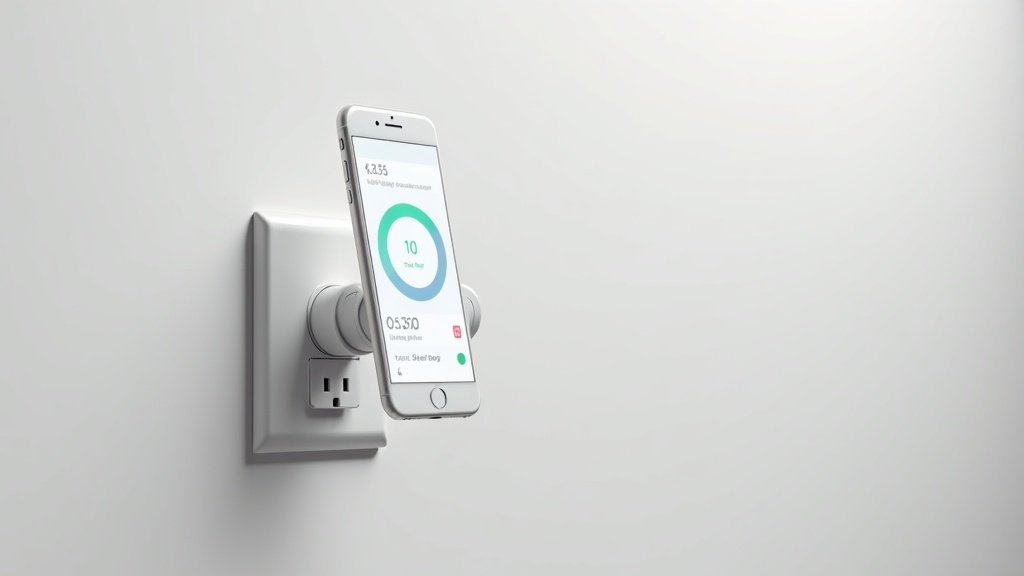
- Kasa Smart Plug HS103P4 – Best Overall Smart Plug
- Amazon Smart Plug – Best Value Smart Plug
- TP-Link Kasa KP125M – Best Premium Smart Plug
- Kasa Smart Outdoor Plug KP400 – Best Outdoor Smart Plug
- Wyze Plug – Safest Smart Plug
- What to Look for in the Best Smart Plug 2026
- Frequently Asked Questions
- Final Verdict: Choose the Right Smart Plug for Your Needs
My electricity bill jumped $40 in one month last summer, and I had no idea why. Turns out a window AC unit and a space heater in the guest room were running 24/7 — both plugged into dumb outlets with no schedule or monitoring. A $12 smart plug would have caught that in a day.
Smart plugs are the cheapest entry point into home automation, but they are not interchangeable. The differences in 2026 come down to which voice ecosystem the plug supports, whether it includes energy monitoring, and what load it is rated for. For this guide, we compared current spec sheets, certification listings, and aggregate owner feedback to match each of the five leading models to the buyer it fits best.
Best Overall: Kasa Smart Plug HS103P4
Best Value: Amazon Smart Plug
Best Premium: TP-Link Kasa KP125M
Best Outdoor: Kasa Smart Outdoor Plug KP400
Safest Smart Plug: Wyze Plug
Here is how the five picks compare at a glance. Note that every model on this list requires a 2.4GHz Wi-Fi network — none of them connect to 5GHz-only networks.
| Model | Protocol | Voice Assistants | Energy Monitoring | Typical Price |
|---|---|---|---|---|
| Kasa HS103P4 | Wi-Fi 2.4GHz | Alexa, Google | No | ~$27 (4-pack) |
| Amazon Smart Plug | Wi-Fi 2.4GHz | Alexa only | No | ~$25 (often $13-15 on sale) |
| Kasa KP125M | Wi-Fi 2.4GHz + Matter | Alexa, Google, Apple Home | Yes (Kasa app) | ~$40 (2-pack) |
| Kasa KP400 | Wi-Fi 2.4GHz | Alexa, Google | No | ~$20-27 (2 sockets) |
| Wyze Plug | Wi-Fi 2.4GHz | Alexa, Google | No | ~$18-20 (2-pack) |
Kasa Smart Plug HS103P4 – Best Overall Smart Plug
TP-Link’s Kasa line has been the default recommendation in this category for years, and the HS103P4 four-pack is the reason. Each plug is rated for 15 amps, connects directly to a 2.4GHz Wi-Fi network with no hub, and is UL certified. The compact housing is slim enough that two plugs can share a duplex outlet without blocking each other.
The Kasa app is the strongest part of the package. Scheduling, countdown timers, and an Away Mode that randomizes on/off times are all included, and the app has a long track record of stable firmware updates. Voice control works with Alexa and Google Assistant, and IFTTT is supported for more advanced automations.
Know the limits before you buy: there is no Apple HomeKit or Matter support on this model, and no energy monitoring. If either of those matters to you, step up to the KP125M below. But at roughly $27 for four plugs — around $7 each — the HS103P4 is the cheapest reliable way to put lamps, fans, and holiday lights on a schedule across an entire home.
Check Kasa HS103P4 Price on Amazon
Amazon Smart Plug – Best Value Smart Plug
The Amazon Smart Plug earns its spot for one reason: if your home runs on Alexa, nothing is easier. Plug it in, and the Alexa app detects it and links it to your account, usually in under a minute. It carries Amazon’s “Certified for Humans” badge, and the compact design leaves the second wall socket free.
The catch is just as clear, and it is the most important thing to know about this plug: it works with Alexa only. There is no Google Home support, no Apple HomeKit, and no standalone app outside of Alexa. If there is any chance your household switches assistants, or if you have a mix of Google and Amazon speakers, buy a Kasa or Wyze plug instead.
Value depends on timing. The list price hovers around $25, which is expensive for a single plug with no energy monitoring — but Amazon discounts it aggressively and it regularly drops to the $13-15 range during Prime Day and holiday sales. At sale price, it is the best value in the category for Alexa-only homes; at full price, the Kasa four-pack is the smarter buy.
Check Amazon Smart Plug Price on Amazon
TP-Link Kasa KP125M – Best Premium Smart Plug
The KP125M is the plug to buy if you want your smart home to still make sense five years from now. It is Matter certified, which means it works natively with Alexa, Google Home, Apple Home, and Samsung SmartThings — you set it up by scanning the Matter code in whichever app you already use. It is the only plug on this list that Apple households can control through the Home app and Siri.
It is also the only pick here with energy monitoring. The Kasa app shows real-time wattage plus daily and monthly consumption history, and you can enter your electricity rate to estimate what a device actually costs to run. One honest caveat: energy data lives in the Kasa app only — Matter does not currently pass those readings through to Apple Home, Google Home, or Alexa dashboards, so plan on keeping the Kasa app installed if you want the numbers.
Hardware is what you would expect from Kasa’s top plug: 15A/1800W rating, UL certification, and a slim body designed so two units stack on one duplex outlet. At around $40 for a two-pack it costs nearly three times the HS103P4 per plug, but Matter support plus energy tracking is a fair trade for anyone measuring a space heater, dehumidifier, or entertainment center’s standby drain.
Check Kasa KP125M Price on Amazon
Kasa Smart Outdoor Plug KP400 – Best Outdoor Smart Plug
String lights, landscape lighting, fountains, and holiday displays need a plug built for weather, and the KP400 is the most dependable option we found. It has two independently controllable sockets rated at 15A/1875W each, an IP64 rating against dust and splashing water, and ETL certification. A built-in Wi-Fi amplifier gives it a stated range of up to 300 feet in open space, which matters when the nearest router is on the other side of an exterior wall.
The feature that makes it genuinely useful outdoors is the sunset/sunrise offset: schedule your patio lights to come on 15 minutes after local sunset year-round, and the plug adjusts automatically as the seasons shift. Both sockets can be grouped and controlled together, or run separate schedules — lights on one, a fountain pump on the other.
Ecosystem support covers Alexa and Google Assistant; like most Kasa Wi-Fi plugs, there is no HomeKit or Matter here. Keep the rubber socket covers in place when a socket is unused, and remember that IP64 means splash-resistant, not submersible — mount it off the ground under an eave when possible.
Check Kasa KP400 Price on Amazon
Wyze Plug – Safest Smart Plug
Every plug on this list carries a UL or ETL safety listing, but the Wyze Plug is the pick we point to for cautious buyers — the people automating a coffee maker or a curling-iron outlet and who want simple, predictable behavior. It is ETL certified, rated for 15 amps, and the physical button on the plug always works regardless of Wi-Fi status, so a family member can override any automation instantly.
The Wyze app keeps safety-minded features front and center: countdown timers that guarantee a device shuts off after a set period, schedules, and a Vacation Mode that varies lights on a random pattern to make the house look occupied. Alexa and Google Assistant are both supported, along with IFTTT. Like the budget Kasa plugs, there is no HomeKit or Matter support and no energy monitoring on the standard indoor model.
At roughly $18-20 for a two-pack, it undercuts nearly everything else per plug while coming from a brand with an established app ecosystem. One usage note that applies to any smart plug, this one included: avoid pairing it with appliances that should never restart unattended after a power interruption, such as space heaters left near furniture.
Check Wyze Plug Price on Amazon
What to Look for in the Best Smart Plug 2026
Ecosystem first. This is where most buyers get burned. The Amazon Smart Plug is Alexa-only. The Kasa HS103P4, KP400, and Wyze Plug cover Alexa and Google but not Apple. Only the Matter-certified KP125M works across Alexa, Google, and Apple Home. Decide which app you want to live in before you decide on a plug.
Amperage and load type. All five picks are rated for 15 amps, which covers lamps, fans, coffee makers, and most small appliances. Space heaters and window AC units push close to that limit — they will run, but check the appliance’s draw, and never plug a smart plug into an extension strip to power a high-draw device. Also confirm the appliance resumes in the state you expect after power is cut; many microwaves and some heaters simply return to standby.
Energy monitoring. If your goal is finding out what a device costs to run — the phantom-load question that usually gets people into smart plugs — only the KP125M on this list measures consumption. A basic on/off plug can still save money through schedules, but it cannot show you the numbers.
Physical size. A plug that blocks the second outlet effectively costs double. The Kasa indoor models and the Amazon plug are designed to leave the adjacent socket usable; the outdoor KP400 is bulkier by nature, so plan its placement.
Frequently Asked Questions
Do smart plugs work on 5GHz Wi-Fi?
No — all five plugs in this guide connect only to 2.4GHz networks, which is normal for the category. If setup fails on a dual-band router, split the 2.4GHz band into its own network name, connect the plug, then recombine if you like.
Can I use a smart plug with a space heater?
Only if the heater’s draw is within the plug’s 15A/1800W rating, it plugs directly into the wall outlet, and the heater is a model that will not restart unattended in an unsafe position. Many safety experts advise against automating heaters entirely; if you only want to know what one costs to run, the KP125M’s energy monitoring answers that without any automation.
Which smart plug works with Apple HomeKit?
Of these five, only the TP-Link Kasa KP125M — its Matter certification lets it join Apple Home natively, alongside Alexa and Google Home. The Amazon Smart Plug is Alexa-only, and the HS103P4, KP400, and Wyze Plug support Alexa and Google but not Apple.
Do smart plugs actually lower an electricity bill?
They can, modestly. Scheduling eliminates standby drain from entertainment centers, game consoles, and chargers, which typically runs a few dollars per device per month. The bigger savings come from catching a device that runs far more than you realized — which is exactly what energy-monitoring models like the KP125M are for.
Final Verdict: Choose the Right Smart Plug for Your Needs
For most homes, the Kasa HS103P4 four-pack is the answer: UL-certified hardware, a proven app, Alexa and Google support, and the lowest cost per outlet of any reliable option. Alexa-only households should grab the Amazon Smart Plug when it dips below $15. If you use Apple Home, or you want to see exactly what your devices cost to run, the Matter-certified Kasa KP125M is worth its premium. Outdoor lighting belongs on the weather-resistant Kasa KP400, and the Wyze Plug is the budget-friendly, safety-minded choice for simple timers and away-mode lighting.
Whichever you choose, buy for the ecosystem you already own — the best smart plug in 2026 is the one whose app you never have to think about after the first week.
Compare All Smart Plugs on Amazon
As an Amazon Associate, we earn from qualifying purchases.
You May Also Like

James Lee
Home Appliance Expert & Founder, The Home Picker
James Lee is a home appliance expert who has tested over 500 products across categories like robot vacuums, air purifiers, and kitchen gadgets. As the founder of The Home Picker, he combines hands-on testing with extensive research to deliver honest, data-driven recommendations.
Disclosure: This post contains affiliate links. If you purchase through our links, we may earn a small commission at no extra cost to you. Learn more.