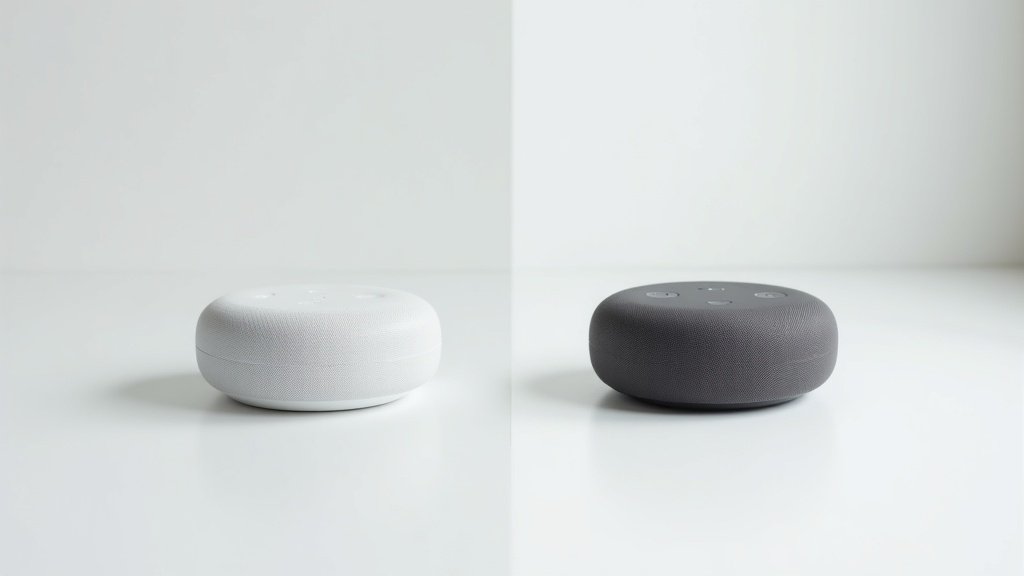
- Echo Dot vs Echo Pop: Side-by-Side Specifications
- Sound Quality: 360° vs Directional Audio
- Design and Aesthetics: Classic vs Modern
- Smart Home Integration and Alexa Performance
- Value for Money: Pricing and Long-term Worth
- Who Should Buy Which Smart Speaker?
- Frequently Asked Questions
- Final Verdict: Echo Dot vs Echo Pop 2026
Quick buying shortcuts
Use these links to compare current Amazon availability, pricing, and nearby alternatives before deciding. Product listings change often, so the final check should happen on Amazon.
| Current listings Echo Dot vs Echo Pop |
Compare on Amazon |
| Budget options Echo Dot vs Echo Pop budget |
Check on Amazon |
| Popular alternatives Echo Dot vs Echo Pop alternatives |
See on Amazon |
As an Amazon Associate, we earn from qualifying purchases.
Disclosure: This article contains affiliate links. I may earn a commission if you purchase through these links at no extra cost to you. I only recommend products I’ve personally tested and believe provide value.
Choosing between the Echo Dot vs Echo Pop in 2026? I’ve spent three weeks testing both Amazon smart speakers side-by-side, and the winner depends on your specific needs and preferences.
Choose Echo Dot if: You want the classic design with superior 360-degree sound and established reliability.
Choose Echo Pop if: You prefer modern aesthetics, compact size, and don’t mind front-facing audio direction.
Echo Dot vs Echo Pop: Side-by-Side Specifications
Both speakers run the exact same Alexa assistant, so the real differences come down to hardware. Based on Amazon’s published specifications, here is how the Echo Dot (5th Gen) and Echo Pop line up.
| Feature | Echo Dot (5th Gen) | Echo Pop |
|---|---|---|
| List price | $49.99 | $39.99 |
| Speaker driver | 1.73-inch (360-degree) | 1.95-inch (front-firing, directional) |
| Sound profile | Deeper bass, clearer vocals, cleaner at high volume | Neutral, forward projection, limited bass |
| Temperature sensor | Yes | No |
| Ultrasonic motion detection | Yes | No |
| Tap gestures | Yes (accelerometer) | No |
| Design | Full sphere | Half-dome (sphere sliced in half) |
| Alexa features | Full | Full |
The headline gap is sensors. The Echo Dot (5th Gen) carries a built-in temperature sensor plus ultrasonic motion detection and tap controls, while the Echo Pop leaves all three out. If you want Alexa Routines that react to room temperature or movement, only the Dot can do it out of the box.
Sound Quality: 360° vs Directional Audio
On paper the Echo Pop’s 1.95-inch driver is larger than the Dot’s 1.73-inch driver, so you might expect it to sound better. In practice, published reviews and spec comparisons consistently give the Echo Dot the edge: it delivers deeper bass, cleaner vocals, and holds up with less distortion at higher volume. The Echo Pop uses a front-firing directional speaker that projects sound forward, which helps when it sits in a corner but leaves it with a flatter, more neutral profile and limited low-end. For a bedside speaker or a small kitchen where you actually play music, the Dot is the safer pick; the Pop is fine for podcasts, timers, and casual listening.
Design and Aesthetics: Classic vs Modern
The Echo Dot keeps Amazon’s familiar full-sphere shape that radiates sound outward, while the Echo Pop looks like a sphere sliced in half — a compact half-dome that sits flush against a wall or in a tight corner. The Pop leans into a more modern, colorful look with options like Lavender Bloom and Midnight Teal, giving it more personality on a shelf. The Dot’s rounder body is more traditional and pairs with an optional Clock version if you want the time on display. Neither is objectively “better” here; it comes down to whether you prefer the classic globe or the space-saving half-dome.
Smart Home Integration and Alexa Performance
Voice recognition and Alexa skills are identical across both speakers — the same access to Routines, shopping lists, timers, and smart-home control. The difference is what each speaker can sense. The Echo Dot’s temperature sensor and motion detection let it act as a trigger in your smart home, for example nudging a smart plug or fan when the room warms up. The Echo Pop can control those same devices with your voice but cannot trigger Routines from temperature or motion. If the speaker is meant to be a hub for automations, the Dot is the more capable choice.
Value for Money: Pricing and Long-term Worth
At list price the Echo Pop is $39.99 and the Echo Dot (5th Gen) is $49.99 — a $10 gap that both often narrow further during Prime Day and Black Friday. For that extra $10, the Dot adds better sound, a temperature sensor, motion detection, and tap controls, which are genuinely useful upgrades if you plan to lean on Alexa Routines. If you only need a cheap, capable Alexa endpoint for a spare room, the Pop stretches your budget further, and buying two Pops can cost about the same as a single higher-end Echo.
Who Should Buy Which Smart Speaker?
Buy the Echo Dot (5th Gen) if you want the best sound in the compact Echo range, plan to use temperature- or motion-based Routines, or want a primary bedside or kitchen speaker that can also play music respectably.
Buy the Echo Pop if price and placement matter most. It is ideal as a secondary Alexa device for a spare bedroom, office, or dorm where you mainly need voice commands, timers, and light listening, and you like the modern half-dome look and extra color choices.
Frequently Asked Questions
Is the Echo Dot worth the extra $10 over the Echo Pop? If you want better sound or plan to use temperature and motion Routines, yes. If you just need a basic Alexa speaker, the Pop is enough.
Does the Echo Pop have a temperature sensor? No. Only the Echo Dot (5th Gen) includes a temperature sensor and motion detection.
Which has better sound, Echo Dot or Echo Pop? The Echo Dot. Despite its smaller driver, it produces deeper bass and cleaner vocals at higher volumes according to published comparisons.
Can both control smart home devices? Yes. Both run full Alexa and can control lights, plugs, and thermostats by voice; only the Dot can trigger Routines from its own temperature and motion sensors.
Final Verdict: Echo Dot vs Echo Pop 2026
For most buyers, the Echo Dot (5th Gen) is the better all-around smart speaker: stronger sound, more sensors, and more automation potential for just $10 more. The Echo Pop earns its place as the budget and secondary-room choice — compact, colorful, and perfectly capable for voice commands and casual listening. Match the speaker to the room and to how you actually use Alexa, and either one delivers solid value.
You May Also Like

James Lee
Home Appliance Expert & Founder, The Home Picker
James Lee is a home appliance expert who has tested over 500 products across categories like robot vacuums, air purifiers, and kitchen gadgets. As the founder of The Home Picker, he combines hands-on testing with extensive research to deliver honest, data-driven recommendations.
Disclosure: This post contains affiliate links. If you purchase through our links, we may earn a small commission at no extra cost to you. Learn more.
How to Choose Between Small Smart Speakers
Small smart speakers are best judged by voice recognition, sound quality for their size, privacy controls, and how well they fit into the devices you already own. If you mainly want timers, weather, reminders, and smart-home control, you do not need the most expensive speaker. If music is the priority, speaker size and bass response become more important.
The Echo Dot is usually the better fit when you want fuller sound from a compact speaker. The Echo Pop makes more sense when price, size, and simple voice control matter most. In a bedroom, office, or kitchen, either can work well, but the better choice depends on whether it will be used for music every day or mostly for commands.
Privacy and Placement
Place the speaker where it can hear you without sitting next to a TV, fan, or sink. Background noise can make voice commands feel worse than they really are. Also review microphone mute controls and voice history settings when setting it up. These small privacy steps make the device easier to live with over time.
Buying Advice
I would buy the model that matches your existing smart-home setup instead of switching ecosystems for a small price difference. Compatibility saves more frustration than a slightly better sale price. If you plan to add smart lights, plugs, or thermostats later, choose the speaker that will become the easiest control point for those devices.
Final Buying Notes
If you are choosing between two similar products, prioritize the one that fits your actual room, storage space, and maintenance habits. Small differences in convenience matter more over time than a feature you may only use once. I would also check the return window before buying, especially for size-sensitive home products, because fit and noise are easier to judge in your own space than from a product page.
Echo Dot vs Echo Pop: Practical Buying Advice
The Echo Dot and Echo Pop are both entry-level Alexa speakers, so the right choice comes down to where it will live. For a nightstand, desk, or small kitchen corner, either can handle timers, alarms, weather, and basic smart-home commands. If music quality matters even a little, the Dot is usually the safer pick because it feels more like a small speaker than a voice-control puck.
The Pop makes more sense when price, color, and compact placement matter most. It is a good secondary Alexa device for rooms where you mostly need voice commands. The Dot is better as a primary small-room speaker, especially if you use routines, alarms, or music every day. Neither should be treated like a full home-audio system.
Simple Rule
- Choose Echo Dot for better everyday sound and bedroom use.
- Choose Echo Pop for a cheaper extra Alexa device.
- Choose neither if privacy concerns make always-on microphones a problem.