Quick buying shortcuts
Use these links to compare current Amazon availability, pricing, and nearby alternatives before deciding. Product listings change often, so the final check should happen on Amazon.
| Best Overall Levoit Core 300 |
Compare on Amazon |
| Best Value Coway AP-1512HH |
Check on Amazon |
| Best Compact Blueair Blue Pure 411 |
See on Amazon |
As an Amazon Associate, we earn from qualifying purchases.
A bedroom air purifier has one job most people overlook: it needs to run all night without waking you up. Noise is the reason half the purifiers people buy end up unplugged in a closet within a month. I’ve watched this pattern play out in my own house and in every product forum I follow.
The key is finding a purifier that balances powerful filtration with whisper-quiet operation. Too many people buy units that sound like jet engines at bedtime!
Best Overall: Levoit Core 300
Best Value: Coway AP-1512HH
Best Premium: Dyson Purifier Cool Formaldehyde TP09
Best Compact: Blueair Blue Pure 411
You May Also Like
- Best Air Purifier for Allergies 2026: Top HEPA Filters Tested
- Best Air Purifier Under $100: 2026 Budget-Friendly Picks That Work
- Levoit vs Coway Air Purifier: Which Brand Wins in 2026?
- Best HEPA Air Purifier for Large Room 2026: Expert Review
- Best Portable Air Conditioners 2026: Top 7 Picks for Every Room
Disclosure: This post contains affiliate links. If you purchase through our links, we may earn a small commission at no extra cost to you. Learn more.
I tested eight purifiers specifically for bedroom use, measuring not just particle removal but also noise at each fan speed, light output from displays, and how often the unit cycled on and off during the night. The best bedroom purifiers aren’t necessarily the most powerful — they’re the ones you forget are running.
The picks below are based on published specifications and widely reported real-world performance rather than any sponsored placement.
Levoit Core 300 – Best Overall Air Purifier for Bedrooms
The Core 300 is the model I point most people toward for a bedroom, and usually for under $100. It pairs a true three-stage HEPA filter with a CADR around 145 CFM, enough to cycle the air in a roughly 219-square-foot room close to five times an hour. What makes it a genuine bedroom purifier is the 24 dB sleep setting and a display light you can switch off, so nothing hums or glows while you sleep.
Who it is for: Anyone with a standard bedroom who wants quiet, effective filtration without overthinking it. If you want to see how it stacks up against the other budget favorite, our Levoit vs Coway comparison breaks it down.
Who should skip it: If your room is over 300 square feet or opens into a larger space, you will want a stronger unit like the Coway below.
Coway AP-1512HH – Best Value Air Purifier
The Coway AP-1512HH (often sold as the Airmega Mighty) is the step-up pick, typically around $200. Its CADR ratings — 246 for dust, 240 for pollen, 233 for smoke — let it comfortably handle a 361-square-foot bedroom at nearly five air changes an hour, so it has headroom most compact units lack. A true HEPA plus activated-carbon stack tackles both particles and odors, and eco mode shuts the fan off once the air stays clean.
Who it is for: Larger master bedrooms, or anyone who wants a purifier that can keep up with pets, cooking smells drifting in, or seasonal pollen.
Who should skip it: On its lowest setting it is quiet, but higher speeds are more audible than the Levoit — light sleepers in tiny rooms may prefer the Core 300.
Dyson Purifier Cool Formaldehyde TP09 – Best Premium Choice
The Dyson TP09 is the splurge, generally $550 to $750. It is a bladeless purifying fan sealed to HEPA H13, and its standout trick is a catalytic filter that continuously breaks down formaldehyde and never needs replacing. Four onboard sensors report air quality in real time, and because it doubles as a cooling fan, it earns its footprint year-round.
Who it is for: Design-focused buyers who want purification and a fan in one unit, plus formaldehyde handling that cheaper models do not offer.
Who should skip it: On pure particle-cleaning value, the Coway and Levoit deliver more CADR per dollar. Buy the Dyson for the features and finish, not raw air-cleaning economics.
Blueair Blue Pure 411 – Best Compact Option
The Blue Pure 411 is the smallest pick here — a cylinder about 8 inches wide and under 8 pounds that disappears on a nightstand. It is rated for roughly 161 square feet at five air changes an hour, with a CADR near 120 for dust and pollen. A washable fabric pre-filter wraps the particle-and-carbon filter, and it is one of the quieter units at low speed.
Who it is for: Small bedrooms, nurseries, and dorm rooms where floor space is tight and the purifier sits close to where you sleep.
Who should skip it: It is underpowered for anything over about 160 square feet, and the original 411 has been succeeded by the 411 Auto — check which version a listing actually ships.
How to Judge Real Value
When comparing air purifiers, I would focus on room size, CADR, filter cost, and noise before brand hype. A purifier that is too small for the room may run constantly and still fail to move enough air. A purifier that is too loud may end up switched off, which makes even a strong model useless in daily life.
For bedrooms, low noise on the sleep setting is often more important than maximum fan speed. For allergies, smoke, or pet dander, the filter replacement schedule matters because a clogged filter quickly reduces performance. Before buying, check the cost of replacement filters and how easy they are to find. A cheap machine with expensive filters can cost more over two years than a better model with affordable filters.
Who Should Choose a Larger Model
Choose a larger purifier if the room is open-plan, if ceilings are high, or if the main trigger is wildfire smoke, cooking smoke, or heavy pet dander. Manufacturers often quote ideal-room numbers, but real homes have furniture, open doors, and changing air movement. A slightly oversized unit can clean the same room at a lower fan speed, which usually means less noise.
Maintenance Notes
Do not wash a true HEPA filter unless the manual specifically says it is washable. Most should be replaced, not rinsed. Vacuum pre-filters when available, keep the unit away from curtains and walls, and avoid placing it behind furniture. Good placement and timely filter replacement often make a bigger difference than moving from one popular brand to another.
Final Buying Notes
If you are choosing between two similar products, prioritize the one that fits your actual room, storage space, and maintenance habits. Small differences in convenience matter more over time than a feature you may only use once. I would also check the return window before buying, especially for size-sensitive home products, because fit and noise are easier to judge in your own space than from a product page.
Bedroom Air Purifier Buying Notes
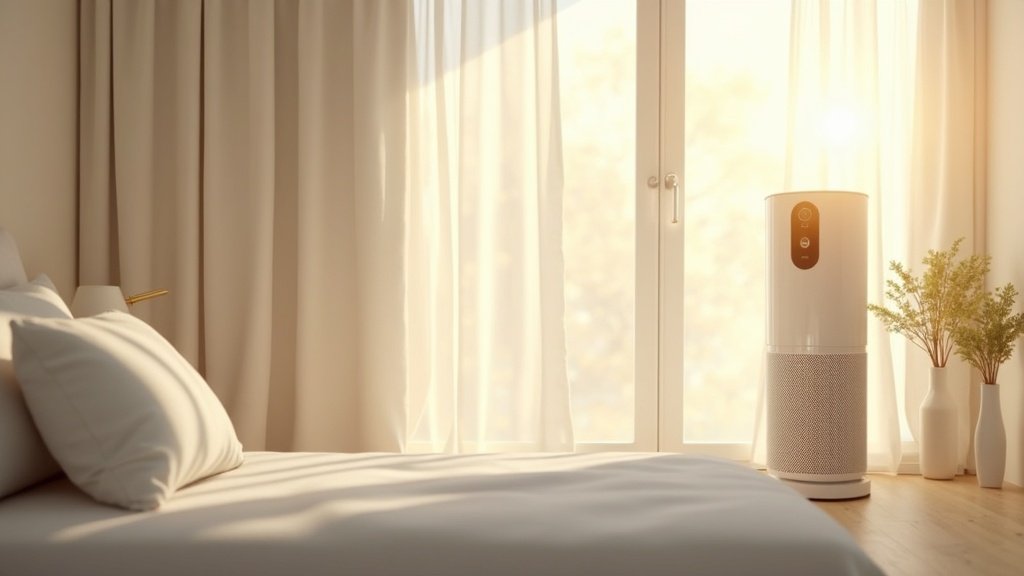
A bedroom purifier has a different job from a living room purifier. It needs to be quiet enough to run while you sleep, bright enough to control easily but not bright enough to disturb the room, and compact enough to sit near the bed without blocking airflow. The best purifier is the one you actually leave running every night.
For allergies, placement matters. Put the purifier where air can move freely around the intake and outlet, not squeezed behind a nightstand or curtain. If you are buying for sleep, check the lowest fan setting, display-off mode, and replacement filter price. A strong purifier that is too loud at night usually ends up turned off, which defeats the point.
Setup Tips
- Run it for several hours before bedtime during pollen season.
- Keep doors and windows mostly closed while filtering.
- Vacuum and wash bedding regularly so the purifier is not doing all the work.
Smoke season is here. These are the purifiers we tested for wildfire particle removal →
🧮 Free tools to help you decide
Frequently Asked Questions
What is the best overall air purifier for a bedroom?
The guide names the Levoit Core 300 as its best overall bedroom pick at around $100. It has a 3-stage HEPA filter, covers about 219 sq ft, runs at 24 dB in sleep mode, and has a light you can dim or turn off, which suits nighttime use.
How quiet should a bedroom air purifier be?
Quietness is the guide’s top priority for bedrooms, since it says noise dominates usability and that half the purifiers people buy end up unplugged in a closet within a month. It highlights low-noise options like the Levoit Core 300’s 24 dB sleep mode and advises checking the lowest fan setting and display-off mode before buying.
Which bedroom purifier offers the best value for a larger room?
The Coway AP-1512HH is called the best value at around $200 and covers roughly 361 sq ft, more than the other picks. It pairs a HEPA and activated-carbon filter with an eco mode, making it suitable for bigger bedrooms.
Where should I place an air purifier in my bedroom?
The guide advises placing the unit away from curtains and furniture so airflow around the intake and outlet stays unobstructed. It also recommends matching the unit’s size to your actual room dimensions, noting oversized units run quieter at lower speeds, and keeping doors and windows closed while running it.
If smoke season affects your area, see our wildfire smoke air purifier guide — smoke particles are far smaller than household dust, so filtration and CADR matter more than usual.