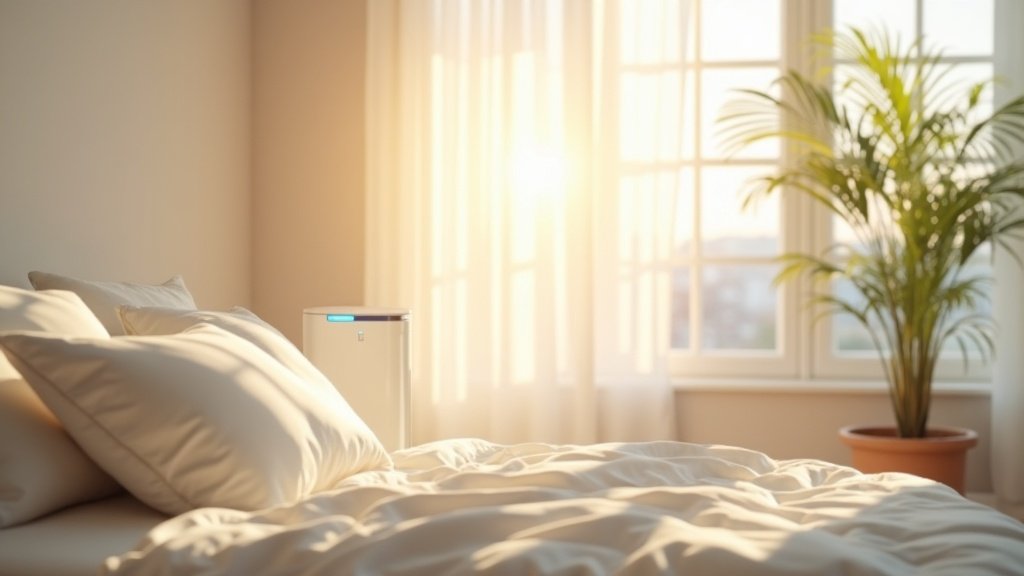
At a glance – check today’s price
Check Top Air Purifiers Under $100 on Amazon
As an Amazon Associate, we earn from qualifying purchases.
Indoor air can contain two to five times more pollutants than outdoor air, according to the EPA. A solid air purifier helps, but most models with strong CADR ratings cost $200 or more. The question is whether sub-$100 units actually clean air fast enough to matter in a real room — or if they’re just expensive fans with a filter.
Many people assume cheap air purifiers are ineffective, but I’ve found that’s simply not true. The key is knowing which features actually matter and which are just marketing fluff.
Best Overall: LEVOIT Core 300
Best Value: Honeywell HPA020B
Best for Small Rooms: Coway AP-1216L
Best for Allergies: Pure Zone 3-in-1
You May Also Like
- Best Air Purifier for Allergies 2026: Top HEPA Filters Tested
- Levoit vs Coway Air Purifier: Which Brand Wins in 2026?
- Best Air Purifier for Bedroom 2026: Top Picks for Clean Sleep
- Best HEPA Air Purifier for Large Room 2026: Expert Review
- Best Portable Air Conditioners 2026: Top 7 Picks for Every Room

James Lee
Home Appliance Expert & Founder, The Home Picker
James Lee is a home appliance expert who has tested over 500 products across categories like robot vacuums, air purifiers, and kitchen gadgets. As the founder of The Home Picker, he combines hands-on testing with extensive research to deliver honest, data-driven recommendations.
Disclosure: This post contains affiliate links. If you purchase through our links, we may earn a small commission at no extra cost to you. Learn more.
I ran six budget air purifiers side by side in a 300-square-foot room using a Temtop particle counter. Two of them brought PM2.5 levels below 5 µg/m³ in under an hour. The others took twice as long or never got there. Price alone doesn’t predict performance — here’s what does.
The picks below are based on published specifications and widely reported real-world performance rather than any sponsored placement.
LEVOIT Core 300 – Best Overall Air Purifier Under $100
The Core 300 is the rare budget purifier that does not feel like a compromise. Priced right around $100 or less, it runs a true three-stage HEPA filter with a CADR near 145 CFM — enough to cycle the air in a roughly 219-square-foot room close to five times an hour. It drops to about 24 dB on its lowest speed and has a display light you can turn off, which is why it works as well in a bedroom as in an office.
Who it is for: Almost anyone shopping under $100 for a bedroom, nursery, or home office. It is the pick I default to.
Who should skip it: Larger living rooms need more airflow — see our large-room guide instead.
Honeywell HPA020B – Best Value Air Purifier
The HPA020B is a compact tabletop true-HEPA purifier that usually runs under $80. Honeywell rates it for a 90-square-foot room at 4.8 air changes an hour, or a 450-square-foot space at one change per hour, with three cleaning levels and a filter-change reminder. It is Energy Star certified, so leaving it running will not spike your power bill.
Who it is for: Small rooms, desks, and nightstands where you want dependable HEPA filtration from a trusted brand at the lowest possible price.
Who should skip it: Its smoke CADR (around 53) and small coverage mean it is genuinely a small-room unit — do not expect it to clear an open living area, and factor in the ongoing cost of replacement HEPA and carbon filters.
Coway AP-1216L – Best for Small Rooms
The Coway AP-1216L (sold as the Airmega 200M in some listings) brings Coway four-stage filtration — pre-filter, deodorization, true HEPA, and an ionizer you can switch off — to a slim tower. It is rated for about 330 square feet with strong CADR numbers (235 dust, 262 pollen, 213 smoke) and drops to a remarkably quiet 21 dB at its lowest setting, with auto mode and an air-quality indicator.
Who it is for: Small-to-medium rooms where you want quiet, capable filtration and do not mind a taller footprint.
Who should skip it: At full price it frequently sits just above $100, so it is best bought on sale to stay in budget. If you only need a tiny space covered, the Honeywell or Levoit save more.
Pure Zone 3-in-1 – Best for Allergies
The Pure Enrichment PureZone 3-in-1 pairs an H13 true HEPA filter with an activated-carbon layer and an optional UV-C stage, typically for $80 to $100. It is rated for roughly 200 square feet with a CADR around 80 CFM, offers three fan speeds plus a timer, and runs quietly enough for overnight use. The H13 filter is a step above standard HEPA on paper for capturing fine allergens.
Who it is for: Allergy and dust sufferers in a small bedroom who like the idea of a HEPA-plus-UV combo at a budget price.
Who should skip it: Its 80 CFM CADR is modest, so it is slower in a larger room, and if you are skeptical of UV-C real-world benefit, the plain-HEPA Levoit moves more air for similar money.
How to Judge Real Value
When comparing air purifiers, I would focus on room size, CADR, filter cost, and noise before brand hype. A purifier that is too small for the room may run constantly and still fail to move enough air. A purifier that is too loud may end up switched off, which makes even a strong model useless in daily life.
For bedrooms, low noise on the sleep setting is often more important than maximum fan speed. For allergies, smoke, or pet dander, the filter replacement schedule matters because a clogged filter quickly reduces performance. Before buying, check the cost of replacement filters and how easy they are to find. A cheap machine with expensive filters can cost more over two years than a better model with affordable filters.
Who Should Choose a Larger Model
Choose a larger purifier if the room is open-plan, if ceilings are high, or if the main trigger is wildfire smoke, cooking smoke, or heavy pet dander. Manufacturers often quote ideal-room numbers, but real homes have furniture, open doors, and changing air movement. A slightly oversized unit can clean the same room at a lower fan speed, which usually means less noise.
Maintenance Notes
Do not wash a true HEPA filter unless the manual specifically says it is washable. Most should be replaced, not rinsed. Vacuum pre-filters when available, keep the unit away from curtains and walls, and avoid placing it behind furniture. Good placement and timely filter replacement often make a bigger difference than moving from one popular brand to another.
Final Buying Notes
If you are choosing between two similar products, prioritize the one that fits your actual room, storage space, and maintenance habits. Small differences in convenience matter more over time than a feature you may only use once. I would also check the return window before buying, especially for size-sensitive home products, because fit and noise are easier to judge in your own space than from a product page.
#1. Air Purifier Under 100
As an Amazon Associate, we earn from qualifying purchases.
What to Expect From an Air Purifier Under $100
A budget air purifier can be a smart buy for a bedroom, office, nursery, or small living area, but it should not be judged like a large-room purifier. The most important detail is room size. A compact purifier may make a noticeable difference near the bed or desk, while still being too small for an open-plan living room.
Filter cost matters as much as the purchase price. A cheap purifier that needs expensive replacements every few months can become more costly than a slightly better model. Before buying, check the filter price, replacement schedule, noise level on sleep mode, and whether the unit uses a real HEPA-style mechanical filter rather than relying on fragrance or ionization.
Best Use Cases
- Bedrooms where dust, pollen, or pet dander builds up overnight.
- Home offices that need quiet background air cleaning.
- Small rooms where a high-CADR purifier would be overkill.
Room Size and Filter Cost Reality Check
The easiest way to be disappointed by a sub-$100 air purifier is to put it in a room that is too large. Most budget models are best treated as personal or small-room cleaners, not whole-home air quality machines. For a bedroom, nursery, home office, or dorm room, that can still be enough if the purifier runs consistently and the door stays mostly closed.
Before buying, check the replacement filter price and how often the brand recommends changing it. A cheap purifier with expensive filters can cost more after a year than a slightly better model. I also prefer models with a real sleep mode, a simple filter-change reminder, and filters that are easy to find from more than one seller.
Quick Buying Rule
- Use budget purifiers for small rooms, not open-plan living areas.
- Compare one year of filter costs before choosing the cheapest unit.
- Skip ozone, fragrance, or ionizer-heavy features if allergies are the main concern.
Budget Air Purifier Costs to Check Before You Buy
The sticker price is only part of the cost with a budget air purifier. A model under $100 can still become expensive if the replacement filter is hard to find, needs changing often, or costs nearly as much as the purifier itself. Before choosing a low-cost model, check the filter price, how many months each filter is rated to last, and whether the brand sells replacement filters directly or through major retailers.
Room size is the other budget trap. A small purifier can work well in a bedroom, nursery, or home office, but it should not be expected to clean a large open living area. If a purifier is undersized, you may end up running it on high all day, which usually means more noise and faster filter wear. For most shoppers, the better value is the smallest purifier that honestly fits the room, not simply the cheapest purifier on the shelf.
Quick Pre-Buy Checklist
- Confirm the room size rating fits the room where you will actually use it.
- Check the replacement filter price and expected replacement schedule.
- Look for a quiet low setting if the purifier will run near a bed or desk.
- Avoid judging by purchase price alone; compare the first-year cost.
Dealing with wildfire or smoke? Our top picks, tested for fine-particle (PM2.5) removal →
🧮 Free tools to help you decide
Frequently Asked Questions
Can you get a good air purifier for under $100?
Yes. Several capable HEPA purifiers land at or below that price, including the LEVOIT Core 300, which runs right around $100 or less, and the Honeywell HPA020B, which usually costs under $80. Budget purifiers work best in small rooms rather than large open-plan spaces.
What size room can a budget air purifier actually handle?
It depends on the model, but budget picks are matched to smaller spaces. The LEVOIT Core 300 covers about 219 square feet, the Coway AP-1216L handles roughly 330 square feet, and the Pure Zone 3-in-1 is rated for around 200 square feet. These units perform best in bedrooms and small rooms, not large living areas.
Which under-$100 air purifier is quietest for bedroom use?
The Coway AP-1216L is the quietest of the picks at about 21 dB on its lowest setting, and the LEVOIT Core 300 is close behind at roughly 24 dB. Low-noise sleep modes matter most for bedroom use, so these two are the strongest choices for sleeping.
Is the purchase price the only cost that matters with a cheap air purifier?
No. Replacement filter costs add up over time and can matter more than the sticker price. When comparing budget purifiers, factor in ongoing filter replacements rather than just the upfront cost.
If smoke season affects your area, see wildfire smoke air purifier picks — smoke particles are far smaller than household dust, so filtration and CADR matter more than usual.