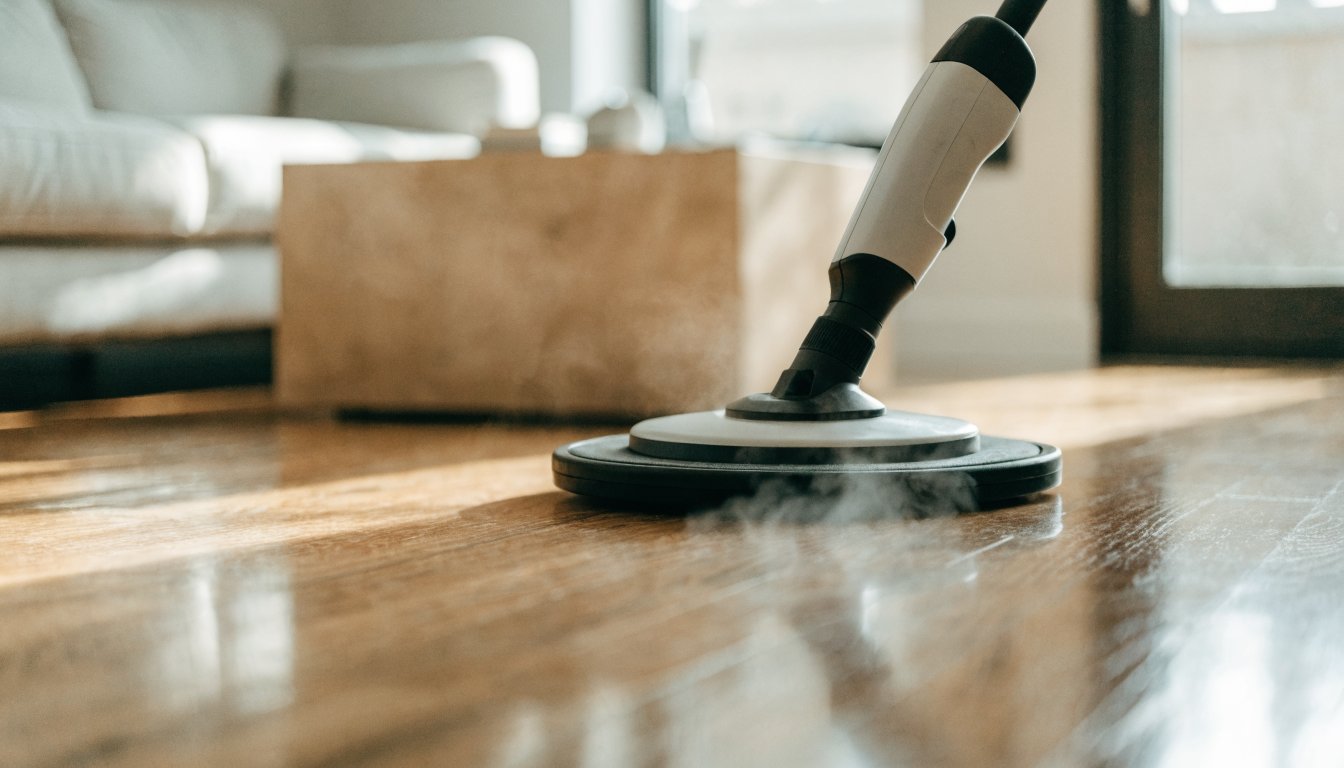
Quick answer: The best steam mop for most people in 2026 is the Bissell PowerFresh Steam Mop (1940) — variable steam control, a flip-down scrubber for stuck-on messes, a ~30-second heat-up, and a long 23-ft cord at a fair price. On a tight budget, the ultra-light O-Cedar Microfiber Steam Mop heats in ~20 seconds; to skip sweeping first, the Bissell Vac & Steam vacuums and steams in one pass; and for hands-off premium cleaning the cordless Tineco Floor One S7 Steam washes, vacuums, and steams at once. One rule first: only steam sealed hard floors.
A steam mop is one of the most satisfying cleaning upgrades you can buy: it lifts sticky spills and sanitizes sealed floors with nothing but hot water — no bucket, no chemical residue, no sticky film. But it is also the tool people most often use on the wrong floor and regret it. This guide covers which floors a steam mop is actually safe on, the different types, what matters when you shop, and seven current models from about $40 to $600 for every home and budget.
As an Amazon Associate, we earn from qualifying purchases. This doesn’t affect which products we recommend.
Which floors are safe for a steam mop?
This is the section to read before you buy anything. A steam mop pushes hot vapor into the floor, and the golden rule is simple: if standing water would damage the floor, so will steam.
Generally safe — when the floor is properly sealed:
- Ceramic and porcelain tile — the ideal steam-mop surface.
- Sealed natural stone (granite, sealed marble), if the sealant is intact.
- Linoleum and quality sealed vinyl / luxury vinyl — use lower steam and keep moving.
- Sealed hardwood — allowed by most steam-mop makers, but with real caveats (below).
Avoid or treat with caution:
- Unsealed, waxed, or oiled hardwood — steam penetrates the wood and can cause cupping, warping, or strip the finish. Many hardwood warranties are voided by steam, so check your floor’s warranty first.
- Laminate — the biggest gray area. Its fiberboard core swells if moisture reaches the seams. Only steam laminate if both the floor and the mop explicitly allow it, on the lowest setting, never dwelling in one spot.
- Unsealed stone or marble, cork, bamboo, unglazed tile, painted floors, and any water-damaged or lifting flooring.
- Carpet — a steam mop is not a carpet cleaner. A “carpet glider” accessory only refreshes low-pile carpet; it does not extract dirt. For real carpet stains, see our guide to the best carpet cleaners.
When in doubt, test an inconspicuous corner and keep the mop gliding.
Types of steam mop
- Basic upright steam mop — a lightweight corded stick with a pad head and small tank; fast to heat, cheap, perfect for quick maintenance on sealed floors.
- Steam + vacuum combo — vacuums debris and steams in one pass, so you skip sweeping first. Heavier and pricier.
- Steam mop with rotating scrub pads — adds mechanical scrubbing for stuck-on grime.
- Cordless all-in-one floor washer with steam — the premium category: vacuums, washes with fresh water, steams, and self-cleans. Heaviest and most expensive, but closest to one-and-done.
- Multi-purpose steam cleaner — a pressurized canister with attachments for floors, grout, upholstery, and more; overlaps with mops but does far more.
What matters when choosing a steam mop?
- Heat-up time — budget uprights are fastest (~20–30 seconds); pressurized steam cleaners take several minutes to build pressure.
- Steam control — variable low/medium/high lets you dial down for delicate sealed floors and up for grimy tile.
- Mop pad system — look for washable, reusable microfiber pads; double-sided or rotating pads add cleaning power.
- Maneuverability and weight — swivel steering and a 4–6 lb body reduce fatigue.
- Tank size and cord length — bigger tank and longer cord mean fewer refills and outlet swaps.
- Scrubbing ability — flip-down scrubbers and rotating pads beat a flat pad on dried spills and grout.
The best steam mops of 2026
Bissell PowerFresh Steam Mop 1940 — Best overall value
The PowerFresh 1940 is the steam mop most worth buying for most homes. Its SmartSet dial gives you genuine low/medium/high steam control, a flip-down Easy Scrubber tackles stuck-on messes, it heats in about 30 seconds, and the ~23-foot cord reaches across a room without unplugging. At roughly $88–115 (approx, as of 2026, subject to change) it’s the value-and-performance benchmark. It’s corded and you’ll sweep first, but nothing at the price does the basics better.
Best for: most people with sealed tile, hardwood, vinyl, or laminate who want one reliable mop.
Shark Steam Pocket Mop S3501 — Best for tight spaces
Light (~4.9 lb) and nimble, the Steam Pocket Mop shines in apartments and cramped kitchens. Its standout feature is a double-sided washable pad — flip to a fresh face mid-clean instead of stopping to swap — plus an XL tank for the class and ~30-second steam (approximately $80–100). It has fewer distinct steam levels than the Bissell’s dial and no scrubber flap, but for quick, agile sealed-floor cleaning it’s excellent.
Best for: apartments, tight kitchens, and anyone who likes a fresh pad mid-clean.
O-Cedar Microfiber Steam Mop — Best budget and lightest
Usually the least expensive steam mop on the market (about $40–50), the O-Cedar is also the lightest (~5 lb) and fastest to heat (~20 seconds). It keeps things simple: adjustable steam, a Velcro-attach washable microfiber pad, and near-instant readiness. The small tank means more frequent refills and there’s no built-in scrubber, but as a first steam mop or a grab-and-go second unit, it’s hard to beat.
Best for: budget buyers, small homes, or a lightweight backup mop.
Buying note (August 2026): the Amazon button that used to sit here pointed at a six-pack of refill pads rather than the O-Cedar Microfiber Steam Mop itself. We could not confirm a current Amazon product page for the O-Cedar Microfiber Steam Mop, so the button has been removed rather than send you to the wrong item — the other picks in this guide all link to products you can order today.
Bissell PowerFresh Vac & Steam 2747A — Best vacuum + steam combo
The two-step “sweep, then mop” routine is the main friction of steam mopping, and the Vac & Steam eliminates it by vacuuming debris and steaming in the same pass. It has digital steam controls and handles everyday debris plus sticky spots well (approximately $180–200). It’s heavier (~10 lb) than a basic upright and the dust bin is small, but for busy kitchens it saves a genuine step. Prefer to keep tools separate? Pair a cordless stick vacuum with a dedicated mop instead.
Best for: people who hate sweeping before they mop.
Shark Steam & Scrub S7001 — Best for stuck-on messes
Where flat-pad mops just glide over dried spills, the Steam & Scrub uses two rotating “Dirt Grip” scrub pads to actively work grime loose, with three steam modes and LED headlights that reveal debris (approximately $150–200, price varies). It comes with four washable pads. The tank is small and it costs more than a basic mop, but for pet messes and textured sealed tile the scrubbing action is a real upgrade.
Best for: homes with dried-on spills, pet messes, or textured sealed tile.
Tineco Floor One S7 Steam — Best premium cordless all-in-one
The S7 Steam is the closest thing to one-and-done floor care: cordless, it vacuums grit, washes with fresh water, and steams all at once, using separate clean and dirty tanks so you never mop with dirty water, then self-cleans its own roller. An iLoop sensor auto-adjusts suction and water to how dirty the floor is (approximately $599). It’s expensive and heavy (~13.5 lb) with more upkeep, but for larger homes wanting premium, low-effort cleaning it delivers. The newer S7 Stretch Steam adds hotter steam, bigger tanks, longer runtime, and a lay-flat design that reaches under furniture if the budget stretches.
Best for: larger homes that want premium, low-effort sealed-floor cleaning.
Dupray Neat — Best multi-purpose steam cleaner
Not a dedicated mop but often cross-shopped with them, the Dupray Neat is a pressurized steam cleaner that does floors and grout, tile, bathrooms, appliances, and upholstery with a 17-piece accessory kit. Its big 54-oz tank runs a long time and it hits high sanitizing temperatures with water only (about $180). It takes ~8 minutes to heat and uses a canister-and-hose format, so it’s overkill if you only mop floors — but it’s the pick if you want one tool for whole-home steam cleaning.
Best for: buyers who want whole-home steam cleaning, not just floor mopping.
Common mistakes and safety
- Never steam unsealed, waxed, or oiled wood — moisture can warp, cup, or strip it, and may void the floor’s warranty.
- Be extra careful with laminate — only steam it if both the floor and the mop allow it, on the lowest setting.
- Don’t over-wet or let the mop dwell — sitting steam forces water into seams and grout. Keep the head moving.
- Use only water (distilled if you have hard water) — don’t add cleaners, vinegar, or essential oils unless the manual allows it; additives clog the boiler and void warranties.
- Always use a clean, dry pad — a dirty pad just smears grime. Wash pads after each use, no fabric softener.
- Sweep or vacuum first — grit scratches and clogs the pad. A robot vacuum for hard floors can handle the daily debris pass so your mop just sanitizes.
- Empty the tank after use to prevent mineral buildup and odor.
Frequently asked questions
Can you steam mop hardwood floors?
Only if the hardwood is fully sealed and the floor manufacturer allows steam — many don’t and will void the warranty. Use the lowest steam setting, a barely damp pad, and keep moving. Never steam unsealed, waxed, oiled, cupping, or gapped wood, because moisture can permanently warp it.
Steam mop vs. regular mop — which is better?
A steam mop sanitizes with heat and no chemicals, dries faster, and cuts sticky messes better than a cold mop. A regular mop is cheaper, works on more surfaces (including floors that can’t take heat), and handles big liquid spills better. Many people keep both.
Do steam mops actually sanitize?
At high enough temperature, yes — most mainstream models advertise eliminating up to 99.9% of common household bacteria using only water, when used as directed. It’s sanitizing, not medical sterilization, and results depend on dwell time and surface.
Are steam mops safe on laminate and vinyl?
Cautiously. Quality sealed vinyl usually tolerates low steam if you keep moving. Laminate is riskier because its fiberboard core swells if moisture reaches the seams — only steam it if both the floor and the mop explicitly allow it, on the lowest setting.
How long does a steam mop take to heat up?
Basic uprights are fast: about 20 seconds for the O-Cedar and around 30 seconds for the Bissell PowerFresh and Shark Steam Pocket. Pressurized steam cleaners like the Dupray Neat take longer (~8 minutes) because they build steam pressure.
Do I need distilled water?
Tap water works in most models, but if you have hard water, distilled water reduces mineral scale and prolongs the mop’s life. Don’t add cleaners or oils unless the manual specifically permits it.
Are the mop pads washable?
Yes — the microfiber pads on these picks are washable and reusable. Machine wash without fabric softener and air- or low-heat dry, and replace them when matted. Buy a spare set so a clean, dry pad is always ready.
Should I sweep or vacuum before steam mopping?
Yes. Steam mops clean but don’t pick up loose debris, and grit can scratch and clog the pad. To skip that step, choose a vacuum-and-steam combo like the Bissell Vac & Steam or a cordless all-in-one like the Tineco Floor One S7 Steam.
The bottom line
For most homes the Bissell PowerFresh 1940 is the steam mop to buy — effective, controllable, and fairly priced. Go with the O-Cedar to spend the least, the Bissell Vac & Steam to skip sweeping, the Shark Steam & Scrub for stuck-on grime, or the Tineco S7 Steam for premium hands-off cleaning. Whatever you choose, confirm your floors are sealed and keep the mop moving. Next, pair it with the right vacuum — see our guides to the best cordless vacuums and the best steam cleaners under $100.
Also worth comparing: best wet/dry vacuum mops and best carpet cleaners.