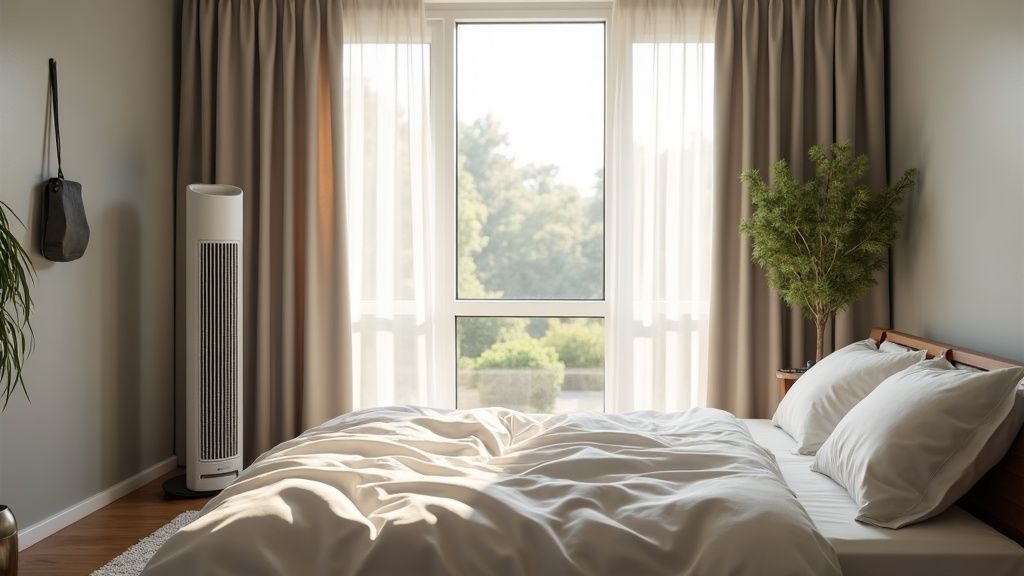
Heat rises. You learned this in fifth-grade science and then forgot about it until the first real July night, when your downstairs is a pleasant 74°F and your upstairs bedroom is doing a slow impression of a pizza oven. That’s not your imagination — it’s physics, ductwork, and a roof that’s been soaking up sun all day, all conspiring to make the one room you sleep in the hottest room in the house.
And if you rent? Good luck. Your landlord hears “window AC unit” and reacts like you asked to knock out a load-bearing wall. So you’re stuck sweating through the sheets, flipping the pillow to the cool side every four minutes like it’s a part-time job. I’ve been there. The good news: you can drop an upstairs bedroom by several degrees without central AC, without a window unit, and without a security-deposit-endangering renovation. Here are the 12 gadgets and tricks that actually move the needle — grouped so you can build the exact stack your room (and your lease) allows.
Quick answer: the four biggest wins
The biggest wins are moving air (a good tower or high-velocity fan), blocking daytime sun (blackout curtains), running a portable AC or evaporative cooler where a window unit won’t fit, and reversing your ceiling fan to summer mode. Do those four and most upstairs bedrooms drop several degrees. Everything below is how to do each one right.
Tower fans on Amazon · Portable ACs · Blackout curtains
As an Amazon Associate, we earn from qualifying purchases.
Move the Air (Cheap, Fast, Renter-Proof)
Moving air is the single cheapest way to feel cooler tonight. Fans don’t lower the room’s temperature — they lower your temperature by speeding up sweat evaporation and breaking up the stagnant hot layer that pools around your bed. Start here before you spend real money.
1. A good tower fan
A tower fan is the workhorse of a hot bedroom: tall, narrow footprint, oscillates to cover the whole bed, and the good ones are quiet enough to sleep through. Look for one with a genuine sleep mode (dims the display — those blue LEDs are their own kind of enemy at 2 a.m.) and a timer. Place it a few feet from the bed, angled across your body, not blasting your face all night. This is the first thing I’d buy for any stuffy upstairs room.
Move air where it matters
Check quiet tower fans on Amazon
As an Amazon Associate, we earn from qualifying purchases.
2. A high-velocity air circulator
Different tool, different job. Where a tower fan gently oscillates, an air circulator (think the classic Vornado-style units) throws a tight, focused column of air clear across the room and keeps the whole space churning. This is what you want if your bedroom has that dead, heavy, doesn’t-matter-how-many-fans-I-own stillness. One circulator pointed to bounce air off the far wall can make an upstairs room feel like it finally has a pulse. Louder than a tower fan, so it’s better for evening cool-down than all-night sleeping — though many people love the white noise.
For rooms with dead, stagnant air
Check air circulator fans on Amazon
As an Amazon Associate, we earn from qualifying purchases.
3. Reverse your ceiling fan to summer mode
Free. Costs nothing. And a lot of people are running their ceiling fan backwards without realizing it. In summer, a ceiling fan should spin counter-clockwise (looking up) so it pushes air straight down and creates a wind-chill effect on your skin. There’s a little switch on the motor housing — flip it, stand under the fan, and you should feel a clear downdraft. If you feel almost nothing, it’s in winter mode. One caveat worth repeating: fans cool people, not rooms, so turn it off when you leave. Running it in an empty room just makes the motor warm and your electric bill sad.
4. The box-fan-in-window exhaust trick
This is the move nobody teaches you, and it’s the best free upgrade for hot summer nights. Once the outside air drops below your indoor temperature (usually late evening), put a box fan in the upstairs window facing outward so it blows the hot inside air out. Crack a window on the opposite side or downstairs, and you create a cross-breeze that actively dumps the day’s trapped heat and pulls cooler night air through the house. Reverse it at dawn and shut everything before the heat returns. Do this nightly and you’re basically giving your house a set of lungs.
The classic night-flush tool
As an Amazon Associate, we earn from qualifying purchases.
Actually Cool the Air (When Fans Aren’t Enough)
Fans have a ceiling. When the air itself is 85°F, moving 85°F air just gives you a warm hair dryer. That’s when you need something that removes heat or adds cooling — and yes, there are renter-friendly options that never touch a window frame permanently.
5. A portable AC (the renter’s window-unit workaround)
This is the big one for anyone whose lease says no to window units. A portable AC sits on the floor and vents hot air out through a flexible hose and a window-bracket kit that installs and removes in minutes with zero permanent modification. It’s the closest thing to real air conditioning you can put in a room without your landlord’s blessing. Buy for the room size — an oversized unit short-cycles and leaves the air clammy, an undersized one runs forever. Single-hose models are cheaper; dual-hose models cool more efficiently in a genuinely hot upstairs room. Not silent, but sleeping in 72°F with a hum beats a silent 84°F.
Real cooling, no permanent install
As an Amazon Associate, we earn from qualifying purchases.
6. An evaporative (swamp) cooler — for dry climates only
Read that subhead twice, because it’s the whole story. An evaporative cooler pulls air through a wet pad and cools it by evaporation — cheap to run, no exhaust hose, no window kit. In Phoenix, Denver, or anywhere the summer air is dry, it’s magic and sips electricity. In Houston or Miami, where the air is already a wet towel, it does approximately nothing except add humidity and disappointment. Rule of thumb: if your local afternoon humidity is regularly below ~50%, a swamp cooler is a brilliant, low-cost pick. Above that, skip it and get the portable AC.
Low-cost cooling for dry air
Check evaporative coolers on Amazon
As an Amazon Associate, we earn from qualifying purchases.
7. A personal / desk cooler for your side of the bed
Sometimes you don’t need to cool the room — you need to cool the three feet around your head. Small personal evaporative coolers and misting desk fans park on the nightstand and create a cool micro-zone right where you sleep. They’re not going to chill a whole bedroom, and that’s fine; the point is targeted comfort at a fraction of a portable AC’s running cost. Great for a renter on a tight budget or as a supplement to a fan.
Block the Heat Before It Gets In
Here’s what most people get backwards: the cheapest cooling is the heat you never let inside. An upstairs window in direct afternoon sun acts like a magnifying glass on your bed. Stop the sun and you’re fighting a much smaller battle at night.
8. Blackout / thermal curtains
The single best dollar-for-degree upgrade in this whole guide. Thermal blackout curtains have a dense, often foam-backed weave that blocks sunlight and insulates against radiant heat. Close them on west- and south-facing windows during the hottest part of the day and you can keep a startling amount of heat from ever entering the room — people routinely report several degrees of difference. Bonus: they make the room darker for sleep and add a little sound dampening. Get them wide and long enough to overlap the window frame; gaps at the edges leak heat and light.
Best dollar-for-degree fix in this guide
Check thermal blackout curtains on Amazon
As an Amazon Associate, we earn from qualifying purchases.
9. Reflective window film
For the windows that turn your room into a greenhouse, heat-control window film is the next level. It’s a thin static-cling or adhesive layer that reflects a big chunk of the sun’s infrared heat back outside while still letting some light through. Renter-friendly versions peel off cleanly when you move. It’s a one-time afternoon project per window, and on a brutal west-facing bedroom it pairs beautifully with blackout curtains — film reflects the heat, curtains block what’s left.
Reflect the sun off hot-facing windows
As an Amazon Associate, we earn from qualifying purchases.
10. Door strategy: close off the heat
Free, and everyone ignores it. Whichever room you’re actively cooling, keep its door closed so your fan or portable AC isn’t fighting the entire second floor. Meanwhile, close the doors to unused upstairs rooms that bake all day — that traps their heat in there instead of letting it bleed into the hallway and your bedroom. A cheap under-door draft stopper on the cooled room seals the deal, keeping the cool air in and the hot hallway air out. Small moves, real degrees.
Sleep Cooler From the Mattress Up
You can lose the temperature war and still win the sleep war. A big part of “I’m too hot to sleep” is heat trapped between you and your mattress, not the room’s air temperature. Attack it directly.
11. A cooling mattress topper & breathable bedding
Memory foam sleeps hot — it hugs you and holds every calorie of body heat like a clingy ex. A cooling mattress topper (gel-infused foam, or better yet a breathable design) plus moisture-wicking sheets pulls heat away from your body instead of banking it. This is the trick that lets people in genuinely hot upstairs rooms sleep comfortably even when the air is still warm. Swap heavy flannel and high-thread-count cotton for lightweight percale, bamboo, or linen and you’ll feel the difference the first night.
Stop your mattress from banking body heat
Check cooling mattress toppers on Amazon
As an Amazon Associate, we earn from qualifying purchases.
12. A smart thermostat schedule (if you have any central air at all)
If your home has central AC that just can’t push enough cold upstairs, a smart thermostat is the multiplier. Schedule it to pre-cool the house in the late afternoon before the upstairs peaks, so you’re not asking the system to claw back a 6-degree deficit at bedtime. Some setups let you add remote room sensors so the thermostat balances toward the hot bedroom instead of the already-cool living room. It’s the same idea as the box-fan night flush — cool early, coast through the peak. For picking one that plays nicely with the rest of your gear, see our smart home buying guide for 2026, and if you’re building out a connected setup, our best smart home hub guide covers what ties it all together.
Portable AC vs. Evaporative Cooler vs. Tower Fan: Which One?
Three very different tools, three very different jobs. Here’s the honest comparison so you buy the right one the first time.
| Factor | Portable AC | Evaporative Cooler | Tower Fan |
|---|---|---|---|
| Upfront cost | $$$ (highest) | $$ (mid) | $ (lowest) |
| Best climate | Any — humid or dry | Dry only (<~50% humidity) | Any (comfort, not cooling) |
| Install effort | Window hose kit (removable) | Fill water tank, plug in | Unbox and plug in |
| Actually lowers air temp? | Yes, significantly | Yes, in dry air | No — cools your skin only |
| Noise | Moderate (compressor hum) | Low–moderate | Low (sleep-friendly) |
| Running cost | Highest | Low | Lowest (pennies) |
| Renter-friendly? | Yes — no permanent install | Yes | Yes |
Quick verdict: Humid climate and you need real cooling → portable AC. Dry climate and want low running cost → evaporative cooler. Tight budget or just need to take the edge off → tower fan, and stack it with blackout curtains.
Renter-Friendly Callout: No Window Units Allowed? Here’s Your Stack
If your lease bans window ACs and you can’t modify a thing, don’t despair — you have a full toolkit that leaves zero marks:
- Cool the air: a portable AC (see above) vents through a removable window bracket — the landlord-approved end-run around the window-unit ban.
- Block the sun: peel-and-stick window film and tension-rod blackout curtains both come off clean at move-out.
- Move air & sleep cool: a tower fan, the nightly box-fan flush, a reversed ceiling fan, and a cooling topper need no permission from anyone.
Stack all three layers — block, cool, move — and a renter with no window unit can still turn a sauna of a bedroom into somewhere you’d actually choose to sleep.
👉 Want more ways to beat the heat? Read Best Cooling Gadgets for Apartments Without AC.
👉 Need real cooling power? Read Best Portable Air Conditioners 2026.
Frequently Asked Questions
Does a fan actually cool a room?
No — and this trips everyone up. A fan doesn’t lower the air temperature; it moves air across your skin to speed up sweat evaporation, which makes you feel cooler. That’s why you turn a fan off when you leave the room: cooling an empty room does nothing but run up the meter. To actually lower the air’s temperature you need a portable AC or (in dry climates) an evaporative cooler.
Portable AC vs. evaporative cooler — which is right for me?
It comes down to your climate’s humidity. Portable ACs work everywhere and genuinely lower the temperature, but cost more to buy and run. Evaporative (swamp) coolers are cheaper and sip electricity but only work in dry air — below roughly 50% humidity. Humid state? Portable AC. Dry state like Arizona, Nevada, or Colorado? An evaporative cooler will save you money.
Do blackout curtains really help with heat?
Yes, noticeably — especially thermal or foam-backed blackout curtains on windows that get direct afternoon sun. By blocking sunlight before it enters and radiates as heat, they can keep a room several degrees cooler than bare or sheer windows. For the biggest effect, close them during the hottest hours and make sure they overlap the window frame so heat can’t leak around the edges.
What’s the cheapest way to cool an upstairs bedroom?
Stack free and low-cost moves before spending big: reverse your ceiling fan to summer (counter-clockwise) mode, run the nightly box-fan-in-window flush to dump trapped heat, close doors to unused rooms, and hang blackout curtains on sunny windows. That combination costs the price of a fan and some curtains and can drop an upstairs bedroom by several degrees before you ever consider a portable AC.
Why is upstairs always hotter than downstairs?
Three reasons pile up. First, heat rises, so warm air from the whole house collects on the top floor. Second, the roof absorbs sun all day and radiates that heat down into the upstairs. Third, central AC systems struggle to push enough cold air up through the ductwork against that rising warm air. That’s why targeted fixes in the actual bedroom — blocking sun, moving air, and spot-cooling — beat just cranking a thermostat that can’t reach the room anyway.
Disclosure: As an Amazon Associate, The Home Picker earns from qualifying purchases. Product recommendations in this guide are categories and examples chosen to illustrate what works for cooling an upstairs room; we have not hands-on tested every specific model linked. Always check current specs, room-size ratings, and reviews for your space before buying. Cooling results vary with your climate, insulation, and home layout.