The Future of Lawn Care Is Here: Robot Mowers in 2026
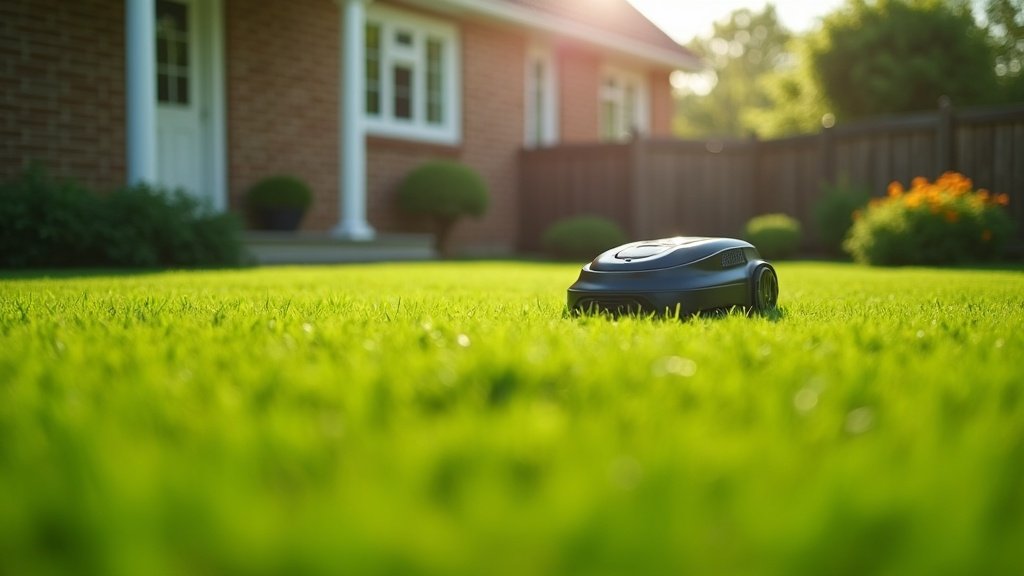
Imagine walking outside on a Saturday morning, coffee in hand, to find your lawn already perfectly trimmed. No noise, no gas, no sweat. That is the reality robot lawn mowers deliver, and the technology has matured dramatically over the past few years.
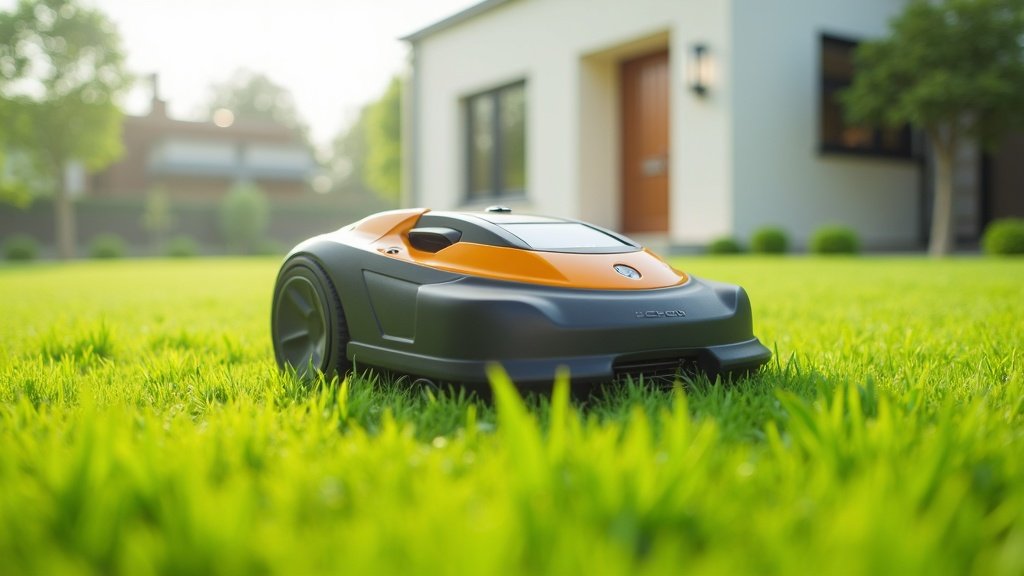
The latest generation of robotic mowers uses GPS-assisted navigation, RTK (Real-Time Kinematic) positioning, LiDAR sensors, and AI-powered obstacle avoidance to cut your lawn systematically and efficiently. Many models no longer require buried boundary wires — a major pain point that kept early adopters away. Set up a virtual boundary in an app, hit start, and let the robot handle the rest.
We spent weeks evaluating the best robot lawn mowers available in 2026, testing navigation accuracy, cut quality, app experience, noise levels, and value. Whether you have a small suburban yard or a sprawling half-acre property, there is a robot mower on this list that fits your needs.
Top 7 Robot Lawn Mowers at a Glance
| Product | Yard Size | Navigation | Wire-Free | Best For |
|---|---|---|---|---|
|
#1. Editor’s Pick |
Up to 1.25 acres | RTK + GPS | Yes | Best Overall |
|
#2. Mammotion LUBA 2 AWD |
Up to 1 acre | RTK + Vision | Yes | Best for Tough Terrain |
|
#3. EcoFlow Blade |
Up to 0.7 acres | RTK + GPS | Yes | Most Innovative |
|
#4. Worx Landroid L WR155E |
Up to 0.5 acres | AI + Boundary Wire | No | Best Value |
|
#5. Husqvarna Automower 415X NERA |
Up to 0.4 acres | RTK + GPS | Yes | Best for Medium Yards |
|
#6. Mammotion YUKA 2000 |
Up to 0.5 acres | RTK + Vision | Yes | Best Lawn Striping |
|
#7. Gardena SILENO City 250 |
Up to 2,700 sq ft | Boundary Wire | No | Best for Small Yards |
Detailed Robot Mower Reviews
1. Husqvarna Automower 450X NERA — Best Overall
Husqvarna Automower 450X NERA
#1. Husqvarna Automower 450X NERA
Husqvarna pioneered robotic mowing in the 1990s, and the 450X NERA represents the pinnacle of their three decades of refinement. This wire-free model uses EPOS (Exact Positioning Operating System) satellite navigation with RTK precision to map and mow your lawn in efficient, systematic patterns rather than random paths.
Covering up to 1.25 acres, the 450X NERA handles large properties with ease. It manages slopes up to 45 percent grade, navigates tight passages as narrow as 24 inches, and automatically adjusts cutting height based on grass growth. The NERA platform also supports virtual boundaries set entirely through the app — no buried wire installation required.
The build quality is exceptional. Weather-resistant construction handles rain, and the mower can even operate in light rain without issues. GPS tracking and a built-in alarm system provide theft protection.
Pros:
- Wire-free virtual boundary setup via EPOS technology
- Covers up to 1.25 acres — largest on our list
- Systematic mowing patterns for efficient coverage
- Handles slopes up to 45% with its pivoting-axle chassis
- GPS theft tracking and PIN code security
- Ultra-quiet operation at 58 dB — mow anytime without disturbing neighbors
Cons:
- Premium price point is the highest on our list
- EPOS reference station sold separately for RTK precision
- Professional installation recommended for optimal mapping
2. Mammotion LUBA 2 AWD — Best for Tough Terrain
Mammotion LUBA 2 AWD
#2. Mammotion LUBA 2 AWD
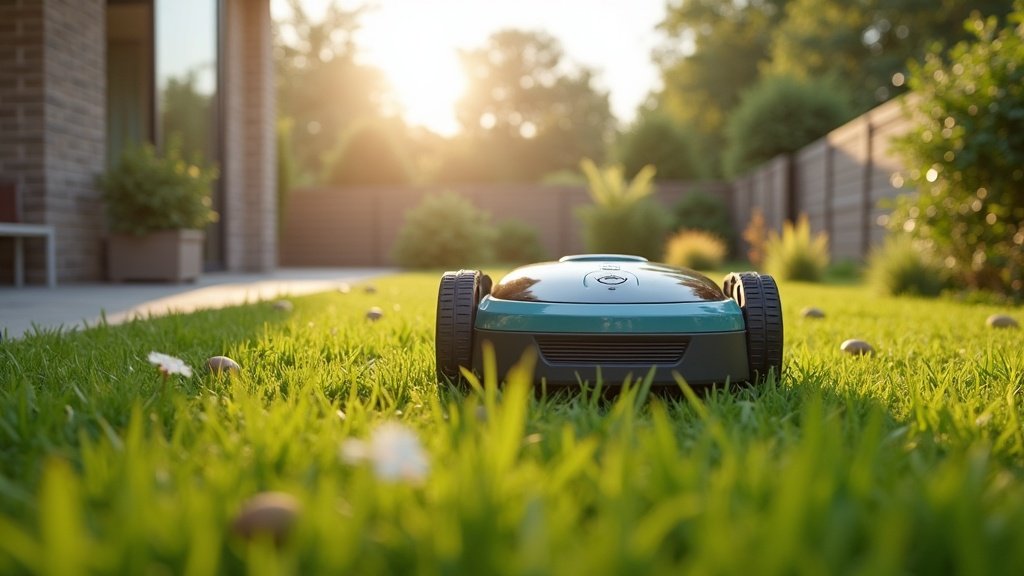
The Mammotion LUBA 2 AWD is built for yards that would challenge most robot mowers. Its all-wheel-drive system and aggressive tread tires handle slopes up to 80 percent grade (roughly 39 degrees), muddy patches, and uneven terrain with confidence. If your yard is anything but flat and manicured, this is the mower to consider.
Wire-free setup uses RTK satellite positioning combined with a vision-based obstacle avoidance system. The multi-zone management feature lets you schedule different areas of your yard to be mowed at different heights and times. The 15.7-inch dual-disc cutting width and adjustable height from about 2.2 to 4 inches accommodate various grass types.
Pros:
- All-wheel drive handles slopes up to 80% grade
- Wire-free RTK navigation with centimeter accuracy
- Multi-zone management for complex yards
- Vision-based obstacle avoidance with camera
- Covers up to 1 acre
Cons:
- Requires RTK reference station (included with some packages)
- Bulkier than competitors due to AWD system
- App can be complex for first-time setup
3. EcoFlow Blade — Most Innovative
EcoFlow Blade
#3. EcoFlow Blade
The EcoFlow Blade stands out with two unique features no other mower offers: an optional leaf-sweeping kit that collects leaves and debris as it mows, and the ability to integrate with EcoFlow’s portable power stations for extended runtime. It is a Swiss Army knife approach to lawn maintenance.
The Blade uses RTK+GPS navigation for wire-free operation, covering up to 0.7 acres. Its LiDAR and visual sensor array creates a detailed 3D map of your yard, identifying and avoiding obstacles as small as a few inches wide. The cutting deck offers a wider 10.2-inch path at heights from 0.8 to 3 inches.
Pros:
- Optional leaf-sweeping kit — unique in the market
- Advanced LiDAR + visual obstacle avoidance
- Wire-free RTK navigation
- Integrates with EcoFlow power ecosystem
- Rain sensor with automatic return to base
Cons:
- Leaf-sweeping kit sold separately at extra cost
- 0.75-acre limit may not suit larger properties
- Newer brand with less long-term track record than Husqvarna
4. Worx Landroid L WR155E — Best Value
Worx Landroid L WR155E
#4. Worx Landroid L WR155E
The Worx Landroid L offers the most accessible entry point into robot mowing without sacrificing critical features. While it uses traditional boundary wire (which requires installation around your lawn perimeter), the trade-off is a significantly lower price than wire-free competitors. For flat to moderate lawns up to half an acre, it delivers excellent results.
The AI-powered AIA (Artificial Intelligence Algorithm) navigation optimizes mowing patterns over time, learning your yard’s shape and coverage gaps. The modular design lets you add optional accessories like an anti-collision sensor, GPS module, voice assistant module, and off-road wheels as your needs grow.
Pros:
- Most affordable full-featured robot mower on our list
- Modular design with optional add-on accessories
- AI navigation improves coverage over time
- Handles slopes up to 35%
- Cut-to-edge feature mows close to boundaries
- Wi-Fi and app control with scheduling
Cons:
- Requires boundary wire installation (time-consuming setup)
- No RTK precision — some overlap and missed patches initially
- Accessories add up if you want full functionality
5. Husqvarna Automower 415X NERA — Best for Medium Yards
Husqvarna Automower 415X NERA
#5. Husqvarna Automower 415X NERA
Not everyone has or needs a mower that covers over an acre. The Automower 415X NERA brings Husqvarna’s premium wire-free EPOS technology to medium-sized yards up to 0.4 acres at a more accessible price point than the flagship 450X.
You get the same systematic mowing patterns, virtual boundary mapping, and smartphone app control. The 415X handles slopes up to 40 percent and operates quietly at 57 dB. For typical suburban lots, this is the sweet spot of capability and cost in the Husqvarna lineup.
Pros:
- Wire-free EPOS virtual boundaries
- Systematic mowing for efficient coverage
- Handles 40% slopes
- More affordable than the 450X NERA
- Same premium Husqvarna build quality
Cons:
- Limited to 0.4 acres
- Still requires EPOS reference station (additional purchase)
- Premium price compared to boundary-wire models
6. Mammotion YUKA 2000 — Best Lawn Striping
Mammotion YUKA 2000
#6. Mammotion YUKA 2000
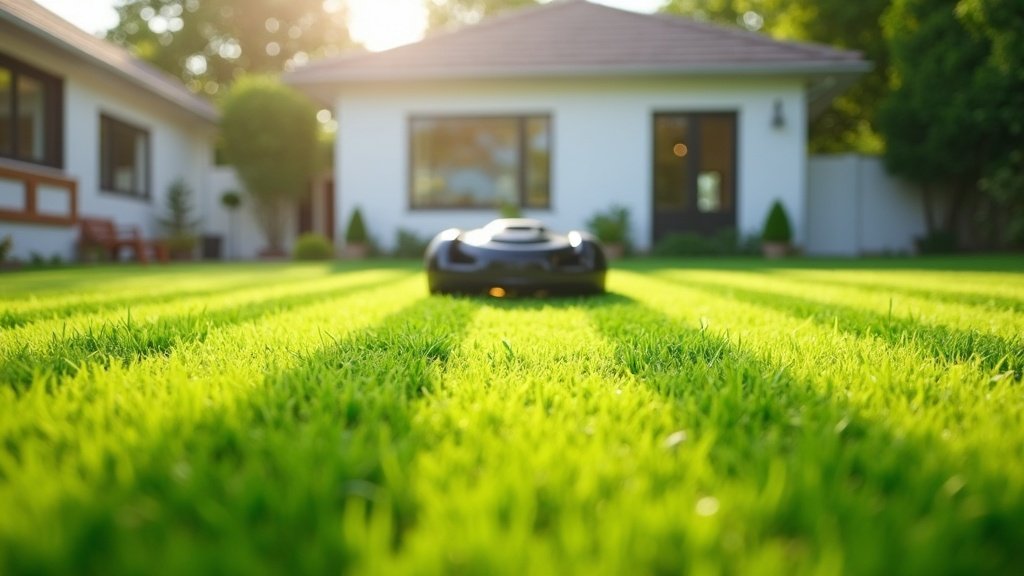
If you love the look of professional baseball-field-style stripes on your lawn, the Mammotion YUKA 2000 is the robot mower for you. Its systematic parallel mowing patterns — drawn in the app with Mammotion’s “lawn printing” feature — create beautiful, uniform stripes that make your yard the envy of the neighborhood.
Beyond aesthetics, the YUKA 2000 delivers solid performance with RTK+vision navigation, wire-free boundaries, and coverage up to half an acre. The front-mounted sweeper collects debris before the blade cuts, resulting in a cleaner cut and healthier lawn.
Pros:
- Professional-looking lawn stripes via app-based lawn printing
- Front sweeper clears debris before cutting
- Wire-free RTK navigation
- Vision-based obstacle avoidance
- Covers up to 0.5 acres
Cons:
- Striping works best on certain grass types
- Larger chassis due to sweeper and roller
- Moderate price for its coverage area
7. Gardena SILENO City 250 — Best for Small Yards
Gardena SILENO City 250
#7. Gardena SILENO City 250
Not every yard is a sprawling estate. For small urban lots, townhouse gardens, and compact suburban lawns up to 2,700 square feet, the Gardena SILENO City 250 is perfectly sized. It is one of the most affordable and quietest robot mowers available, operating at just 57 dB.
Setup uses a boundary wire, which is manageable for small areas and can be completed in under an hour for a simple yard. The Gardena Smart App provides scheduling, and the mower handles slopes up to 35 percent. Its compact size lets it navigate tight spaces and narrow passages with ease.
Pros:
- Compact and lightweight for small yards
- Most affordable robot mower on our list
- Ultra-quiet at 57 dB
- Simple setup for small lawns
- Handles narrow passages down to 24 inches
Cons:
- Limited to 2,700 sq ft
- Boundary wire required
- Random mowing pattern rather than systematic
Robot Lawn Mower Buying Guide
Yard Size and Coverage
Match the mower’s rated coverage to your lawn size, and ideally choose a model rated for slightly more than your actual area. This ensures complete coverage even if the mower needs extra passes for complex yard shapes, narrow passages, or obstacles.
Wire-Free vs. Boundary Wire
Boundary wire systems are proven and affordable but require burying or pegging a wire around your lawn perimeter and around obstacles. This can take several hours for larger yards. Wire-free RTK systems use satellite positioning for virtual boundaries set in an app, making setup much faster. However, wire-free models cost significantly more and may require an RTK reference station.
Slope Handling
If your yard has hills, check the mower’s maximum slope rating carefully. Most standard models handle 30-35 percent slopes. For steeper terrain, look for all-wheel-drive models like the Mammotion LUBA 2 AWD, which manages up to 80 percent grade. Inadequate slope handling leads to wheel spin, uneven cutting, and a stuck mower.
Noise Level
One of the biggest advantages of robot mowers is their quiet operation, typically 55-65 dB compared to 85-95 dB for gas mowers. This means you can run them early in the morning, late in the evening, or even at night without disturbing neighbors. Look for models under 60 dB if noise is a concern.
Cutting Quality
Robot mowers cut with sharp, rotating blades that trim small amounts of grass frequently (usually every day or every other day). This mulching approach is actually healthier for your lawn than weekly mowing because the tiny clippings decompose quickly and return nutrients to the soil. Look for adjustable cutting heights to match your grass type.
Security Features
Robot mowers are valuable and sit outside unattended. Look for models with PIN codes, alarm systems, GPS tracking, and geofencing. Husqvarna and Mammotion offer the most comprehensive anti-theft features. Some homeowner’s insurance policies cover robot mowers under personal property — check with your provider.
Frequently Asked Questions
Q: Are robot lawn mowers safe around children and pets?
A: Modern robot mowers include multiple safety features: lift sensors that stop the blades instantly when the mower is picked up, collision sensors that reverse direction upon contact, and ultrasonic sensors that detect obstacles before impact. However, you should supervise children and pets when the mower is running, especially during initial use. Most manufacturers recommend not allowing small children or pets in the yard during mowing as a precaution.
Q: Can robot mowers handle thick or tall grass?
A: Robot mowers work best when they mow frequently (daily or every other day), cutting only a small amount each time. If grass gets very tall from extended neglect, you should manually mow it down first and then let the robot maintain it. Most models can handle grass up to 4-6 inches tall, but cutting quality and motor strain increase with grass height.
Q: Do robot mowers work in the rain?
A: Most robot mowers are weather-resistant and can technically operate in light rain. However, many models include rain sensors that send them back to the charging station during rain because wet grass clippings can clump, stick to the deck, and result in uneven cuts. Mowing dry grass always produces better results. Models without rain sensors can be scheduled around typical weather patterns.
Q: How long do robot mower blades last?
A: Blade lifespan depends on the model and grass conditions. Small rotating blades (used by Husqvarna and Gardena) typically last 1-3 months and cost just a few dollars for a pack of replacements. Larger fixed blades (used by Mammotion and EcoFlow) last 3-6 months. Inspecting blades every 4-6 weeks and replacing them when dull ensures a clean cut and a healthy lawn.
The Bottom Line
#1. Husqvarna Automower 450X NERA
Check Price on Amazon is the best robot lawn mower for 2026 if your budget allows it. Wire-free setup, systematic mowing, and decades of Husqvarna reliability make it the gold standard. For challenging terrain with steep hills, the Mammotion LUBA 2 AWD
#2. Mammotion LUBA 2 AWD
Check Price on Amazon offers unmatched slope handling. And for those wanting to start with robot mowing without a huge investment, the Worx Landroid L WR155E
#4. Worx Landroid L WR155E
Check Price on Amazon provides excellent value with room to grow through its modular accessory system.
A robot mower is an investment that pays for itself in saved time, reduced physical effort, and a consistently well-maintained lawn. Once you experience the freedom of automated mowing, you will never want to push a mower again.
Need help narrowing down your options? Check out our Smart Home Buying Guide for a full rundown of what to look for.
You May Also Like
- Best Robot Vacuum Under $200: Top Budget Picks for 2026
- Best Robot Vacuum for Pet Hair 2026: Top Picks That Actually Work
- Roomba J7 vs Roborock S8: 2026 Robot Vacuum Showdown
- Best Robot Vacuum and Mop Combo 2026: Top Picks Tested
- Best Budget Robot Vacuum Under $150 in 2026: Top Picks
- Best Smart Speakers in 2026: Echo vs Nest Audio vs Sonos Era 100
- Best Smart Home Hub in 2026: Alexa vs Google Home vs SmartThings

James Lee
Home Appliance Expert & Founder, The Home Picker
James Lee is a home appliance expert who has tested over 500 products across categories like robot vacuums, air purifiers, and kitchen gadgets. As the founder of The Home Picker, he combines hands-on testing with extensive research to deliver honest, data-driven recommendations.
Disclosure: This post contains affiliate links. If you purchase through our links, we may earn a small commission at no extra cost to you. Learn more.
As an Amazon Associate, we earn from qualifying purchases.