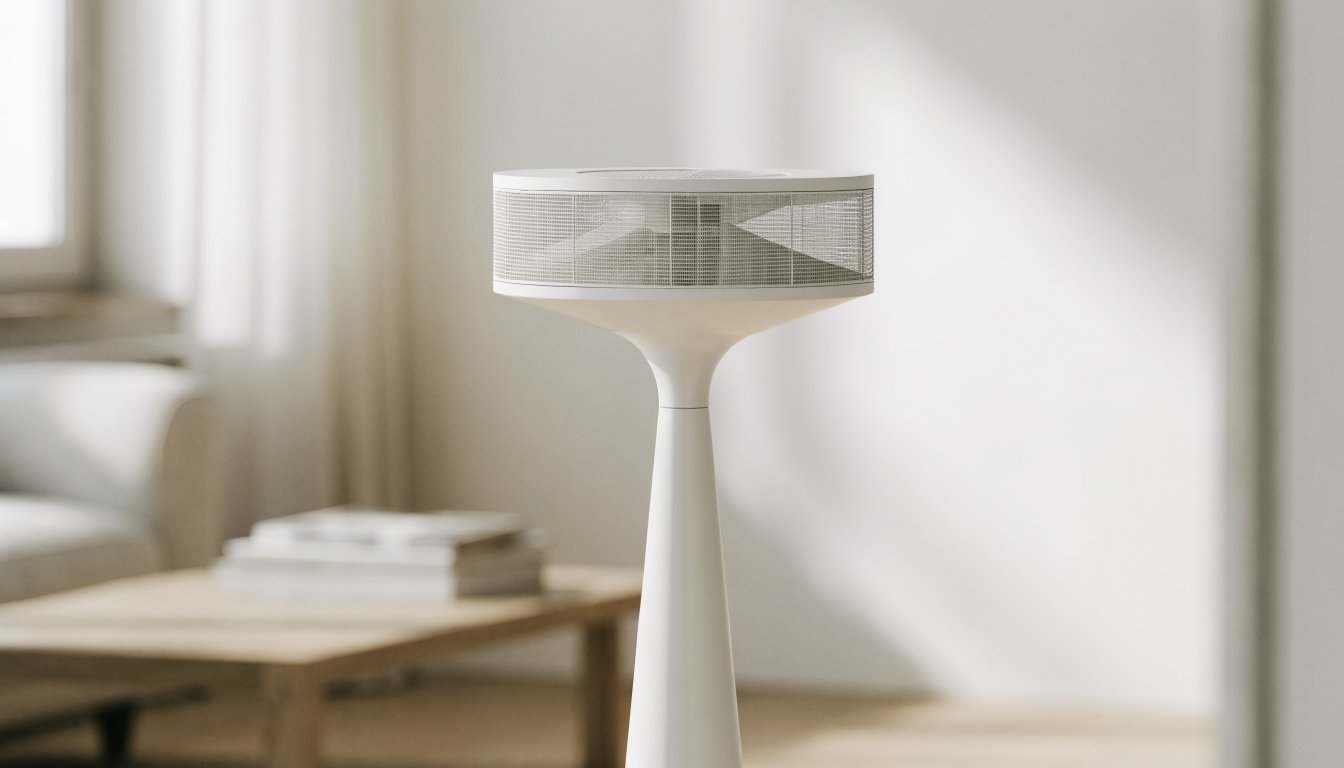
Quick answer: The best tower fan for most people in 2026 is the Dreo Cruiser Pro T1 — a 42-inch bladeless tower with strong, far-throwing airflow, a genuinely quiet ~25 dB sleep mode, and a mid-range price, giving you near-premium performance without paying Dyson money. Want design plus air purification? The Dyson Purifier Cool. App and voice on a budget? The Levoit Classic 36-inch. Light sleeper? The Honeywell QuietSet. Tightest budget? The Lasko Wind Curve. One rule first: a fan cools you, not the room.
A tower fan is the cheapest, lowest-power way to feel cooler at home — a slim column that tucks beside furniture, oscillates a tall curtain of air, and sips 40–60 watts instead of the hundreds an AC pulls. The catch most buyers miss is what a fan actually does: it doesn’t lower the room’s temperature, it moves air across your skin. Understand that, match the airflow and noise to your space, and a good tower fan is one of the best comfort buys you can make. Here are seven current models for every budget, plus the honest fan-versus-AC math.
As an Amazon Associate, we earn from qualifying purchases. This doesn’t affect which products we recommend.
Does a tower fan actually cool a room?
No — and this is the single most important thing to understand before buying. A tower fan doesn’t lower the air temperature. It moves air across your skin, speeding sweat evaporation and carrying heat away — a wind-chill effect that makes you feel several degrees cooler. The US Department of Energy puts it plainly: fans “cool people, not rooms,” and you should turn one off when you leave. In a closed room the motor even adds a tiny bit of heat. So a fan isn’t a substitute for an air conditioner on a genuinely hot, humid day — but running one alongside AC lets you raise the thermostat a few degrees with no loss of comfort, which trims your cooling bill. If you need the air actually colder, see our guides to the best window air conditioners and best portable air conditioners.
Tower vs. pedestal or box fan: tower fans win on footprint and looks, but a similarly priced box or pedestal fan usually moves more raw air. Choose a tower when space, aesthetics, and even oscillation matter most; choose a pedestal or box fan for maximum airflow per dollar. Bladed vs. bladeless: “bladeless” fans still have a hidden impeller in the base — the win is no exposed blade (safer around toddlers and pets) and no grille to clean, at a higher price.
What matters when choosing a tower fan?
- Airflow and reach — enough air to move a room, not just stir a desk. Judge by reach in feet and reviews, not cross-brand CFM claims (brands measure airflow differently, so those numbers aren’t comparable).
- Oscillation width — 60° cools a couch; 90° covers a room. Match it to your space.
- Noise for bedrooms — the lowest-setting volume and the number of speed steps matter far more than a loud turbo mode you’ll never use.
- Height — 36–42 inches is the sweet spot for pushing air at both seated and standing height.
- Smart features — WiFi app, schedules, temperature-auto, and voice control if you’ll use them; a plain remote and sleep timer if you won’t.
- Safety — bladeless removes the exposed-blade risk entirely; on any tall tower, a stable, tip-resistant base matters with kids and pets.
The best tower fans of 2026
Dreo Cruiser Pro T1 — Best overall
The value benchmark of 2026. This 42-inch bladeless tower throws strong, far-reaching airflow, has a genuinely quiet ~25 dB sleep mode, 90° oscillation, six speeds, four modes, an LED display, and a 12-hour timer — near-premium performance at roughly $90–$110 (approx, as of 2026, subject to change). The only catch: the base T1 has no built-in WiFi, so step up to the Cruiser Pro T1S if you want app and voice control. For everyone else, this is the default recommendation.
Best for: anyone who wants near-premium cooling and quiet without Dyson prices.
Dyson Purifier Cool (and Cool AM07) — Best premium bladeless
The design and build benchmark. Dyson’s bladeless towers push a smooth, blade-free airstream, wipe clean in seconds, and offer precise settings with a tidy magnetized remote (approximately $400). The cool-only AM07 is the long-running pure-fan model; the Purifier Cool TP07 adds sealed HEPA H13 air cleaning and 350° oscillation for allergy households that want fan and air purifier in one. The honest downsides: it’s expensive for what’s functionally a fan, and Dyson’s “Air Multiplier” marketing avoids a standard airflow number, so you can’t easily compare its raw output to rivals.
Best for: design-focused buyers and allergy households (TP07) who value a blade-free airstream and premium finish.
Levoit Classic 36-Inch — Best smart value
Full smart-home features at a fraction of Dyson money: WiFi with the VeSync app, voice control, and a temperature sensor that auto-adjusts speed — all bladeless and quiet (~28 dB on low), with a 12-hour timer, for roughly $60–$80. At 36 inches it’s a touch shorter than the 42-inch towers, so the air sits slightly lower, but if you want to run a fan from your phone or a smart speaker, nothing here matches the value.
Best for: smart-home users who want bladeless plus app control on a mid-range budget.
Honeywell QuietSet HYF290B — Best for bedrooms
The classic light-sleeper’s fan. Eight discrete “QuietSet” levels — from a barely-there whisper (~26 dB on the lowest setting) up to power cool — let you dial in exactly enough white noise without a jarring jump between speeds (approximately $60–$90). It adds an auto-off timer and LED touch plus remote controls in a slim profile. It’s a bladed design, so there’s a grille to vacuum, and oscillation is a moderate 75°, but for fine speed control in a bedroom or nursery it’s excellent.
Best for: bedrooms, nurseries, and anyone sensitive to fan noise.
Lasko Wind Curve T42951 — Best budget
The dependable, no-drama workhorse. A tall 42-inch column, three speeds, a real remote, a carry handle, and a Nighttime mode that dims the display and lowers the speed — all for roughly $40–$60. It’s ETL-listed with Lasko’s fused safety plug. The trade-offs are a narrow 60° oscillation and only three speeds, and it’s louder on high than the premium picks, but it’s hard to beat on price-to-performance.
Best for: a first fan, kids’ rooms, dorms, or offices that just need reliable air movement cheaply.
Vornado OSCR37 — Best whole-room circulation
Vornado’s signature trick is whole-room circulation rather than a narrow oscillating breeze. The OSCR37 pushes a focused vortex of air far across a room (the maker rates it to ~75 feet) and can also oscillate on demand, so it keeps a whole living room’s air moving instead of just cooling one seat (approximately $90–$100). It has touch controls plus a remote. Some owners note it runs louder than the quiet-focused picks at higher speeds, so it’s less of a bedroom fan and more of a living-room air mover.
Best for: larger or open rooms where you want the whole space’s air circulating.
Sharper Image AXIS 42 — Most versatile
A genuinely different design: the AXIS converts from a vertical tower into a low, horizontal “Airbar” via a magnetized base, so you can aim air along a desk, bed, or floor instead of only upward (approximately $40–$50). It oscillates and comes with a remote. Sharper Image publishes limited detailed specs and positions these as value picks rather than performance leaders, so confirm the exact configuration before buying — but for small spaces and desks, the flexibility is unique.
Best for: small spaces, desks, and buyers who like a fan that reconfigures.
Which tower fans are quiet enough for a bedroom?
If the fan is going in a bedroom, focus on the lowest setting, not the top speed. The quietest picks here, by manufacturer low-setting figures, are the Dreo Cruiser Pro T1 (~25 dB), the Honeywell QuietSet (~26 dB, with eight fine steps to find just enough white noise), and the Levoit Classic 36-inch (~28 dB, with a shut-off timer). Two honest notes: those decibel numbers are manufacturer lowest-speed claims, not independent lab measurements, and every fan gets clearly louder on high. Many people actually want a steady low hum as sleep white noise — in which case an ultra-quiet fan run at medium is the best of both worlds. Bladeless towers tend to produce a smoother, less “chopping” sound than bladed grilles.
Common mistakes when buying a tower fan
- Expecting it to cool the room like AC. It won’t lower the temperature — for that you need a window or portable AC.
- Judging by max-speed noise, or ignoring dB. For a bedroom, the lowest-setting volume and number of speed steps matter most.
- Comparing CFM across brands. They’re measured differently — use reach, oscillation width, and reviews instead.
- Overpaying for bladeless when you don’t need it. It’s a real safety and cleaning win with kids and pets, but a good bladed tower cools just as well for less.
- Ignoring oscillation width. A 60° sweep cools a couch; 90° covers a room.
- Leaving it running in an empty room. Per the DOE, that just wastes power — fans cool people, not rooms. Pair one with our other apartment cooling gadgets for a no-AC setup.
- Skipping cleaning. Bladed towers collect dust behind the grille that cuts airflow — check how easily a model opens before you buy.
Frequently asked questions
Do tower fans actually cool a room?
No — not the air temperature. A tower fan creates a wind-chill effect on your skin that makes you feel cooler and circulates air, but it doesn’t lower the room’s temperature. For that you need an air conditioner. As the US Department of Energy puts it, fans “cool people, not rooms.”
Tower fan or pedestal fan — which is better?
A pedestal fan usually moves more raw air for the money and adjusts for height. A tower fan has a smaller footprint, looks sleeker, oscillates over a tall column, and often runs quieter. Choose pedestal for maximum airflow on a budget; choose tower for space-saving looks and even coverage.
Are bladeless (Dyson-style) fans worth it?
For safety around toddlers and pets and for easy cleaning, yes — bladeless is a real upgrade. For pure cooling per dollar, no: a good bladed tower cools just as effectively for far less. Value bladeless options like the Dreo Cruiser Pro T1 and Levoit Classic split the difference.
Which tower fan is quietest for sleeping?
On their lowest settings, the Dreo Cruiser Pro T1 (~25 dB), Honeywell QuietSet (~26 dB), and Levoit Classic 36-inch (~28 dB) are the quietest here, per manufacturer figures. The Honeywell’s eight fine speed steps make it especially easy to dial in gentle white noise.
How tall should a tower fan be?
36–42 inches is the sweet spot. Taller towers (40–42 inches) push air at both seated and standing height; 36-inch models suit smaller rooms and tight corners.
Do tower fans use a lot of electricity?
No. Most draw roughly 40–60 watts on high — a fraction of an air conditioner’s several hundred to over a thousand watts. Running a fan so you can raise your AC thermostat a few degrees actually saves money.
Are tower fans safe for kids and pets?
Bladeless towers are the safest since there’s no exposed blade. Bladed towers are still reasonably safe behind their grilles, but choose a stable, tip-resistant base and keep cords out of reach.
Can a tower fan replace an air conditioner?
No. A fan improves comfort by moving air, but it can’t dehumidify or lower the temperature. On hot, humid days you’ll want an AC. The smart move is to use both — run the AC a few degrees warmer and let the fan make up the difference.
The bottom line
For most people the Dreo Cruiser Pro T1 is the tower fan to buy — quiet, bladeless, and strong for the price. Go premium with the Dyson Purifier Cool, add smarts with the Levoit Classic, sleep easy with the Honeywell QuietSet, or spend the least with the Lasko Wind Curve. Just remember a fan is a comfort tool, not a temperature tool — if you need the air genuinely colder, compare the best window air conditioners, and for a full no-AC setup see our cooling gadgets for apartments guide.
Cost check: for the ongoing running cost of home appliances, see our free home appliance running-cost data — independent data, no affiliation, free to cite.