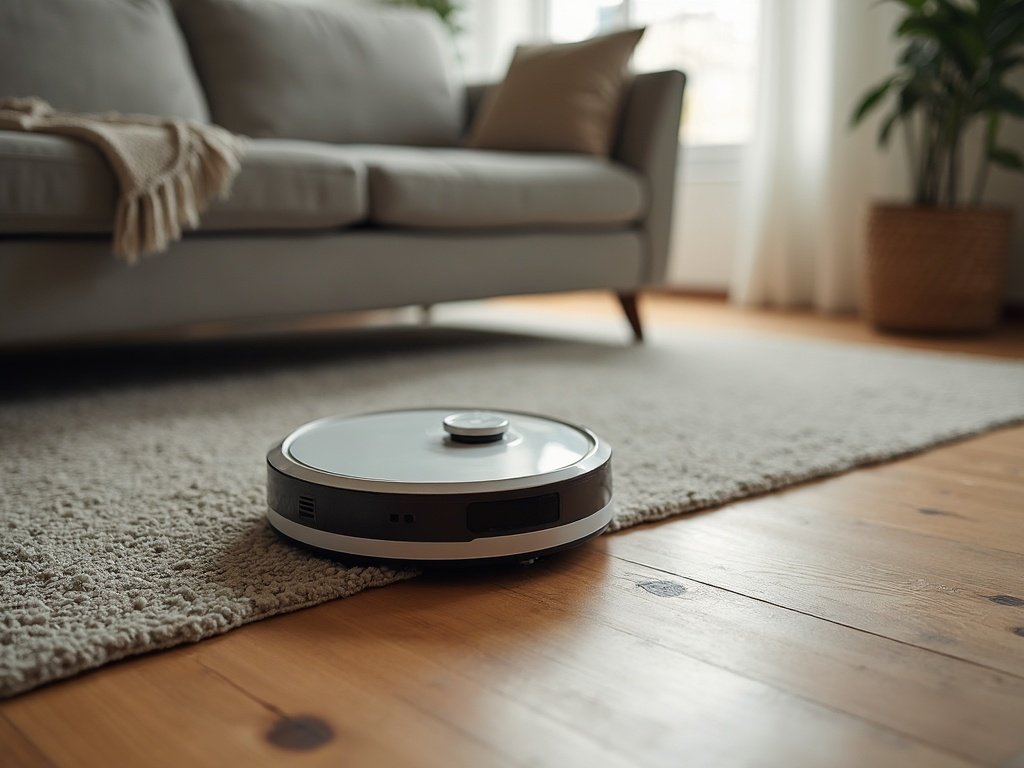
The wrong robot vacuum usually fails before it breaks. It gets stuck under the same chair, misses the same rug edge, or needs its bin emptied so often that you stop running it. That is why I start robot vacuum shopping with the home, not the spec sheet.
Try our free
Robot Vacuum Room Size Calculator
to match your square footage, floor type, pets, and layout before comparing models.
This guide walks through the exact decisions that matter: floor type, layout, pets, mapping, self-emptying, mopping, and maintenance. If you want product picks after the framework, use our best robot vacuum under $300 guide or compare long-term cost in the Robot Vacuum Ownership Cost Index.
Robot Vacuum Decision Table
| Home Situation | Feature To Prioritize | What To Avoid |
|---|---|---|
| Small apartment, hard floors | Low profile, reliable basic coverage | Overspending on premium docks |
| Multi-room house | LiDAR or strong mapping | Random-navigation robots |
| Pets | Rubber rollers, self-empty option | Bristle-only brushes |
| Mostly carpet | Brush design and sustained suction | Cheap mop-first models |
| Kitchen messes | Vacuum-mop combo with washable pads | Passive wet-rag mopping |
1. Start With Your Floor Type
Hard floors are forgiving. A basic robot with decent edge cleaning can keep dust, crumbs, and pet hair under control. Carpet is less forgiving because hair and grit sit below the surface, where weak brushrolls and low suction struggle.
Skip if: you are only looking at suction numbers and ignoring brush design.
2. Match Navigation To Your Layout
A random-navigation robot can work in a studio or single bedroom. In a full house, it becomes frustrating. It may clean the hallway three times and miss the dining room completely.
LiDAR or stronger visual mapping matters when you have multiple rooms, no-go zones, rugs, pet bowls, or furniture legs that create traps. Mapping is not a luxury feature in a complicated layout. It is what keeps the robot useful after week two.
3. Decide Whether Self-Emptying Is Worth It
Self-emptying is the feature people underestimate until they own a robot. A small robot bin fills quickly with pet hair, cereal crumbs, and dust. If you have to empty it after every run, the robot becomes another appliance asking for attention.
The tradeoff is recurring cost. Self-empty docks use bags or dock filters, and those costs show up later. Check the ownership cost index before assuming the dock is a free convenience.
4. Treat Mopping As A Bonus, Not A Miracle
Robot mopping is useful for light maintenance: dust film, paw prints, and fresh kitchen spots. It is not the same as scrubbing dried sauce, grout, or sticky spills that need pressure.
If mopping matters, look for mop lift, washable pads, and a dock that can wash or dry the pad. If you mostly need vacuuming, a stronger vacuum-only robot may be the smarter buy.
5. Check Maintenance Before The Price
Every robot vacuum has a maintenance routine. Filters clog. side brushes bend. Hair wraps around rollers. Mop pads need washing. Budget models can still be good buys, but only if replacement parts are easy to find.
- Check filter and brush kit availability before buying.
- Look for rubber rollers if you have long hair or pets.
- Confirm the dock bag cost if buying self-emptying.
- Read owner reviews for stuck events, not just cleaning power.
Home Type Decision Tree
The fastest way to avoid the wrong robot vacuum is to start with your home, not the spec sheet. A studio apartment, a pet-heavy family room, and a multi-floor house all need different priorities. Use this as the short version before comparing individual models.
| Home Situation | Prioritize | Do Not Overpay For |
|---|---|---|
| Small apartment | Good navigation, quiet operation, compact dock | Oversized self-empty stations if storage is tight |
| Pets and shedding | Brush design, bin capacity, obstacle avoidance | Weak suction numbers with poor hair pickup |
| Mixed carpet and hard floor | Carpet boost, mapping, mop lift if mopping | Basic random-navigation models |
| Large house | Battery life, room maps, self-emptying | Tiny bins that need daily manual emptying |
Feature Priority Matrix
If your floor plan is simple, LiDAR mapping and premium obstacle avoidance are nice but not always mandatory. If your home has cords, pet toys, chair legs, thresholds, and mixed rooms, navigation becomes one of the most important features. The more complicated the home, the more a cheap robot can waste time bumping around or skipping areas.
Self-emptying is worth considering when you have pets, allergies, or a larger floor plan. It is less important in a small apartment where emptying the bin takes ten seconds. Mopping is useful for dust control and light maintenance, but it should not replace a real mop for sticky spills. For most buyers, the best order is navigation first, hair pickup second, dock convenience third, and mopping last.
Budget Ranges That Make Sense
Under $200, look for simple hard-floor cleaning and basic pet hair pickup. Between $200 and $500, mapping and better cleaning consistency become realistic. Above $500, you are usually paying for convenience: stronger docks, better obstacle handling, improved mopping, and less daily babysitting.
If you are unsure, start with the cheapest model that solves your biggest problem. A pet owner should not buy a weak brush system just because the app looks good. A small apartment owner should not pay for a giant dock if there is nowhere to put it. The right robot vacuum is the one that removes a cleaning task from your week without adding a new maintenance chore.
Helpful Next Reads
If budget is the main concern, compare the options in our guide to the best robot vacuums under $200. If you want a stronger step up, see our best robot vacuums under $300 guide. For long-term ownership cost, read the robot vacuum ownership cost index before deciding how much convenience is worth paying for.
Best First Step
If this is your first robot vacuum, start in the $200-$300 range. That tier usually gives you better navigation and fewer regrets than the cheapest model, without jumping straight into $900 dock systems.
Use our under-$300 guide if you want the practical middle ground. Use the under-$200 guide only if the rooms are simple and expectations are realistic.
FAQ
How much should I spend on a robot vacuum?
Many homes can start under $300. Spend more if you need better mapping, self-emptying, heavy pet-hair handling, or real mop automation.
Do I need LiDAR mapping?
You need it if your home has multiple rooms, no-go zones, furniture traps, or rugs the robot must avoid. A simple apartment can often skip it.
Are self-emptying robot vacuums worth it?
They are worth it for pets, allergies, and daily cleaning routines. Skip self-emptying if lowest ownership cost matters more than convenience.
Should I buy a robot vacuum and mop combo?
Buy one if you want light maintenance mopping. Skip it if you expect deep scrubbing or if your floors should not be exposed to regular moisture.
Related Product Check
Robot vacuums for home use: Compare models only after matching your floor type, pet hair level, and room layout.