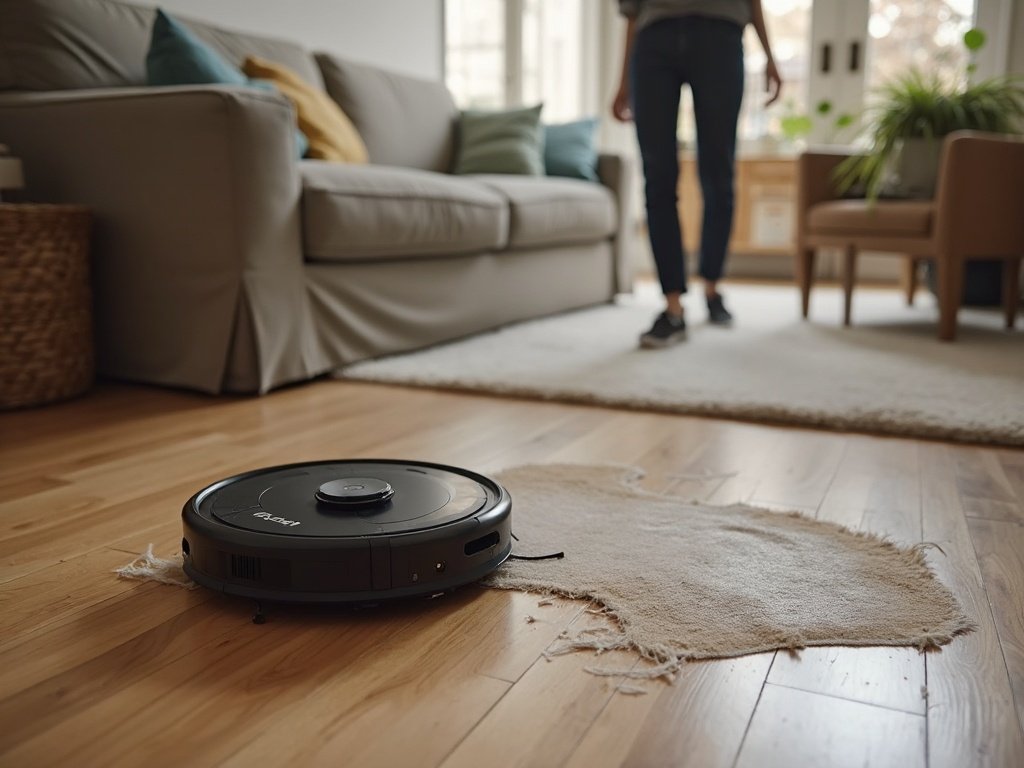
A cheap robot vacuum is only a bargain if it keeps running after the first week. The bad ones do not fail dramatically. They just get stuck, miss rooms, fill their bins too fast, or need parts you cannot find.
These are the mistakes I would avoid before buying any budget robot vacuum. If you already know you want specific picks, start with our best robot vacuum under $200 shortlist. If you want to understand long-term cost, use the Robot Vacuum Ownership Cost Index.
Cheap Robot Vacuum Mistake Checklist
| Mistake | What Happens Later | Safer Move |
|---|---|---|
| Buying only by price | Weak navigation and poor parts support | Set a minimum feature baseline |
| Ignoring floor type | Poor carpet pickup or missed rug edges | Match robot to floors first |
| Overvaluing cheap mops | Wet pad drags dirt around | Prioritize vacuuming unless mop system is real |
| Ignoring bin size | Daily emptying becomes annoying | Consider self-emptying for pets |
| Buying unknown brands | No filters, brushes, or batteries later | Check replacement parts before checkout |
Mistake 1: Ignoring Your Floor Type
Budget robots are usually strongest on hard floors and low-pile rugs. Thick carpet exposes their limits quickly. The brushroll matters as much as suction because hair and grit need to be lifted before the motor can pull them in.
Skip if: your home has thick carpet, high thresholds, or heavy shedding pets and you are shopping at the very bottom of the price range.
Mistake 2: Expecting Premium Mapping
Cheap robots can clean well, but many do not understand a room the way premium robots do. Random-navigation models may eventually cover the floor, but they waste time and repeat areas.
If you need room selection, no-go zones, and reliable multi-room coverage, pay for better mapping. A cheap robot is best when the job is simple.
Mistake 3: Forgetting Replacement Parts
A budget robot vacuum is not a one-time purchase. Filters, brushes, side brushes, and batteries wear out. If the brand disappears or parts are hard to find, the cheap robot becomes disposable.
Before buying, search for the exact model plus “replacement filter” and “replacement brush.” If you cannot find parts in two minutes, that is a warning sign.
Mistake 4: Buying Too Small For Pet Hair
Pet hair fills bins fast and wraps around weak brushrolls. A cheap robot can handle light shedding, but it may struggle with long-haired cats, double-coated dogs, or carpeted rooms.
For pet-heavy homes, a self-empty dock and rubber roller design may be worth more than saving $80 upfront. See our robot vacuums for pet hair guide if hair is the main problem.
Mistake 5: Paying For Features You Will Not Use
Some cheap robots look impressive because they add a mop tank, app control, or voice assistant. Those features are not always useful. A weak mop does not make a weak vacuum better.
Spend first on the fundamentals: coverage, brush design, parts availability, and a battery that can finish your space. Convenience features come after that.
Best Next Step
If your home is simple and your budget is strict, use the under-$200 guide. If you can stretch a little, the under-$300 category is usually where budget robots become easier to live with.
FAQ
Are cheap robot vacuums worth it?
Yes, if the cleaning job is simple. They work best on hard floors, low-pile rugs, and smaller layouts without constant clutter.
What is the biggest mistake when buying a cheap robot vacuum?
The biggest mistake is buying only by price and ignoring navigation, replacement parts, brush design, and bin size.
Should I buy the cheapest robot vacuum with a mop?
Usually no. Cheap mop features are best for light dust, not deep cleaning. A stronger vacuum-only robot can be the better budget buy.
How long should a cheap robot vacuum last?
A good budget robot can last three to four years if filters, brushes, and batteries are available. No-name models with poor parts support may fail much sooner.
Related Product Check
Budget robot vacuums: Use this as a price check after reading the mistakes to avoid, not as a shortcut around the buying criteria.
My Simple Rule Before Buying Cheap
Before I would trust a low-cost robot vacuum, I would check three things that do not show up clearly in the headline: whether replacement filters and brushes are easy to buy, whether the robot can return to its dock without help, and whether the app has basic no-go or scheduling controls. Those boring details matter more than a big suction number because they decide whether you still use the robot after the first month.
If a model cannot pass that check, I would either wait for a better brand to go on sale or buy a simpler vacuum-only unit instead of chasing a cheap combo mop. The goal is not to buy the cheapest robot on the page. The goal is to avoid buying the same category twice.
You May Also Like
- Best Robot Vacuum Under $300: Top Budget Picks for 2026
- Best Robot Vacuum Under $200 in 2026: Eufy, Shark & Budget Picks
- Best Budget Robot Vacuum Under $150 in 2026: Top Picks
- Robot Vacuum Buying Guide for Beginners
- eufy Robot Vacuum Review 2026: The Best Budget Pick After 10 Weeks of Testing (Tested and Reviewed)
- Best Dreame Robot Vacuums in 2026: X60 vs L40 vs L50 Compared