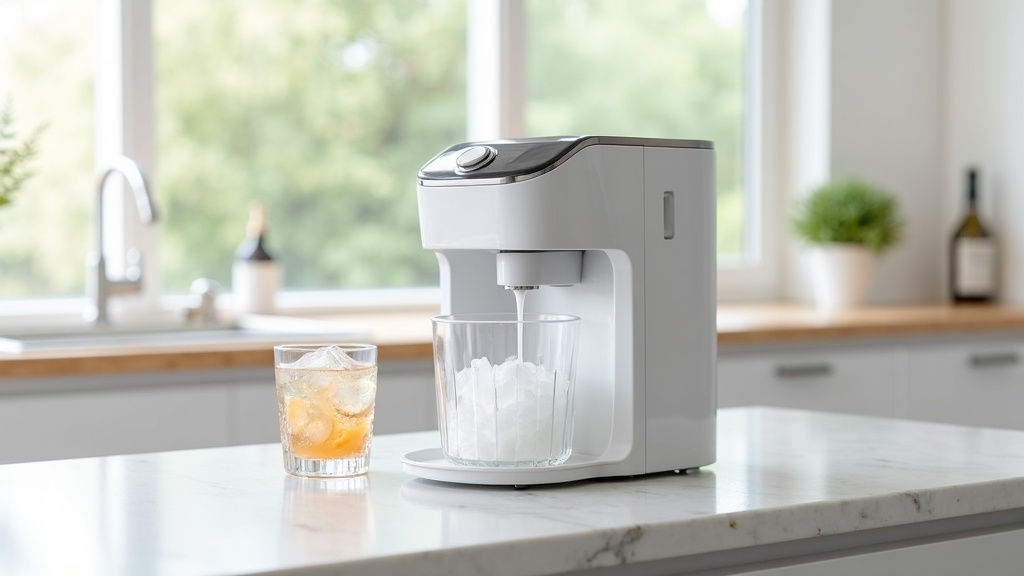
Quick answer: GE Profile’s new Opal Mini line (launched July 14, 2026) shrinks the cult-favorite nugget ice maker by about 30% and starts at $279–$299, with the $379 Opal Mini Pro adding a side tank, scale-inhibiting filter, Wi-Fi, and an RGB bin light. It makes up to 34 lbs of ice a day versus the outgoing Opal 2.0 XL’s 38 lbs, and the bin holds 2 lbs instead of 3. For most kitchens the Mini Pro is the one to get — but big households should check the Opal 2.0 clearance deals ($449–$549 across XL and Ultra variants) before stock runs out.
Nugget ice people are a devoted bunch, and for the last few years the GE Profile Opal 2.0 has been the machine they argue about. Now GE has replaced the argument with a new one: on July 14, 2026 the company launched the Opal Mini family — three smaller, cheaper nugget ice makers that quietly signal the end of the Opal 2.0 era. GE’s own product pages now mark several Opal 2.0 SKUs “no longer being manufactured,” with clearance pricing to match.
We’ve tracked the Opal platform closely across our GE Opal 2.0 XL vs Frigidaire comparison and our countertop ice maker guide, so here’s a clear-eyed look at what actually changed, what GE’s launch materials do (and don’t) say, and which version — new Mini or clearance 2.0 — makes sense for your kitchen.
What GE launched: three Opal Minis
The new line, per GE’s press release and launch coverage, has three tiers:
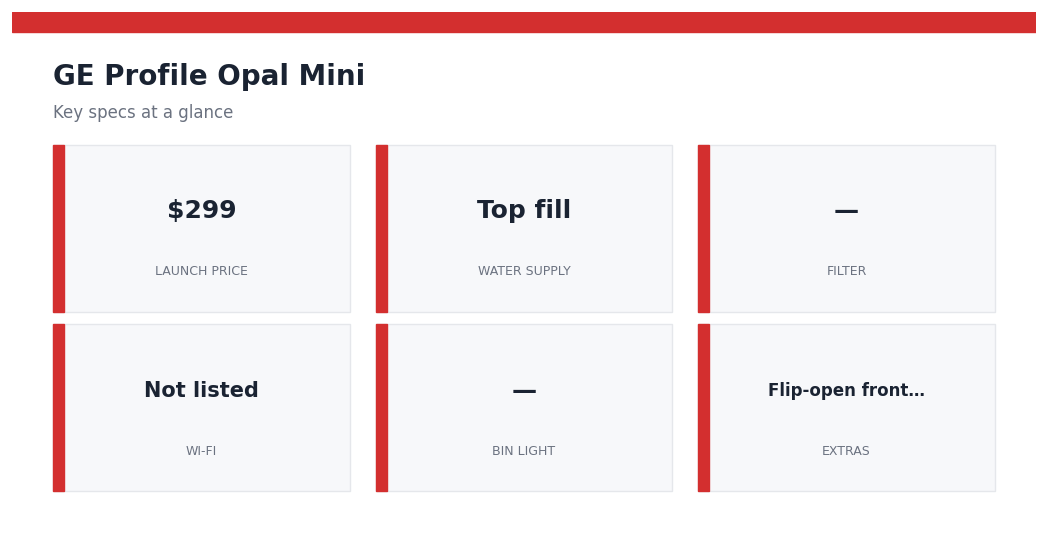
| Opal Mini | Opal Mini Pro | Opal Mini Pro+ | |
|---|---|---|---|
| Launch price | $299 MSRP ($279 Charcoal Grey, exclusive to GE and Walmart) | $379 | Top of the range (fully stainless; GE’s launch pricing lists the stainless models at $379) |
| Water supply | Top fill, no side tank | Side tank | Same as Pro* |
| Filter | — | Scale-inhibiting water filter | Same as Pro* |
| Wi-Fi (SmartHQ app) | Not listed | Yes — scheduling, maintenance alerts | Same as Pro* |
| Bin light | — | Customizable RGB light | Same as Pro* |
| Extras | Flip-open front panel for cleaning | Stainless scoop with external holder | Full stainless exterior + scoop |
| Finishes | Moonstone Blue, Stone Grey, Charcoal Grey | Charcoal Grey with stainless side tank, or full Stainless | Stainless Steel |
*GE’s launch materials don’t itemize Mini Pro+ specs separately; GE positions it as the Mini Pro formula in a full stainless finish.
All three make the same style of chewable, Sonic-style nugget ice, rated at up to 34 pounds per day.
Delivery note: Amazon ships this free to Prime members, and Amazon runs a 30-day free Prime trial if you are not one. We earn a commission on sign-ups, at no cost to you.
What changed vs. the Opal 2.0 — the honest ledger
Smaller footprint (the headline)
GE says the Mini is about 30% smaller than the full-size Opal. The old Opal 2.0 XL measured roughly 16.5″ H × 13.4″ W × 17.5″ D and needed serious counter real estate plus clearance for airflow. If the Opal 2.0 never fit under your cabinets, this is the fix GE finally shipped.
You give up some capacity
The trade is real: daily production drops from the XL’s 38 lbs to 34 lbs, and the ice bin shrinks from 3 lbs to 2 lbs. For one or two people filling tumblers, that’s irrelevant — nugget machines recycle melted bin water and keep making ice anyway. For parties or big-tumbler households that regularly emptied an Opal 2.0 XL’s bin, the Mini will feel small. That’s exactly the buyer GE built the XL’s 1-gallon side tank for, and the Mini Pro’s side tank is the closest equivalent here.
Cleaning might finally be less miserable
The most persistent, documented complaint about the Opal platform has always been upkeep: owners report the reservoir is hard to reach and prone to buildup unless you run cleaning cycles religiously. The base Mini’s flip-open front panel for cleaning and descaling is aimed squarely at that pain, and the Pro models add a scale-inhibiting filter — the same feature GE shipped on the Opal 2.0 Ultra (it’s in the product’s name). We’ll hold judgment until long-term owner reports come in, but this is the upgrade path we wanted to see.
What we can’t tell you yet
This machine launched days ago. There is no long-term reliability data — nobody outside GE knows yet how the Mini’s pump and fan hold up after a year, which is where older Opals developed their noise and leak complaints. GE’s launch materials also don’t quote a time-to-first-ice for the Mini the way its 2.0-era pages did. If you need a proven quantity today, that’s an argument for the outgoing 2.0 at clearance prices — with the caveat that it carries the old cleaning quirks.
Which one should you buy?
- Solo/couple, tight counter, budget-first: the $279–$299 Opal Mini. You lose Wi-Fi and the side tank, but you keep the nugget ice, and the flip-open panel makes maintenance simpler. Top-fill only, so expect more frequent refills.
- Most kitchens: the $379 Opal Mini Pro. The side tank cuts refills dramatically, the scale-inhibiting filter should slow the buildup that plagued older Opals, and SmartHQ scheduling plus maintenance alerts are genuinely useful on a machine that demands regular cleaning. The RGB bin light is a party trick, but a fun one.
- Matching a stainless kitchen: the Mini Pro+ — positioned by GE as the Pro’s formula in a full stainless shell.
- High-volume households: consider the outgoing Opal 2.0 XL while clearance stock lasts (GE has listed it at $549, and Ultra variants at $449–$499). It still out-produces the Mini (38 lbs/day, 3-lb bin, 1-gallon tank) — just know GE marks these SKUs “no longer being manufactured,” so buy for the capacity, not the longevity of the product line. Our Opal 2.0 XL vs Frigidaire breakdown covers that machine in depth.
Not sure nugget ice is even your style? Our free Ice Maker Type Picker sorts nugget vs. bullet vs. clear ice in about 30 seconds, and the full countertop ice maker guide has picks at every price.
The bigger picture: why GE shrank the Opal
Two things are true at once. First, compact is where the market went — GE pitches the Mini squarely at small families, compact kitchens, and travel. Second, the Opal 2.0 line settled into the $450–$550-plus range, while rivals like Frigidaire’s nugget models undercut it badly on price-per-pound (we ran those numbers in our comparison). A $279 entry Opal resets that fight. GE’s director of ice and beverage small appliances, Lauren Platts, framed it as “compact convenience without sacrificing the craveable” ice — which is marketing speak, but the spec sheet mostly backs it up: same nugget ice, about 90% of the XL’s output, a little over half the price of a clearance XL.
FAQ
Is the GE Opal Mini replacing the Opal 2.0?
Functionally, yes. GE’s product pages now mark Opal 2.0 XL and Ultra SKUs “no longer being manufactured” with clearance pricing, while the Mini line launched as the new lead product in July 2026. Remaining 2.0 stock is being sold through.
How much ice does the Opal Mini make per day?
GE rates the Mini line at up to 34 pounds per day. The bin holds about 2 pounds at a time; like other nugget machines, melted bin water recycles back into ice production.
What’s the difference between the Opal Mini and Mini Pro?
The $299 Mini is top-fill with no side tank, no Wi-Fi, and no filter, but has a flip-open front panel for easier cleaning. The $379 Mini Pro adds a side water tank, scale-inhibiting filter, SmartHQ Wi-Fi with scheduling and maintenance alerts, an RGB bin light, and a stainless scoop with holder. GE positions the Mini Pro+ as the same formula in a full stainless shell.
Should I buy the Opal 2.0 XL on clearance instead?
If you regularly empty the ice bin — parties, big families, giant tumblers — the 2.0 XL’s 38 lbs/day, 3-lb bin, and 1-gallon side tank still beat the Mini, and GE’s clearance pricing ($549 for the XL; Ultra variants from $449) is the cheapest that hardware has ever been. Just go in knowing the line is discontinued and the older design is more demanding to keep clean.
Pricing note: launch prices verified against GE’s press materials and product pages in July 2026 — check the live listing, as clearance stock and street prices move quickly.
As an Amazon Associate, we earn from qualifying purchases.
🧮 Free tools to help you decide