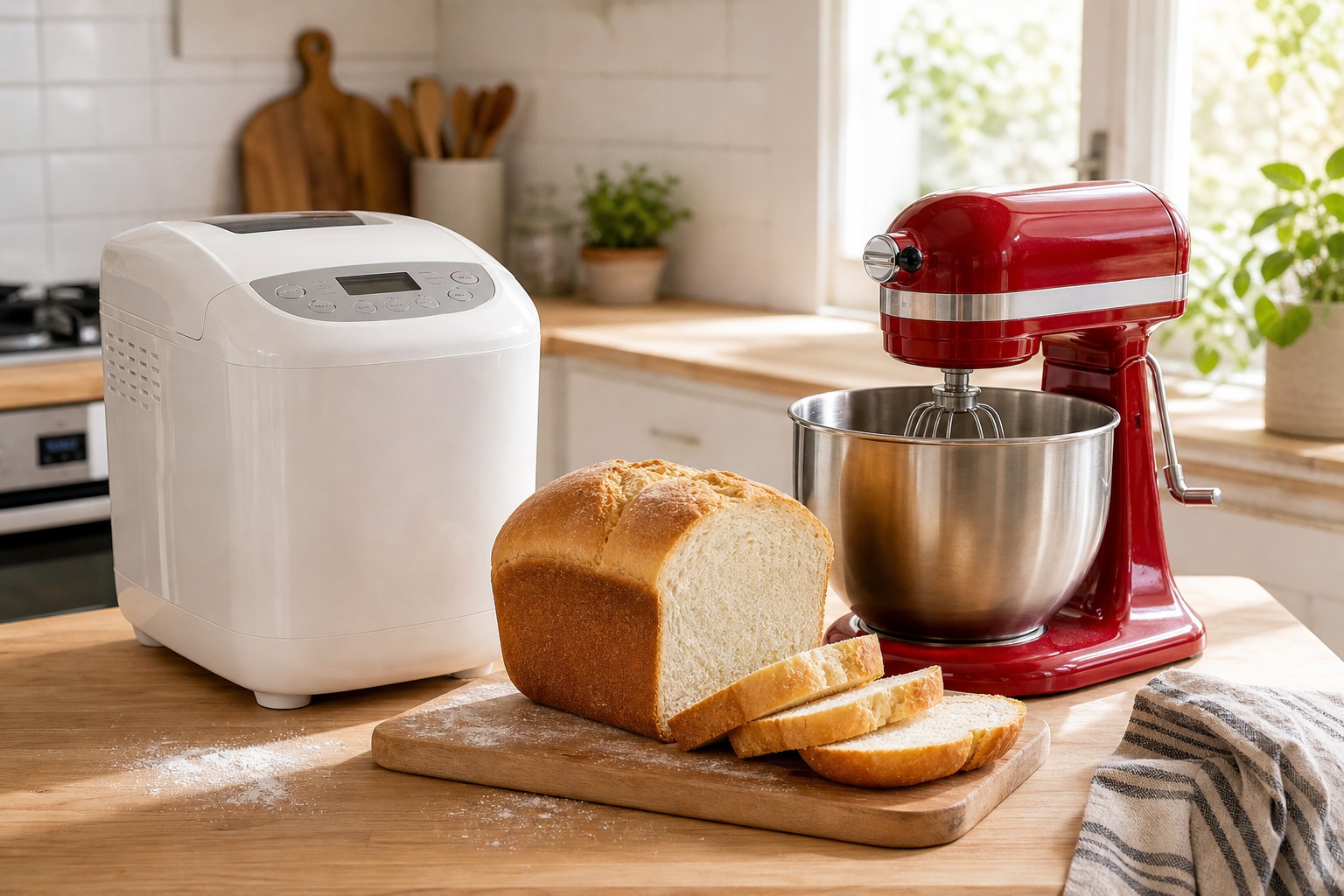
A bread maker and a stand mixer can both help you make homemade bread, but they solve different problems. A bread maker is built for convenience. A stand mixer is built for control. If you choose the wrong one, you either end up with another appliance collecting dust or a baking process that feels like more work than you wanted.
The right answer depends less on which machine is technically better and more on how you want bread to fit into your week. Do you want a fresh sandwich loaf with five minutes of effort? Or do you want to shape dough, experiment with recipes, and use the same appliance for cookies, cakes, and pizza dough?
Quick Answer
Buy a bread maker if you want hands-off sandwich bread with the least possible effort. Buy a stand mixer if you want more control, better artisan-style bread, and one appliance that can handle far more than bread. For busy households that mostly want toast, sandwiches, and simple loaves, the bread maker is usually the better first buy. For people who already bake, the stand mixer is the more versatile long-term tool.
Quick product shortcuts
These links are for checking current availability. The better choice still depends on whether you want convenience or baking control.
Bread maker pick: Zojirushi Virtuoso Plus
Best fit if you want the most hands-off sandwich loaf routine.
Budget bread maker: Cuisinart Compact
A smaller option for basic loaves without giving up much counter space.
Stand mixer pick: KitchenAid Artisan
The better long-term choice if you bake cookies, cakes, pizza dough, and bread.
As an Amazon Associate, TheHomePicker.com earns from qualifying purchases.
Bread Maker vs Stand Mixer Comparison Table
| Factor | Bread Maker | Stand Mixer |
|---|---|---|
| Hands-on time | About 5 minutes | 20-45 minutes |
| Best bread style | Sandwich loaves | Artisan loaves, rolls, pizza dough |
| Learning curve | Low | Medium |
| Cleanup | One pan and paddle | Bowl, hook, counter, baking tools |
| Other uses | Limited dough, jam, cake programs | Cookies, cakes, frosting, pasta, doughs |
| Counter space | Moderate | Moderate, but heavier |
| Typical price | $80-$400 (our top pick, the Zojirushi Virtuoso Plus, sits at the high end) | $250-$550+ |
| Best for | Convenience | Versatility and control |
What a Bread Maker Does Better
A bread maker combines mixing, kneading, rising, and baking in one appliance. You add the ingredients, choose a program, and walk away. That is the entire appeal. It handles the boring parts consistently and removes the timing decisions that make bread intimidating for beginners.
This is especially useful for sandwich bread. The machine creates a warm, controlled environment, so basic white, wheat, and sweet loaves come out reliably. The crust is usually softer than oven bread, the shape is fixed by the pan, and there may be a paddle hole in the bottom. For toast and lunches, those tradeoffs are usually acceptable.
If you want to compare models by loaf size, gluten-free settings, noise, and counter space, our updated bread maker machine guide is the better place to start after you decide this category fits your kitchen.
What a Stand Mixer Does Better
A stand mixer does not bake bread for you. It kneads dough. That sounds like a limitation, but it is also why the stand mixer is more flexible. You control hydration, rise time, shaping, scoring, and oven setup. That matters if you want crusty boules, focaccia, brioche, cinnamon rolls, pizza dough, or anything outside a standard pan loaf.
The mixer also earns its space beyond bread. With the paddle and whisk attachments, it can handle cookies, cakes, frosting, whipped cream, mashed potatoes, and more. If you bake regularly, the stand mixer is not a bread appliance. It is a general kitchen power tool.
Who Should Buy a Bread Maker
- You want bread without managing dough. The machine handles kneading, proofing, and baking.
- You eat sandwich bread often. Bread makers are excellent for everyday toast and lunch loaves.
- You like delay timers. Many models can start overnight so bread is ready in the morning.
- You are new to baking. The learning curve is low and the results are consistent.
- You do not need one appliance to do everything. A bread maker is specialized, which is a strength if bread is the goal.
Who Should Buy a Stand Mixer
- You already bake more than bread. Cookies, cakes, frosting, pasta, and pizza dough make the mixer more useful.
- You want artisan-style bread. Oven baking gives better crust and more shaping options.
- You enjoy the process. A stand mixer helps with labor but still leaves you in control.
- You want a long-term appliance. Good stand mixers can last many years with basic care.
- You have room to keep it out. Heavy mixers are annoying to move in and out of cabinets.
Cost, Space, and Cleanup
Cost
Bread makers are cheaper up front. A decent machine often costs less than half of a quality stand mixer. If you only want bread, that matters. A stand mixer costs more, but it spreads that cost across many kitchen tasks. The more you bake, the better the stand mixer value becomes.
Counter Space
Both appliances take meaningful counter space. Bread makers are usually easier to store because they are boxy and lighter. Stand mixers are heavier and often stay on the counter because moving them gets old quickly. Measure cabinet clearance before buying either one.
Cleanup
A bread maker usually means washing the pan and paddle. A stand mixer means washing the bowl and hook, then cleaning flour from the counter and dealing with baking tools. The difference is not huge on a relaxed Sunday, but it matters on a weekday night.
Which One Makes Better Bread?
For soft sandwich bread, a bread maker is hard to beat because it is consistent. For crusty, shaped, bakery-style bread, the stand mixer wins because your oven can get hotter and you can control the final shape. A bread maker makes convenient bread. A stand mixer helps you make more expressive bread.
The mistake is buying for the fantasy version of yourself. If you picture slow weekend baking but actually need bread for school lunches, buy the bread maker. If you picture a one-button loaf but really want focaccia, cinnamon rolls, and sourdough experiments, buy the stand mixer.
FAQ
Can a stand mixer replace a bread maker?
Yes, if you are willing to proof and bake the bread yourself. It replaces the kneading function, not the full automation.
Can a bread maker make pizza dough?
Most bread makers have a dough-only cycle that works for pizza dough. You still shape and bake the pizza separately.
Which is better for beginners?
A bread maker is easier for beginners because it removes timing and kneading decisions. A stand mixer is better if you want to learn baking skills.
Does a bread maker save money?
It can, especially if you replace store-bought sandwich bread regularly. The bigger benefit is freshness and ingredient control.
Should I own both?
Only if you bake often and have room. Most households should start with the one that matches their real bread habits.
The Real Decision Matrix
If you still cannot choose, ask three questions. First: do you want the machine to bake the bread too? If yes, buy the bread maker. Second: do you already bake cookies, cakes, pizza dough, or frosting at least once a month? If yes, buy the stand mixer. Third: are you trying to build a new habit with the least friction possible? If yes, the bread maker is the safer starting point.
Most failed appliance purchases happen because people buy for an ideal routine instead of a real one. A stand mixer is wonderful if you enjoy hands-on baking. It is not wonderful if you wanted a machine to make bread while you were answering emails. A bread maker is convenient, but it will disappoint you if your real goal is crusty sourdough with an open crumb.
Gluten-Free Bread Changes the Answer
For gluten-free bread, a bread maker with a dedicated gluten-free cycle can be surprisingly useful. Gluten-free dough behaves more like thick batter than traditional wheat dough, so the kneading advantage of a stand mixer matters less. The controlled rise and bake cycle inside a bread maker can reduce collapsed loaves and gummy centers.
That said, the recipe matters more than the machine. Gluten-free loaves need the right flour blend, binder, hydration, and cooling time. If gluten-free bread is your main goal, do not buy the cheapest appliance in either category. Look for proven recipes and a machine with enough power to mix dense dough without overheating.
Sourdough and Artisan Bread
For sourdough, the stand mixer usually wins. Sourdough depends on fermentation timing, dough strength, shaping, and oven spring. A bread maker can make a sourdough-style loaf, but it cannot fully replace the shaping and high-heat oven environment that create a crisp crust. If your inspiration is bakery-style boules, get the mixer and learn the process.
Noise, Heat, and Daily Convenience
Bread makers are usually quieter than stand mixers during kneading, but they run longer. Stand mixers are louder for a shorter period. Bread makers also generate heat while baking, though not as much as a full oven. In summer, that can be a small advantage because you avoid heating the whole kitchen for one loaf.
Which One Has Better Resale Value?
Quality stand mixers generally hold value better because they are useful to more people. Bread makers are easier to find secondhand, partly because many people buy them with good intentions and stop using them. That can work in your favor: if you are unsure, a gently used bread maker is one of the lowest-risk ways to test the habit before spending more.
My Practical Recommendation
For a first homemade-bread appliance, I would choose a bread maker if the household eats sandwich bread every week. It removes the excuses. For someone who already bakes, or wants to learn bread as a craft, I would choose a stand mixer and accept the extra cleanup. The best purchase is not the one with the most features. It is the one that makes bread happen more often in your actual kitchen.
Common Buying Mistakes
The most common mistake is buying a stand mixer only because it looks more serious. If you do not bake often, that heavy mixer can become expensive counter decor. The second mistake is buying the cheapest bread maker and expecting premium results. Weak motors, thin pans, and poor temperature control show up quickly in dense whole-wheat dough.
Another mistake is ignoring loaf size. A compact bread maker may be perfect for one or two people, but frustrating for a family that goes through bread quickly. A stand mixer has the opposite issue: it may handle large dough batches well, but small batches can ride around the bowl without mixing cleanly. Match the machine to the amount of bread you actually plan to make.
Best First Recipe for Each Machine
For a bread maker, start with a basic white or honey wheat sandwich loaf from the manual. Do not begin with gluten-free, sourdough, or heavy seed bread. Learn how your machine handles a predictable recipe first. For a stand mixer, start with pizza dough or simple dinner rolls. They are more forgiving than high-hydration artisan loaves and teach you what properly kneaded dough feels like.
Bottom Line
Choose the bread maker for convenience and repeatable everyday loaves. Choose the stand mixer for flexibility, better artisan bread, and a tool that helps with many other recipes. The best appliance is the one you will actually use after the first week.
You May Also Like
- Zojirushi Virtuoso Plus vs Breville Custom Loaf (head-to-head)
- Best Bread Maker 2026: Zojirushi vs Cuisinart (Tested)
- KitchenAid Artisan Stand Mixer Review 2026: Worth It After 6 Months?
- KitchenAid Artisan Plus vs the Classic Artisan (2026): Is the First Big Upgrade Since 1955 Worth $600?
- Stand Mixer vs Hand Mixer: Which Do You Actually Need?