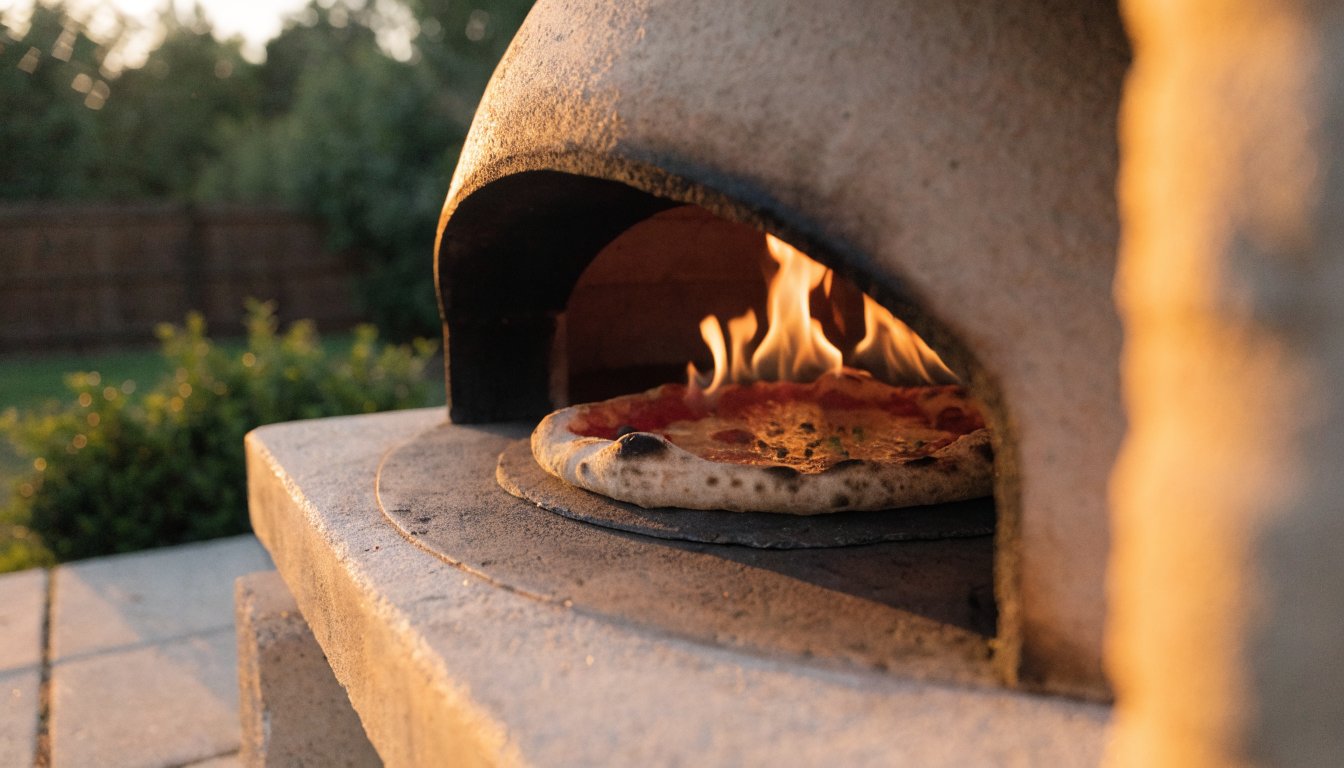
Quick answer: The best outdoor pizza oven for most people in 2026 is the Ooni Koda 16 — it hits a true Neapolitan 950°F, heats in about 20 minutes, fits a full 16-inch pizza, and runs on convenient gas. Want real wood flavor on a budget? The multi-fuel Ooni Karu 12. Premium and portable? The Gozney Roccbox. Best value looks? The Solo Stove Pi Prime. The biggest decision isn’t the brand — it’s the fuel.
A dedicated pizza oven does the one thing your kitchen oven can’t: it reaches 900°F+ and bakes a leopard-spotted, puffy-crust pizza in 60 to 90 seconds. That’s why a $250–$500 outdoor oven produces pizzeria results a $2,000 range never will. But the category has quietly gotten complicated — gas versus wood, 12-inch versus 16-inch, and a wave of 2025–26 model refreshes. This guide sorts the fuel types, what actually matters, and seven current ovens from about $249 to $999. For the two most cross-shopped models head-to-head, see our Ooni Koda 16 vs Solo Stove Pi Prime comparison.
As an Amazon Associate, we earn from qualifying purchases. This doesn’t affect which products we recommend.
Gas, wood, multi-fuel, or electric: which should you choose?
Fuel drives flavor, convenience, and price more than the brand does.
- Gas (propane/natural gas) — the right choice for most buyers. Turn a dial, ignite, wait ~15–20 minutes, and hold a steady 900°F+ with no fire-tending. You lose a little wood-smoke aroma, but you gain consistency and you’ll actually use it on a Tuesday.
- Wood / charcoal — the flavor play. Real hardwood gives the smoke and char purists chase, but you feed the fire, manage flare-ups, and accept temperature swings. Great for weekend enthusiasts who enjoy the process.
- Multi-fuel — ovens like the Ooni Karu burn wood or charcoal out of the box and accept a bolt-on gas burner (usually sold separately). Wood on weekends, gas on weeknights — you pay for the flexibility.
- Electric — plug in, no fuel, no fire, and the only type you can realistically run indoors. The trade-offs: a lower ceiling (~850°F) and, in Ooni’s case, an indoor-only rating on the current Volt 2.
Simple rule: want easy and consistent, buy gas; want flavor and enjoy the ritual, buy wood or multi-fuel; no outdoor space, buy electric and accept the lower ceiling.
What actually matters when choosing a pizza oven?
- Max temperature. Authentic Neapolitan cooks in 60–90 seconds at ~900–950°F. If that’s the goal, prioritize a 900°F+ oven. If you prefer New York-style or pan pizza (longer bake, lower heat), ~800°F is plenty.
- Cooking surface size. A 12-inch oven makes personal-to-medium pies; a 16-inch fits a full pizza with room to launch and turn. Match the stone to your typical pie, not the maximum.
- Heat-up time. Most gas ovens reach temperature in 15–25 minutes; less waiting means less fuel burned before the first pizza.
- Portability. Folding legs and manageable weight matter for storage and travel — the Karu 12 (26.5 lb) and Pi Prime (~30 lb) are grab-and-go; the Koda 16 (40 lb) is portable but two-handed.
- Insulation and heat recovery. Better insulation holds heat between pies, so pizza #4 cooks like pizza #1 — often more important than headline temperature for back-to-back baking.
The best outdoor pizza ovens of 2026
Ooni and Gozney both refreshed their lineups for 2025–26 (Ooni’s Koda 2 and Karu 2, Gozney’s Arc and Tread). The picks below are all currently sold; where a newer sibling exists, it’s noted.
Ooni Koda 16 — Best overall (gas)
The Koda 16 is the sweet spot of size, heat, convenience, and price. Its L-shaped burner spreads heat more evenly than the single burner in smaller ovens, the 16-inch cordierite stone fits a full pizza with room to turn, and it reaches a true 950°F in about 20 minutes on propane (approximately $499, recently reduced). It’s gas-only, so no wood flavor, and at 40 lb it’s portable but not featherweight — but for most buyers who want great pizza with minimal fuss, this is the default.
Best for: most people who want Neapolitan results the easy way.
Gozney Roccbox — Best portable premium
The most refined portable oven. A silicone safe-touch outer jacket makes it far friendlier around kids than bare-metal designs, 2-layer insulation holds heat between pies, and it hits 950°F on propane — with an optional detachable wood burner if you want flavor later (approximately $399.99). The 12-inch ceiling limits pizza size and the wood burner is a separate purchase, but it comes ready to cook and travels beautifully.
Best for: buyers who want a premium, family-safe, take-anywhere oven.
Solo Stove Pi Prime — Best value and best-looking gas oven
Striking cylindrical design, true 950°F heat, and a slightly larger 13-inch stone than most 12-inch rivals — often at a lower price (approximately $349.99–399.99). A 360-degree airflow design gives long runtime per tank, and it heats in ~15 minutes. It’s gas-only and single-burner (you’ll rotate pizzas to cook evenly), but for design-conscious buyers who want Neapolitan heat and strong value, it’s hard to beat.
Best for: value seekers who also want an oven that looks great on the patio.
Ooni Karu 12 — Best wood-fired flavor on a budget
The cheapest legitimate route to real wood-fired flavor at 950°F, and the lightest oven here at 26.5 lb. It burns wood or charcoal out of the box, has a ClearView glass door so you can watch the bake, and accepts a gas burner later for weeknight convenience (approximately $249). Wood means fire-tending and a learning curve, and the gas burner is an extra cost — and note the newer Karu 2 offers integrated gas, so confirm which generation you’re buying.
Best for: flavor-first hobbyists on a budget who enjoy managing a live fire.
Gozney Arc XL — Best large premium (gas)
The Arc XL brings a signature “rolling flame” burner that mimics a traditional wood-fired oven’s heat pattern — with gas convenience and excellent even cooking across a true 16-inch surface (approximately $999.99; the smaller 14-inch Arc is ~$799.99). Premium 2-layer insulation and a removable stone floor round it out. It’s expensive, gas-only, and less about grab-and-go portability, but it’s a genuine step up in cooking experience from entry gas ovens.
Best for: serious home pizzaiolos who want near-wood-oven results without tending a fire.
Ooni Volt 2 — Best electric (indoor)
The most convenient oven here: plug it into a standard outlet, skip the fuel entirely, and use adaptive “Pizza Intelligence” presets for Neapolitan, thin-and-crispy, or pan — plus a dough-proofing mode. It cooks in as little as ~90 seconds and is compact enough to store in a cupboard (approximately $699). Two honest caveats: Ooni positions the Volt 2 as indoor-only, so it isn’t a true patio oven, and it tops out at 850°F rather than 950°F.
Best for: apartment dwellers and anyone who prizes push-button, fuel-free convenience indoors.
Cuisinart CPO-600 — Best big-box budget (gas)
A legitimate, easy-to-find budget entry from a mainstream brand. It assembles tool-free in about 10 minutes, runs on propane with a 15,000 BTU burner, and cooks on a 13-inch stone (approximately $249–299). Its ~800°F ceiling means longer bakes and less true Neapolitan char than the 950°F ovens, and the build is more basic — so it’s best for New York-style and pan pizzas rather than 60-second Neapolitan. As a low-risk gateway oven, it delivers.
Best for: first-timers on a tight budget who value availability and price.
Buying note (August 2026): the Amazon button that used to sit here pointed at a pizza-oven cover rather than the Cuisinart CPO-600 itself. We could not confirm a current Amazon product page for the Cuisinart CPO-600, so the button has been removed rather than send you to the wrong item — the other picks in this guide all link to products you can order today.
Also worth knowing: the Ooni Koda 12 (~$299) is a strong smaller-budget gas option, and the Gozney Dome is the flagship multi-fuel choice for enthusiasts who want a near-built-in oven.
Gas vs. wood-fired: an honest comparison
| Factor | Gas | Wood-fired |
|---|---|---|
| Convenience | Excellent — dial on, ~15–20 min | Lower — build and tend the fire |
| Flavor | Clean, great crust; little smoke | Signature smoke and char |
| Consistency | Very high — set and hold | Variable — swings with the flame |
| Cleanup | Minimal | Ash and more upkeep |
For 90% of home cooks, gas delivers better, more repeatable pizza with far less hassle. Wood delivers a flavor and experience gas can’t fully match, but it rewards patience. Can’t decide? A multi-fuel oven (Karu) or a gas oven with an optional wood burner (Roccbox) lets you start easy and add wood later, and a “rolling flame” gas oven (Gozney Arc) is the closest gas gets to a wood-oven cooking pattern.
Common mistakes when buying a pizza oven
- Chasing max temp you’ll never use. 950°F matters for Neapolitan; if you love NY-style or pan pizza, an 800–850°F oven is fine and cheaper.
- Underestimating pizza size. A 12-inch oven really makes ~10–11 inch pies once you account for launch and turn clearance. Want full-size? Buy 16-inch.
- Forgetting the accessories budget. A turning peel, an infrared thermometer, and a cover are near-mandatory — budget $75–$150 on top of the oven.
- Assuming “multi-fuel” includes gas. On many Ooni Karu models the gas burner is a separate purchase.
- Buying wood/pellet for convenience. If you want easy, buy gas or electric; wood is a flavor-and-hobby choice, not a shortcut.
- Confusing generations. Ooni (Koda 2, Karu 2, Volt 2) and Gozney (Arc, Tread) refreshed their lines — verify exactly which model a listing sells.
- Assuming electric means outdoor. The Ooni Volt 2 is marketed indoor-only.
Frequently asked questions
Should I get a gas or wood pizza oven?
Gas for convenience and consistency (best for most people); wood for authentic smoke flavor and the hands-on experience. If you’re unsure, a multi-fuel oven or a gas oven with an optional wood burner lets you do both.
What temperature do you need for pizza?
Neapolitan-style needs ~900–950°F and cooks in 60–90 seconds. New York-style and pan pizzas do well at 700–850°F over a few minutes. Most quality outdoor ovens hit ~950°F; electric and budget models often top out around 800–850°F.
Are outdoor pizza ovens worth it?
If you make pizza more than a few times a season, yes — they reach temperatures a home oven (usually ~550°F) can’t, producing pizzeria-quality crust in minutes. Casual once-a-year users may not get their money’s worth.
Can you use an outdoor pizza oven in winter?
Yes. Gas and wood ovens work year-round; just allow extra preheat time in cold weather and shield the oven from wind, which disrupts the flame and steals heat. Store it dry and covered between uses.
How long does an outdoor pizza oven take to heat up?
Typically 15–25 minutes for gas to reach ~900°F+. Electric ovens like the Volt 2 heat in about 12 minutes; wood ovens light quickly but take practice to stabilize.
Should I buy a 12-inch or 16-inch pizza oven?
A 12-inch oven makes personal-to-medium pies and is lighter and more portable; a 16-inch fits a full pizza with turning room and is more forgiving for beginners. Buy for your typical pie, not the maximum.
Can a grill or home oven make pizza instead?
A home oven maxes around 550°F, so the crust never gets true char, and a grill struggles with even top heat. A dedicated oven’s 900°F+ and radiant top heat are what produce the leopard-spotted crust.
How much should I spend on my first pizza oven?
Solid entry gas ovens start around $250–$400 (Cuisinart CPO-600, Ooni Koda 12/16, Solo Stove Pi Prime). Premium ovens run $700–$1,000+ (Gozney Arc XL, Ooni Volt 2), and flagship multi-fuel ovens exceed $2,000.
The bottom line
Pick the fuel first, then the size. For most people that means the Ooni Koda 16 for easy Neapolitan pizza, the Ooni Karu 12 for wood flavor on a budget, the Gozney Roccbox for premium portability, or the Solo Stove Pi Prime for value and looks. Still weighing the two most popular gas ovens? Read our Ooni Koda 16 vs Solo Stove Pi Prime comparison, and if you cook low-and-slow too, see our guide to the best Dutch ovens.