As an Amazon Associate, TheHomePicker.com earns from qualifying purchases. We only recommend products we would evaluate ourselves; affiliate links never affect our rankings.
Quick answer: A good Dutch oven is the workhorse of fall and winter cooking — stews, braises, soups, and no-knead bread all come out of one heavy pot. After weighing performance, enamel durability, size, and value, our top pick is the Lodge 6-Quart Enameled Dutch Oven: it delivers the enameled cast-iron performance of pots costing three times as much, at a mid-budget price. Want the heirloom? The Le Creuset 5.5-Qt. Lowest price that still braises well? The Amazon Basics 6-Qt.
Why a Dutch oven earns its counter space in fall
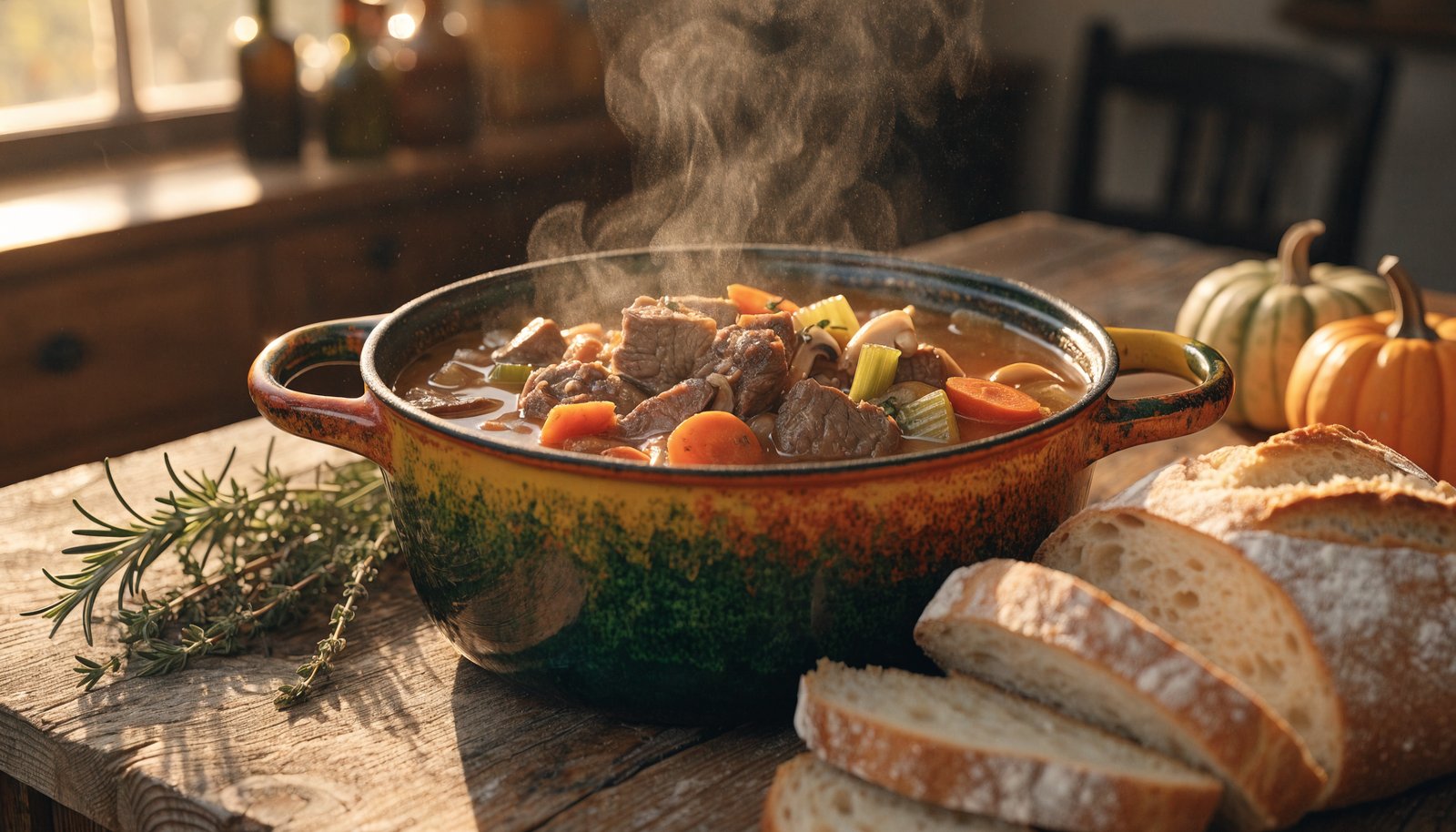
When the weather turns, one heavy pot quietly does the work of several. A Dutch oven sears on the stovetop, braises low in the oven, simmers soups and chili, deep-fries, and even bakes bakery-style crusty bread. The magic is the material: a thick cast-iron body holds a huge amount of heat and releases it slowly and evenly, so a stew barely simmers for hours without scorching and a seared roast browns deeply instead of steaming.
An enameled cast-iron Dutch oven adds convenience to that performance — no seasoning, no rust, and it shrugs off acidic ingredients like tomatoes and wine that would strip a bare-iron pot. Buy a good one and it becomes the pot you reach for from October through winter, and very likely for decades.
How we chose
We judged Dutch ovens on the things that actually determine whether you’ll love yours: heat retention and evenness (the core reason to own cast iron), enamel quality (does the interior resist staining and chipping over time?), usable size and weight (big enough to be useful, not so heavy it stays in the cupboard), lid fit (a snug lid traps moisture for better braises and bread), and value. We deliberately included picks at every price, because the cheapest enameled cast iron cooks far better than its price suggests — and the priciest earns its keep mainly on durability, finish, and looks rather than raw cooking ability.
Best Dutch ovens 2026 compared
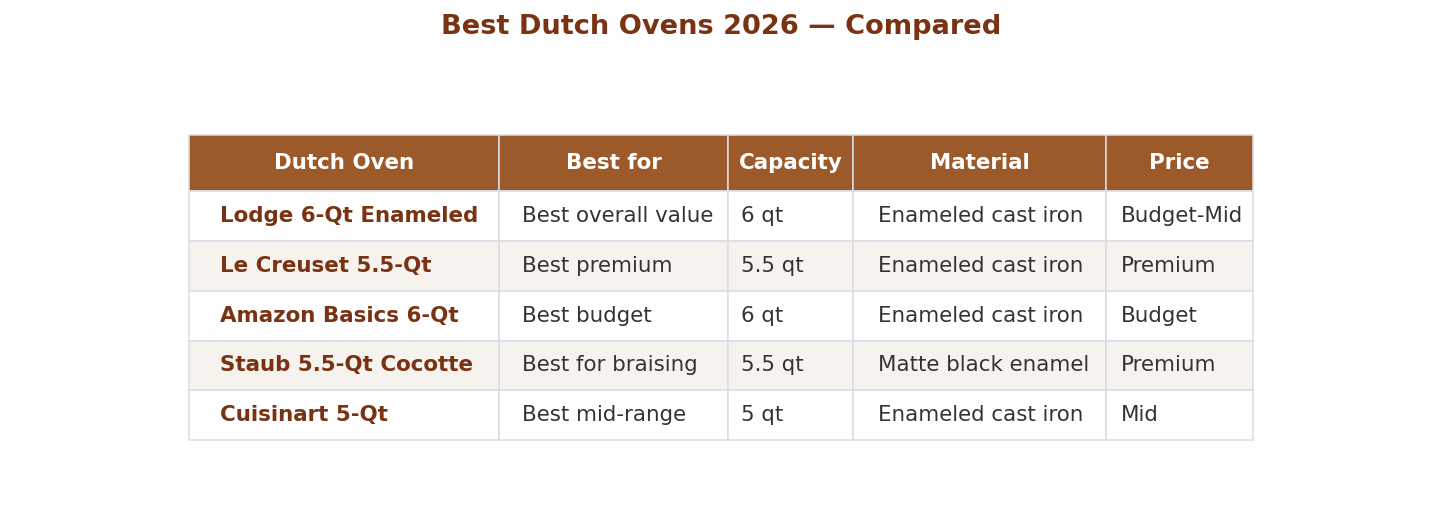
1. Lodge 6-Quart Enameled — Best overall value
The Lodge 6-quart enameled Dutch oven is the one we recommend to most people, because it captures nearly all of the performance of boutique pots for a fraction of the price. You get the same heavy, heat-retaining cast-iron body and a smooth enamel interior that needs no seasoning, in the 6-quart size that suits the widest range of cooking — stews, braises, soups, and a proper round of no-knead bread.
Who it’s for: anyone who wants a genuinely good Dutch oven without overthinking or overspending. The trade-off: the enamel and finish aren’t quite as refined as premium brands, and it’s on the heavy side — but for pure cooking results it punches far above its price. Check price on Amazon.
2. Le Creuset 5.5-Quart — Best premium
The Le Creuset Signature 5.5-quart is the heirloom pick. The enamel is exceptionally durable, the fit and finish are flawless, the pot is a touch lighter for its size than budget rivals, and it comes in a rainbow of colors that make it worthy of the stovetop-as-display treatment. Many owners cook with the same pot for 20+ years.
Who it’s for: serious cooks who buy once, cook often, and value durability and looks. The trade-off: you pay a significant premium, and the cooking results, while excellent, aren’t dramatically better than a good budget pot — you’re paying for longevity and craftsmanship. Check price on Amazon.
3. Amazon Basics 6-Quart — Best budget
The Amazon Basics enameled Dutch oven proves you don’t need to spend much to braise well. The heavy cast-iron body does the important work — even, retained heat — and the 6-quart size handles family-sized stews and soups. It’s the lowest-risk way to find out whether a Dutch oven earns a permanent spot in your kitchen.
Who it’s for: first-time buyers and anyone on a tight budget. The trade-off: you won’t get the enamel longevity, lighter design, or color options of premium brands, and long-term durability is more of a question mark — but the cooking is genuinely good. Check price on Amazon.
4. Staub 5.5-Quart Cocotte — Best for braising
The Staub round cocotte is the braiser’s specialist. Its matte black enamel interior is built for high-heat searing (it doesn’t show stains the way light interiors do), and the underside of the lid is studded with self-basting spikes that drip collected moisture back onto the food — a real advantage for pot roasts, short ribs, and coq au vin. The heavy lid seals tightly for long, gentle braises.
Who it’s for: cooks who braise often and want every advantage for moisture and browning. The trade-off: premium price, and the dark interior makes it slightly harder to judge fond and light-colored sauces. Check price on Amazon.
5. Cuisinart 5-Quart — Best mid-range
The Cuisinart Chef’s Classic enameled Dutch oven sits sensibly between budget and boutique: solid enameled cast iron, a comfortable 5-quart size, tight-fitting lid, and a friendly price. It’s a dependable everyday pot for cooks who want a step up from the cheapest options without paying heirloom money.
Who it’s for: the value-minded who still want a nicer finish than bare-budget pots. The trade-off: not as refined or durable as the premium names, but a well-rounded middle choice. Check price on Amazon.
How to get the most out of a Dutch oven
For braises (short ribs, pot roast, coq au vin): pat the meat dry and sear it hard on the stovetop in batches to build fond, then soften aromatics, deglaze with stock or wine, nestle the meat back in, cover, and braise low in the oven (around 300–325°F) until fork-tender. The heavy lid traps moisture so the meat bastes itself.
For no-knead bread: preheat the empty covered pot in a hot oven (around 450–500°F), drop in your risen dough, cover, and bake — the sealed pot traps steam for a crackling, bakery-style crust, then uncover for the last 10–15 minutes to color. (Check that your lid knob tolerates the heat, or swap in a metal one.)
For soups and chili: the even, gentle heat lets big pots simmer for hours without scorching the bottom — stir occasionally and keep the heat low.
What to look for when buying
Size: 5.5–6 qt is the do-everything sweet spot; go smaller for 1–2 people, larger (7 qt+) for crowds and big batches.
Enameled vs bare: enameled for easy, acid-safe, no-seasoning cooking (the right call for most); bare cast iron if you mainly sear and don’t mind maintenance.
Shape: round is the most versatile and fits burners best; oval suits long roasts but heats less evenly over a round burner.
Lid fit and knob: a snug, heavy lid means better braises and bread. Check the knob’s max oven temperature if you plan to bake bread hot.
Weight: heavier means better heat retention but harder to lift full — be honest about what you can comfortably handle.
Common mistakes to avoid
Thermal shock. Don’t move the pot between temperature extremes (cold pot into a blazing oven, or cold water into a hot pot) — it can craze or chip the enamel.
Overheating an empty pot. Enameled cast iron isn’t meant to be cranked empty on high; preheat gently with oil or food in it (bread baking, where you preheat covered, is the deliberate exception).
Metal-on-enamel abuse. Banging metal utensils on the rim or scraping hard chips the coating; use wood, silicone, or nylon.
Buying oval by default. Round is more versatile and heats more evenly for most cooking; only choose oval if you specifically roast long cuts.
Assuming price equals cooking performance. A budget pot braises beautifully; you pay up for durability, finish, and looks, not dramatically better stew.
Which should you buy?
For most people, the Lodge 6-Quart is the smart, near-unbeatable value. Want an heirloom you’ll keep for decades? The Le Creuset 5.5-Qt. Lowest price that still cooks well? The Amazon Basics 6-Qt. Braise constantly? The Staub cocotte. Want a nice middle ground? The Cuisinart 5-Qt. Cooking your way through fall and the holidays? Pair it with our best roaster ovens, best bread makers, and kitchen appliance buying guide.
Frequently Asked Questions
What size Dutch oven should I buy?
A 5.5–6 quart round Dutch oven is the sweet spot for most households — big enough for a whole chicken, a batch of chili or stew for four to six, or a standard boule of no-knead bread, but not so heavy that lifting it full is a two-person job. Cooking for one or two? A 3–4 qt is plenty. Feeding a crowd or making big-batch soups and braises? Step up to 7 qt.
Is an enameled Dutch oven worth it over bare cast iron?
For most cooks, yes. Enameled cast iron needs no seasoning, won’t rust, and is safe for acidic foods like tomato sauce, wine, and citrus braises — exactly the fall and winter cooking a Dutch oven does best. Bare cast iron is cheaper and superb for searing, but the enamel makes daily use, cleanup, and storage far easier for the average kitchen.
Dutch oven vs slow cooker — which for fall stews?
They’re different tools. A Dutch oven browns meat and builds deep flavor on the stovetop, then braises low in the oven, and it doubles for bread, deep-frying, and soups — but it needs the oven and some attention. A slow cooker is hands-off all day but can’t sear. If you only buy one and you like to brown and roast, the Dutch oven is far more versatile; many cooks happily own both.
Can a Dutch oven go in the oven, and how hot?
Yes — oven use is the whole point. Enameled cast iron Dutch ovens are oven-safe, typically up to around 500°F (check your specific model, and note that plastic or phenolic knobs may have a lower limit than the pot itself — many owners swap in a stainless knob for high-heat bread baking). That heat tolerance is what lets you sear on the stove and braise low and slow in the oven.
How do I keep the enamel from chipping or staining?
Avoid thermal shock (don’t put a cold pot into a screaming-hot oven or run cold water into a hot one), don’t bang metal utensils on the rim, and don’t drag heavy metal across the interior — wood, silicone, or nylon tools are kinder. Light interior staining from browning is normal and cosmetic; a simmer of water and baking soda usually lifts it.
Is a cheap Dutch oven as good as Le Creuset or Staub?
For actual cooking results, a budget enameled Dutch oven like Lodge or Amazon Basics gets you most of the way there — the heavy cast-iron body retains and spreads heat well regardless of price. What you pay up for with premium brands is enamel durability, fit and finish, lighter-for-the-size designs, color range, and a warranty. If you cook a lot and want an heirloom, that’s worth it; if you just want great stews, the value picks deliver.
Cooking outdoors: see best outdoor pizza ovens.