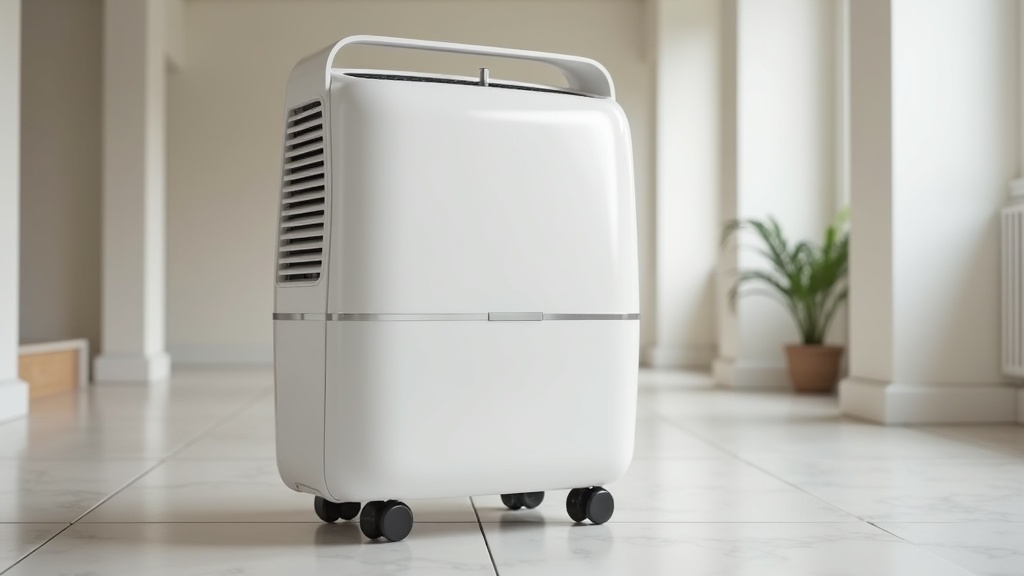
Here’s a fun way to lose your mind on a humid August afternoon: buy a dehumidifier, plug it in, and listen to it work. It hums. It whirs. The fan pushes air and the little light glows — everything sounds like a machine earning its keep — and then you check the bucket and it’s bone dry. Not “a little low.” Dry as a cracker. You start to wonder if you bought a very expensive box fan.

Before you rage-return it, take a breath. A dehumidifier that runs but collects no water is one of the most common “it’s broken!” panics out there, and most of the time nothing is broken at all — the machine is either fighting physics it can’t win or has already done its job. Below are the 8 real reasons a dehumidifier stops collecting water, each with the symptom, why it’s happening, and how to fix it. Start with the first two; they solve the clear majority of cases.
Quick answer: The most common reasons a dehumidifier runs but collects no water are a room that’s too cold (below ~65°F the coils frost over — you need a low-temp or desiccant unit), the humidity already being below the setpoint, frosted coils, a full-bucket sensor or float stuck, a dirty filter or blocked coils, or a failed compressor. Check the room temperature and your setpoint first — that solves most “no water” cases before you touch anything else.
If the fix turns out to be “wrong unit” — the three replacements this guide points to:
- Cold basement, garage or crawlspace (below ~65°F): a desiccant model has no coils to frost over — Ivation desiccant dehumidifier
- Wet basement around 1,500 sq ft or more: 50 pints, ENERGY STAR — Midea Cube 50-pint dehumidifier
- Moderately damp bedroom or living area: 30–35 pints is enough — Frigidaire 35-pint dehumidifier
Do the free checks below first — most “no water” units are not broken. As an Amazon Associate, we earn from qualifying purchases.
Fighting a damp room? Start with the two cheap tools that diagnose it
Humidity monitors on Amazon · Ivation desiccant dehumidifier · Midea Cube 50-pint dehumidifier
As an Amazon Associate, we earn from qualifying purchases.
1. The Room Is Too Cold (Below ~65°F the Coils Frost Over)
Symptom: The unit runs happily in a cool basement, garage, or crawlspace — you hear the compressor and fan — but the bucket stays empty for hours, and the coils feel icy if you peek behind the grille.
Why it happens: A standard dehumidifier is a mini refrigerator: it pulls warm, moist air across cold coils, moisture condenses on the metal, and it drips into the bucket. That only works when the room is warm enough. Below roughly 65°F, those already-cold coils drop below freezing and collect frost instead of water. The ice insulates the coil and stops condensation dead. Compressor units simply aren’t built to squeeze water out of cold air — there’s little moisture in it to begin with, and what’s there freezes on contact.
How to fix it: Warm the space above 65°F if you can, which lets a standard unit work as designed. Or — the better long-term fix for cold basements and garages — switch to a desiccant dehumidifier. Instead of cold coils, desiccant models use a moisture-absorbing wheel that works down to about 33°F, so they keep collecting where a compressor unit just makes ice. If you’ve been fighting an empty bucket in a 55°F basement, this is almost certainly your problem, and no amount of “fixing” a compressor unit will change the physics.
Cold basement or garage? A desiccant unit works where compressors freeze
Ivation desiccant dehumidifier on Amazon
As an Amazon Associate, we earn from qualifying purchases.
2. The Humidity Is Already Below Your Setpoint (It’s Working — Nothing to Collect)
Symptom: The unit runs, the fan is on, but no water appears — and the room actually feels comfortable and dry, not clammy. It may cycle on briefly, then shut the compressor off.
Why it happens: Here’s the plot twist nobody expects: the machine isn’t broken, it’s done. Every dehumidifier has a humidity setpoint (say, 50%). Once the room hits or drops below it, the built-in humidistat tells the compressor to stop — there’s nothing left to pull. In many models the fan keeps spinning to sample the air, so it sounds like it’s working full-tilt while collecting exactly zero water. On a dry day, or after it’s already dried the room, an empty bucket is a sign of success, not failure.
How to fix it: Get a cheap hygrometer and check the actual room humidity. If it reads at or below your setpoint — anywhere under about 50% — your dehumidifier is winning. To push it lower for a damp-prone space, drop the setpoint a few points and watch what happens. A comfortable indoor range is roughly 40–50%; chasing lower wastes energy and makes a room feel arid. A $10 monitor ends this whole mystery in thirty seconds. Keeping tabs on indoor air pays off beyond humidity, too — the same habit flags when it’s time to run an air purifier during wildfire smoke season.
Stop guessing — measure the room
Shop humidity monitors on Amazon
As an Amazon Associate, we earn from qualifying purchases.
3. Frosted or Iced-Over Coils
Symptom: You see visible frost or a sheet of ice on the coils behind the front grille. The unit runs but produces little or no water, and it may run indefinitely without ever satisfying the humidistat.
Why it happens: This is the close cousin of #1, and it shows up even in moderately cool rooms or when a unit runs nonstop in high humidity. When the coil surface dips below 32°F, condensation freezes into frost instead of dripping off. That ice insulates the coil, so it can no longer chill incoming air or shed moisture — and the frost keeps building. Poor airflow, from a dirty filter or a unit crammed against a wall, makes it worse by letting the coil get colder than it should.
How to fix it: Most modern dehumidifiers have auto-defrost that senses frost and pauses the compressor to let the coils thaw — make sure it’s enabled and give the machine time to cycle through it. If you see ice, turn the unit off and let it fully thaw for a few hours before restarting. Then fix the root cause: raise the ambient temperature, pull the unit 6–12 inches off the wall for airflow, and clean the filter (see #5). If your space simply runs cold, you’re back to the desiccant answer from #1 — a compressor model in a cold room frosts over again and again no matter how often you thaw it.
4. A Stuck Float or Misseated Bucket (The Full-Bucket Sensor Is Lying)
Symptom: The “bucket full” light is on and the unit has shut off even though the tank is empty. Or it won’t collect at all, acting as if the bucket is full when it plainly isn’t.
Why it happens: Dehumidifiers use a float — a small buoyant sensor, usually a hinged foam or plastic piece — to detect a full bucket and shut the compressor off so water doesn’t overflow. If that float sticks in the “up” position, jams on debris, or gets knocked out of place, the machine thinks the tank is full and refuses to collect a drop. The other classic version: the bucket isn’t seated all the way. Many units have a safety switch that only lets the compressor run when the tank is pushed fully home, so a bucket a half-inch shy of clicking stops everything.
How to fix it: Pull the bucket, empty it, and find the float — a light piece that swings or slides freely. Wiggle it, clear any gunk or mineral scale around its hinge, and confirm it drops back to “empty” on its own. Wipe the bucket and sensor area, then reseat the bucket firmly until it clicks and sits flush. Nine times out of ten, a “full” light on an empty tank is a stuck float or a lazy reseat. If the float is cracked or won’t move, it’s a genuine — and usually cheap — part to replace.
5. A Dirty Air Filter or Blocked Coils
Symptom: Collection has slowly tapered off over weeks or months, airflow from the unit feels weak, and the machine runs longer for less result. You may also notice more frosting than before.
Why it happens: A dehumidifier can only pull moisture from air it can move. The intake filter traps dust, pet hair, and lint, and over time it clogs — so less humid air ever reaches the coils. Starve the coils and two bad things happen: collection drops because less moist air passes through, and the under-ventilated coils get too cold and start to frost (looping back to #3). Dust caked on the coil fins makes it worse by insulating the metal.
How to fix it: Pop out the filter — most slide or clip out of the back or side — and clean it. A rinse under warm water (dried fully before reinstalling) or a pass with a vacuum brush handles most; check your manual, since some are washable and some replaceable. Do this every 2–4 weeks during heavy-use season, and gently vacuum dust off the coils while you’re in there. Clean airflow is the difference between a unit that pulls pints a day and one that just hums. It’s the same logic behind why a neglected appliance quietly costs more to run — worth knowing if you track what these add to the power bill, which we break down in what it really costs to run an air purifier.
Filter shot or missing? Grab a fresh one
Shop dehumidifier filters on Amazon
As an Amazon Associate, we earn from qualifying purchases.
6. The Continuous-Drain Hose Is Doing Its Job (Water’s Going Elsewhere)
Symptom: The bucket is empty, but the unit is clearly running fine and the room is getting drier. There’s a hose attached to the back — and maybe a suspiciously damp floor drain nearby.
Why it happens: This one trips people up constantly. Most dehumidifiers have a continuous-drain port where you attach a garden hose so the unit drains straight to a floor drain, sump, or sink instead of filling a bucket. If someone set that up (or you did and forgot), the water flows out the hose, not into the tank — and an empty bucket is completely correct. The gotcha: gravity drains only work if the hose runs downhill the whole way. A hose that kinks, loops upward, or dumps into a drain higher than the unit backs up, and then the internal float trips and stops collection (looping back to #4).
How to fix it: Check the back for an attached hose and follow it — is water reaching the drain? Then the machine is working perfectly. If you’d rather use the bucket, disconnect the hose and cap the drain port per your manual. Keeping continuous drainage? Make sure the hose slopes downward with no kinks or high spots; for a drain above the unit, you’ll need a model with a built-in condensate pump rather than a gravity hose. Simple issue, but it masquerades as a broken machine more than almost anything else here.
7. A Refrigerant Leak or Failed Compressor (The One That’s Actually Broken)
Symptom: The fan runs but you never hear the deeper hum of the compressor kicking in, or it cycles on and off rapidly. The coils never get cold, no water collects however warm and humid the room is, and you’ve already ruled out temperature, setpoint, filter, float, and drain hose.
Why it happens: Now we’re in genuinely-broken territory. The compressor circulates refrigerant to chill the coils. If the sealed system springs a slow leak, it loses the refrigerant it needs and the coils never get cold enough to condense water — the fan runs, but it’s just moving room-temperature air. A failed compressor (worn out, seized, or with a dead start capacitor) does the same from a different angle: no compression, no cold coil, no water. These aren’t user-serviceable — the sealed refrigerant system needs specialized tools and EPA-certified handling.
How to fix it: There’s no DIY fix here, and usually no worthwhile repair one either. Recharges and compressor swaps on a consumer dehumidifier typically cost more than the unit is worth, especially on anything a few years old. If you’ve methodically ruled out every other cause — warm enough room, setpoint verified with a hygrometer, clean filter, free-moving float, seated bucket, no drain hose siphoning it off — and the coils simply never get cold, it’s time to replace. The upside: new units are more efficient and quieter than models from even a few years ago.
Ruled everything else out? It’s replacement time
Frigidaire 35-pint dehumidifier on Amazon
As an Amazon Associate, we earn from qualifying purchases.
8. It’s Undersized for the Space (or the Room Is Just Dry Now)
Symptom: A small unit runs constantly in a big, damp basement and barely fills the bucket, or collects far less than the “pints per day” number on the box led you to expect.
Why it happens: Those headline capacity ratings — “50 pints per day” — are measured under lab conditions of high heat and humidity. In your real room, at normal temperatures and once the worst dampness is gone, actual collection is a fraction of that, and that’s expected, not a defect. If the unit is genuinely undersized for the square footage and dampness, it’ll run around the clock and still lose ground. And once it has knocked humidity down, collection naturally tapers off (circling back to #2).
How to fix it: Match capacity to the space and how damp it is. As a rough guide, a moderately damp 1,500 sq ft area wants 30–35 pints, while a wet basement that size wants 50 pints or more; bigger or wetter spaces scale up. If your unit is clearly too small, sizing up to a proper basement dehumidifier collects more and runs less. And if collection has simply slowed because the room is finally dry — verify with that hygrometer — the machine has done exactly what you bought it for.
Outmatched by a big damp basement? Size up
Midea Cube 50-pint dehumidifier on Amazon
As an Amazon Associate, we earn from qualifying purchases.
How to Tell If It’s Broken vs. Just Done Its Job
Here’s the whole game in one tool: a hygrometer. Before you conclude anything is broken, measure the humidity in the room. If it reads at or below your target — say, under 50% — your dehumidifier isn’t failing, it’s succeeding, and an empty bucket is the trophy. There’s simply not enough moisture in the air to pull. Bump the setpoint down a few points, wait, and see if collection resumes; if it does, the machine is healthy.
If the hygrometer reads high — 60%, 70%, a muggy room — and the bucket still isn’t filling, then you have a real problem, and you work down this list in order: room temperature (below 65°F?), frosted coils, a stuck float or unseated bucket, a clogged filter, a drain hose carrying water away, and finally the compressor. Nine times out of ten you’ll solve it in the first five. It’s the same principle behind any connected-home gear — a smart hygrometer that logs humidity over time makes this diagnosis effortless, and if you’re building that kind of setup, our smart home buying guide covers where sensors like it fit.
When to Repair vs. Replace
The math is refreshingly simple. Everything on this list except #7 is a free or cheap fix — cleaning, reseating, thawing, rerouting a hose, buying a $10 monitor, or at worst a low-cost filter or float. Do those first, always. But if you’ve genuinely landed on a refrigerant leak or dead compressor, don’t pour money into it: sealed-system repairs on a consumer dehumidifier routinely cost as much as a new unit, and a machine that’s already several years old is on borrowed time anyway. Repair the cheap stuff; replace the compressor failures. And if your real issue was a cold room all along, “replacing” means buying the right kind of unit — a desiccant model — not another compressor unit destined to frost over.
Dehumidifier Not Collecting Water — FAQ
Why is my dehumidifier not collecting water?
The most common reasons are a room that’s too cold (below about 65°F, where a standard unit’s coils frost over), the humidity already being at or below your setpoint so there’s nothing to pull, frosted coils, a stuck full-bucket float or an unseated bucket, or a clogged filter choking airflow. Less commonly, a continuous-drain hose is carrying water to a floor drain instead of the bucket, or the compressor has failed. Check the room temperature and measure humidity with a hygrometer first — those two account for most “no water” cases.
What temperature is too cold for a dehumidifier?
For a standard compressor-based unit, roughly 65°F is the practical floor. Below that, the cold coils dip under freezing and collect frost instead of water, and collection drops sharply. Some units have auto-defrost to cope with cooler temperatures, but even those struggle in a genuinely cold basement or garage. If your space regularly sits below 65°F, a desiccant dehumidifier is the right tool — it uses a moisture-absorbing wheel that keeps working down to about 33°F.
How do I know if my dehumidifier is broken?
Measure the room’s humidity with a hygrometer. If it’s at or below your target (under ~50%), the machine isn’t broken — it’s done its job, and the empty bucket is proof. If humidity is high (60%+) and muggy but the bucket won’t fill, work through the fixable causes: cold room, frosted coils, stuck float, unseated bucket, dirty filter, and drain hose. Only if the coils never get cold after you’ve ruled all those out — the fan runs but the compressor never truly kicks in — are you likely looking at a genuine refrigerant or compressor failure.
Should a dehumidifier run all the time?
Not necessarily, and constant running isn’t automatically a sign of health or failure. A well-matched unit cycles: it runs until the room hits the setpoint, then the compressor shuts off (though the fan may keep sampling the air). If yours runs nonstop, the space may be very damp, the unit undersized, a door or window letting in outside humidity, or the setpoint very low. A dehumidifier that runs constantly and still can’t lower the humidity is either too small for the space or has a real problem worth diagnosing.
What size dehumidifier do I need for a basement?
It depends on square footage and how damp the space is. As a rough guide, a moderately damp basement around 1,500 sq ft is well served by a 30–35 pint unit, while a genuinely wet basement of the same size wants 50 pints or more; larger or wetter spaces scale up. When in doubt, size up — an oversized unit reaches your target humidity faster and then cycles off, whereas an undersized one runs constantly and never quite catches up. For cold basements specifically, prioritize a low-temperature or desiccant model regardless of pint rating.
Disclosure: As an Amazon Associate, The Home Picker earns from qualifying purchases. This guide reflects general dehumidifier troubleshooting knowledge, not hands-on testing of specific models; exact temperature thresholds, defrost behavior, drainage options, and capacity recommendations vary by unit, so check your manufacturer’s specs. Product categories and examples are provided as common starting points, not as individually tested recommendations here.