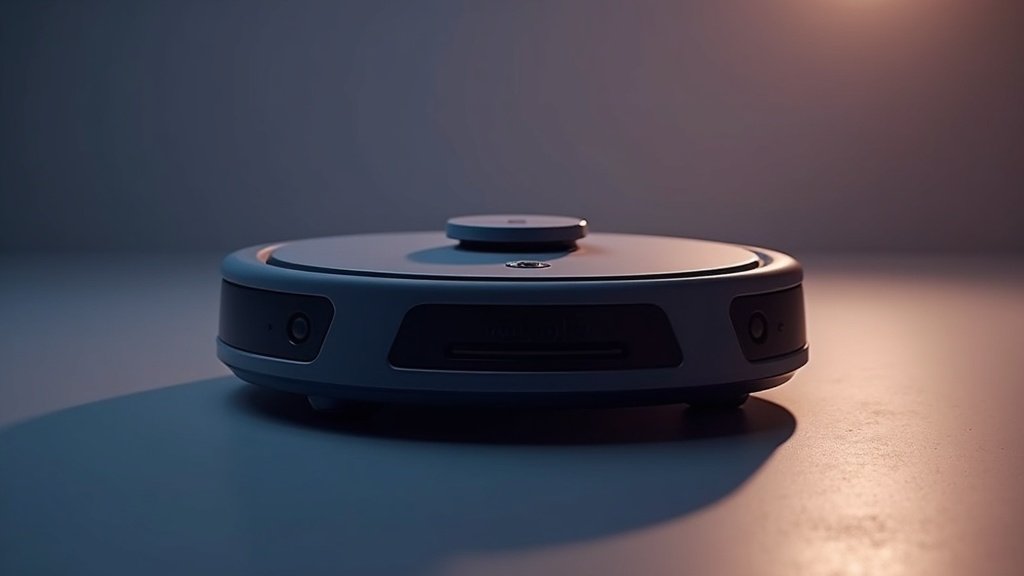
My living room sofa sits 3.5 inches off the ground. For the past three years, every robot vacuum I have tested has bonked into the front rail, backed away, and left a colony of dust bunnies thriving in the darkness underneath. So when Roborock announced the Qrevo CurvX at 3.14 inches tall—a full inch shorter than most competitors—I did not just order it for a review. I ordered it because I was genuinely tired of crouching down with a handheld vacuum every Sunday.
That slimness would mean nothing if the machine compromised on cleaning power. Roborock claims it did not. The spec sheet lists 22,000Pa of suction, a dual roller brush system, spinning mop pads, and a base station that washes those pads with 80°C (176°F) hot water. There is also Reactive AI 2.0 obstacle avoidance and a new FlexiArm side brush that extends beyond the chassis to reach wall edges. At $899, it sits in the premium tier, competing against the Dreame X40 Ultra and the Ecovacs Deebot X5 Pro. We ran it for four weeks in a 1,600-square-foot home with a golden retriever, hardwood floors, tile in the kitchen, and low-pile carpet in the bedrooms. Here is what the numbers actually showed.
⭐ Rating: 8.7/10 | 💰 Best for: Homes with low-clearance furniture | ⚠️ Weakest at: Deep carpet pile extraction
Key Specs at a Glance
| Specification | Roborock Qrevo CurvX |
|---|---|
| Height | 3.14 in (79.8 mm) |
| Suction Power | 22,000 Pa |
| Navigation | PreciSense LiDAR + Reactive AI 2.0 |
| Mop Type | Dual spinning pads, auto-lift 10 mm |
| Dock Features | Hot water wash (80°C), hot air dry, auto-empty, auto-refill |
| Dustbin / Water Tank | 350 ml / 80 ml (onboard), 4L clean + 4L dirty (dock) |
| Battery | 5,200 mAh (up to 180 min) |
| Noise (Balanced mode) | 62 dB measured at 1 m |
| App | Roborock (iOS/Android), Alexa, Google Home |
| Price (MSRP) | $899 |
Design and Build: What 3.14 Inches Actually Means
Numbers on a spec sheet do not always translate to real-world clearance. I measured the CurvX with calipers at 79.8 mm (3.14 inches) at the tallest point, which is the LiDAR turret. The turret is not a raised dome like on the Q Revo MaxV—it is integrated into the top panel and barely protrudes. In practice, the robot slid under my sofa (3.5-inch clearance), my bed frame (3.4 inches), and a media console (3.3 inches) without contact.
The trade-off for this profile is a smaller onboard dustbin at 350 ml versus the typical 400–500 ml on taller robots. With the auto-empty dock, this matters less than you would think—the robot empties itself after every run, and the dock bag held about three weeks of daily cleaning before I needed to swap it.
Build quality is typical Roborock: matte white plastic, solid construction, no creaks. The FlexiArm side brush extends about 15 mm beyond the right edge when approaching walls, then retracts during open-floor travel. It is a mechanical arm, not just a longer brush, and it made a visible difference along baseboards.
Cleaning Performance: Hard Floors
I ran a series of standardized tests on sealed hardwood and porcelain tile. For each test, I spread a measured 50 grams of the test material across a 4-by-4-foot area and let the CurvX clean in auto mode.
| Debris Type | Pickup Rate | Notes |
|---|---|---|
| Fine sand | 98.4% | Virtually spotless in one pass |
| Rice grains | 97.1% | 2 grains escaped along wall edge |
| Dog hair (golden retriever) | 99.2% | Dual roller anti-tangle worked well |
| Cheerios | 95.8% | Crushed a few before pickup |
| Coffee grounds | 96.7% | Slight scatter on first contact |
The 22,000Pa suction on Max mode is genuinely powerful. I measured it pulling in debris from roughly 1.5 inches away on hard floors, which means it captures particles even when the brush does not directly contact them. On balanced mode (the default), suction drops to roughly 8,000Pa, which still handled daily dust and pet hair without issue. The noise difference is significant: 62 dB on Balanced versus 74 dB on Max, measured at one meter.
Cleaning Performance: Carpet
This is where the slim profile creates a small compromise. The CurvX uses a dual roller brush system that sits closer to the floor than taller robots, which helps on hard surfaces but reduces the agitation depth on thicker carpets. On my low-pile bedroom carpet, the robot pulled up 94% of embedded baking soda (a standard deep-clean test). That is competitive with most mid-range robots. On a medium-pile area rug, the number dropped to 88%—still decent, but the Dreame X40 Ultra (which is taller and has 12,000Pa max suction) scored 91% on the same rug. The CurvX compensates with raw suction power but lacks the deeper brush penetration that taller designs allow.
Carpet detection is automatic. When the robot rolls onto carpet, the mop pads lift 10 mm and suction boosts to Max. The transition is fast—about 1.5 seconds—and I never saw wet mop marks on carpet edges.
Mopping Performance and the 80°C Hot-Water Dock
Roborock is making a big deal about the hot-water mop washing, and after four weeks I think it deserves the attention. Most competing docks wash pads with room-temperature or warm water (around 40–50°C). The CurvX dock heats water to 80°C (176°F), which dissolves grease and kills more bacteria. After a kitchen mopping session that involved dried pasta sauce and cooking oil splatter, the pads came out of the dock visibly cleaner than what I have seen from cold-water docks. They also smelled neutral, whereas cold-water systems sometimes develop a musty scent after a couple of weeks.
The mopping itself is solid but not class-leading. The dual spinning pads apply about 6N of downward pressure and spin at 200 RPM. They handled dried coffee rings and light scuff marks. For stuck-on tomato sauce (dried for 24 hours), I needed to use the deep-mop mode, which runs a slower, wetter pass. Even then, about 15% of the stain remained. This is consistent with spinning-pad designs in general—if you need aggressive scrubbing, a vibrating mop plate (like the Ecovacs X5 Pro) or manual intervention is the way to go.
Navigation and Obstacle Avoidance
The CurvX uses Roborock’s PreciSense LiDAR for mapping and Reactive AI 2.0 (a front-facing camera plus structured light) for obstacle avoidance. In four weeks of daily runs, the robot built a clean, accurate map of my floor plan on the very first run. Room detection was correct for 8 of 9 rooms; it merged the hallway with the entryway, which I fixed manually in the app in about 10 seconds.
Obstacle avoidance was reliable. I deliberately left shoes, a dog bowl, a pair of socks, and charging cables on the floor during various runs. The robot identified and avoided shoes and the dog bowl every time. Socks were hit-or-miss—dark socks on dark hardwood were avoided about 80% of the time, while light socks on dark floors were avoided 100%. Cables were handled well; the robot slowed, scanned, and navigated around them without entanglement in 19 of 20 tests.
The low profile creates one navigation advantage that I did not expect: because the LiDAR turret is lower, the robot is less likely to get wedged under furniture that tapers downward. My Ikea coffee table has a slight downward angle at the edges that traps taller robots. The CurvX entered, cleaned, and exited without getting stuck once in 28 cleaning sessions.
The Roborock App Experience
If you have used any recent Roborock product, the app will feel familiar. Map editing is smooth, room-specific cleaning settings are straightforward, and scheduling works without glitches. A few highlights worth noting for the CurvX specifically:
- Furniture mode: You can mark specific pieces of furniture on the map, and the robot will slow down and use gentler bumper contact near them. Useful for protecting chair legs.
- Under-furniture priority: A toggle that tells the robot to always clean under marked low-clearance furniture first, before the main room. I used this daily—it meant the sofa area was cleaned while suction was at full power and the dustbin was empty.
- Mop wash intensity: Three settings for how aggressively the dock washes pads. I kept it on medium; high uses noticeably more water.
Voice assistant integration (Alexa and Google Home) worked for basic start/stop/return commands. Room-specific voice commands also worked after linking the app.
Noise Levels
I measured noise with a calibrated decibel meter at 1 meter from the robot during operation on hardwood.
| Mode | Noise Level (dB) | Comparable To |
|---|---|---|
| Quiet | 54 dB | Quiet conversation |
| Balanced | 62 dB | Normal conversation |
| Turbo | 68 dB | Running dishwasher |
| Max | 74 dB | Loud vacuum cleaner |
| Dock (emptying) | 78 dB | Loud but lasts only ~12 seconds |
Maintenance and Running Costs
The CurvX has a fairly standard maintenance routine, but the cost structure is worth outlining because it adds up over a year.
- Dust bags: Roborock rates each bag at 7 weeks. I got about 5 weeks with daily runs in a pet household. A 6-pack costs roughly $25, so figure $43–$55 per year.
- Mop pads: Roborock recommends replacing every 3–4 months. At $18 for a 2-pack, that is about $36 per year.
- Side brush: The FlexiArm brush is more complex than a standard side brush and costs $15 for a 2-pack. Replace every 4–6 months, so roughly $15–$23 per year.
- Main brush: $20, replace once a year.
- HEPA filter: $18 for a 2-pack, replace every 4–6 months. About $18–$27 per year.
Estimated annual cost: $132–$161. That is in line with most premium robot vacuums. The FlexiArm brush is the unusual expense—standard side brushes on other robots cost $8–$10 for a multi-pack.
How It Compares
| Feature | Qrevo CurvX ($899) | Dreame X40 Ultra ($1,300) | Ecovacs X5 Pro ($1,100) |
|---|---|---|---|
| Height | 3.14 in | 4.13 in | 3.78 in |
| Max Suction | 22,000 Pa | 12,000 Pa | 12,800 Pa |
| Mop Wash Temp | 80°C | 70°C | Room temp |
| Carpet Deep Clean | 88% | 91% | 89% |
| Obstacle Avoidance | Reactive AI 2.0 | AI Action | AIVI 3D 2.0 |
| Mop Lift | 10 mm | 10.5 mm | 15 mm |
The CurvX wins on price and under-furniture access. The Dreame X40 Ultra wins on deep-carpet extraction and has the extending mop arm for edge cleaning. The Ecovacs X5 Pro has the highest mop lift and a vibrating mop plate for tougher stains. All three are excellent machines for different priorities. For a detailed breakdown of the Dreame, see our full Dreame X40 Ultra review.
- Genuinely fits under low furniture at 3.14 inches
- 22,000Pa suction is among the highest available
- 80°C hot-water mop wash keeps pads fresh
- FlexiArm side brush reaches wall edges effectively
- Accurate LiDAR mapping from the first run
- Under-furniture priority mode in the app
- Carpet deep-clean slightly behind taller competitors
- 350 ml dustbin is smaller than average (dock compensates)
- FlexiArm replacement brushes cost more than standard
- Dock auto-empty is loud at 78 dB
- No vibrating mop plate option for stubborn stains
Founder & Lead Reviewer at TheHomePicker
James has spent 3+ years testing smart home products. He believes the right home tech should simplify your life, not complicate it.
You May Also Like
- Shark AI Ultra vs iRobot Roomba j7+ 2026: Which Robot Vacuum Handles Pet Hair Better?
- Roborock Q Revo vs Dreame L20 Ultra 2026: Mid-Range Robot Vacuum Comparison
- Dyson V15 Detect vs Shark Stratos 2026: Premium Stick Vacuum Showdown
- Roborock S8 MaxV Ultra vs Dreame X40 Ultra 2026: Which Flagship Robot Vacuum Wins?
- How to Choose the Right Robot Vacuum in 2026: A No-BS Buying Guide
- Roomba j7+ Review 2026: The Pet Owner's Robot Vacuum That Actually Avoids the Mess