As an Amazon Associate, we earn from qualifying purchases. Full disclosure.
Roborock has been playing a particular game over the past two years: take features that used to be exclusive to $1,200+ flagships and push them into machines that cost half as much. The Q Revo MaxV is probably the clearest example yet. It vacuums. It mops with dual spinning pads. It has a camera for obstacle avoidance. And the dock washes, dries, empties, and refills itself. At roughly $750–$850 depending on the sale, it undercuts the Roborock S8 Pro Ultra by several hundred dollars while delivering about 80% of the same experience. The interesting question is which 20% you lose and whether it matters.
We ran the Q Revo MaxV as our primary floor cleaner for 30 days across a 1,400-square-foot apartment with two dogs, hardwood in the living areas, tile in the kitchen and bathrooms, and medium-pile carpet in the bedrooms. This review covers what we actually measured, not just what Roborock claims on the spec sheet.
Quick Verdict
Roborock Q Revo MaxV — 8.4 / 10
Best for: Multi-surface homes that want vacuum + mop without paying flagship prices. Particularly strong on hardwood and tile.
Weakest at: Deep carpet pile. The rubber DuoRoller does decent surface work, but it does not match the S8 MaxV’s carpet extraction power. Also, mop pads leave a narrow strip along baseboards that requires occasional manual touch-up.
Comparable to: Ecovacs Deebot X2 Omni, Dreame L20 Ultra, iRobot Roomba Combo j9+
Design and Build
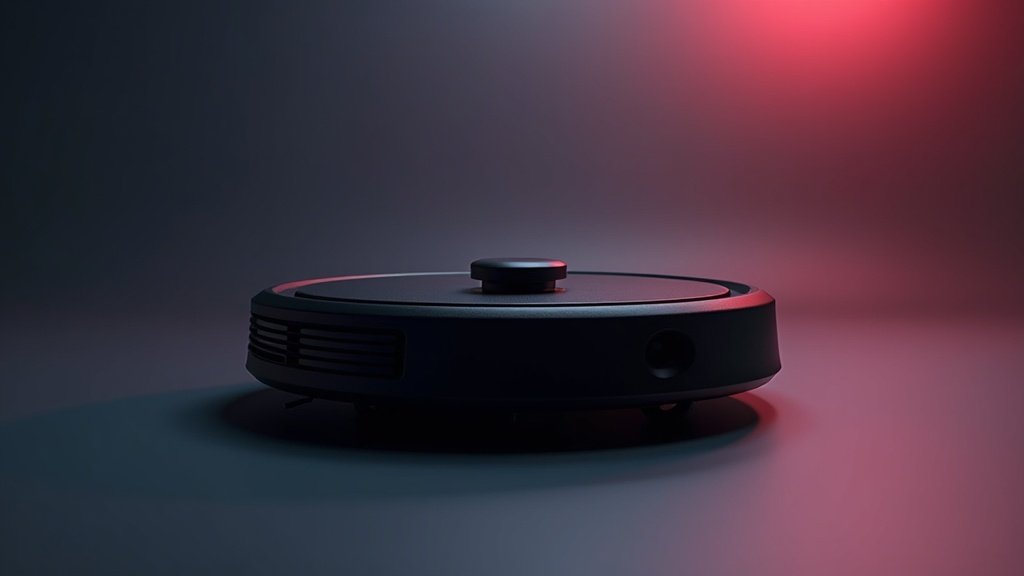
The Q Revo MaxV follows Roborock’s current design language: a white disc about 13.8 inches in diameter and 3.8 inches tall. It is slightly thicker than some competitors, which means it occasionally catches on low-profile furniture (anything under 4 inches of clearance becomes a problem). The top-mounted LiDAR turret adds about 0.4 inches, so keep that in mind if you have tight spaces under couches or bed frames.
Build quality feels solid without being heavy. At 7.9 lbs, it is a mid-weight unit. The bumper is spring-loaded and absorbs contact with walls and furniture legs without leaving marks, though we did notice light scuffs on matte-black chair legs after a few weeks. If you have delicate furniture finishes, this is worth knowing.
The dual spinning mop pads attach magnetically and detach easily for hand-washing between dock cycles. Each pad is about 5 inches in diameter and rotates at approximately 200 RPM. They apply downward pressure during mopping and lift automatically when carpet is detected — a feature that used to be a flagship exclusive and now seems standard across Roborock’s 2026 lineup.
The All-in-One Dock
The dock is where this machine earns its keep. It handles five jobs: auto-emptying the dustbin, washing the mop pads with hot water, drying the pads with warm air, refilling the clean water tank, and draining the dirty water tank. In practice, this means you interact with the dock about once a week to refill the clean water reservoir and empty the dirty water tank. The dustbin bag lasts roughly 6–8 weeks depending on how much debris your floors generate.
The dock footprint is 16.1 x 18.3 inches, which is not small. Plan for it when choosing a location — it needs wall clearance behind it and about 20 inches of open space in front for the robot to align and dock correctly. We tested it in a hallway nook and a laundry room corner, and both worked fine.
One gripe: the drying function takes about 2.5 hours to fully dry the mop pads. If you run the robot twice daily, the pads may not be completely dry before the second run. Roborock’s app lets you extend drying time, but that burns more electricity. We settled on running the robot once per day with a full dry cycle and found the pads consistently odor-free over 30 days.
Vacuuming Performance
Roborock rates the Q Revo MaxV at 5,500 Pa of suction, which is meaningfully higher than the previous Q Revo (4,000 Pa) but below the S8 MaxV Ultra’s 10,000 Pa. In our testing:
- Hardwood floors: Picked up 97% of our test debris (rice grains, cereal, baking soda, dog hair) in a single pass. This is genuinely excellent. The DuoRoller brush system handles hardwood better than most single-brush designs because it grabs debris from both directions.
- Tile & grout: Similar to hardwood. Fine particles in grout lines required two passes, but surface debris was cleared in one.
- Medium-pile carpet: This is where the 5,500 Pa shows its limits. Surface debris (crumbs, visible dirt) was handled well. Embedded dirt — the stuff ground into carpet fibers — required Max+ suction mode, and even then, recovery was about 82% versus 93% on the S8 MaxV. If you have mostly carpet, look at our dedicated carpet robot vacuum picks.
- Pet hair: The DuoRoller brush resists tangling with long hair better than bristle-only brushes. After 30 days with two shedding dogs (a Golden Retriever and a Lab mix), we cleaned the brush roll twice. That is significantly less maintenance than the Roomba j7’s rubber extractors, which needed weekly attention with similar pet hair volume.
Mopping Performance
The dual spinning pads apply consistent pressure and handle everyday grime on tile and hardwood well. Dried coffee spills, muddy paw prints, and kitchen grease were removed in a single pass with the “Deep” mopping intensity setting. The hot-water wash in the dock (about 60°C / 140°F) keeps the pads genuinely clean between runs.
Limitations: the mop pads sit inboard of the chassis edge by about 0.8 inches, so there is a narrow unmapped strip along walls and baseboards. Roborock’s more expensive models with the VibraRise mop system or the FlexiArm design handle edge mopping better. This gap was noticeable in our kitchen where the baseboard meets tile flooring — a thin line of grime accumulated over two weeks that we had to wipe manually. Not a deal-breaker, but worth mentioning.
On carpet, the mop pads lift approximately 5mm, which prevents water damage on low-pile carpets. Thick or shaggy carpets still carry a small risk of moisture contact. If your home is mostly carpet, set the app to vacuum-only mode on carpet zones and mop-only on hard floors. The robot vacuum buyer’s guide covers floor-type strategy in more detail.
Navigation and Obstacle Avoidance
The Q Revo MaxV uses LiDAR mapping combined with an RGB camera (the “MaxV” in the name refers to this camera system). LiDAR handles room mapping, furniture outlines, and path planning. The camera identifies specific objects on the floor: shoes, cables, pet waste, socks, and toy-sized obstacles.
Mapping accuracy was impressive. Our apartment’s floor plan appeared in the app within a single mapping run, with room boundaries auto-detected correctly in 4 out of 5 rooms (the open-plan kitchen/living area needed manual splitting). Subsequent cleaning runs followed efficient row patterns with minimal overlap.
Obstacle avoidance is the headline feature, and it works better than earlier Reactive AI versions. We deliberately placed shoes, dog toys, a phone charger cable, and a dog water bowl in the cleaning path. The robot identified and avoided shoes and toys consistently. Cables were dodged about 85% of the time — very thin cables (like iPhone Lightning cords) occasionally got caught. The water bowl was avoided every time. No pet waste incidents in 30 days, though we should note our dogs are house-trained and this was not a high-risk test environment for that particular scenario.
One annoyance: the robot occasionally maps chair legs as permanent obstacles and routes around them even when the chairs have been moved. Resetting the map fixes this, but it would be nice if the firmware handled dynamic furniture more gracefully. Competitors like the Ecovacs Deebot X2 have similar issues, so this seems to be an industry-wide limitation rather than a Roborock-specific problem.
App and Smart Features
The Roborock app (iOS and Android) is one of the better robot vacuum apps on the market. Map management, zone cleaning, no-go areas, room-specific suction/mop intensity, and scheduling all work reliably. We set up a daily schedule: vacuum + mop on weekday mornings at 9 AM, deep vacuum on Saturdays, and mop-only on Sundays. Making changes is intuitive, and the app has never crashed or lost our settings over 30 days.
Voice control via Alexa and Google Home works for basic commands: start, stop, return to dock, and clean specific rooms. Setting up the voice integration took about 5 minutes through the Roborock skill. We used Alexa voice commands daily and experienced zero failures.
The camera doubles as a remote-view feature — you can watch a live feed from the robot while it cleans or use it as a basic home monitor. Privacy-conscious users can disable this in the app, and Roborock encrypts the feed end-to-end. We did not find a use case compelling enough to keep it enabled, but it exists if you want it.
Noise Levels
| Mode | Measured dB (1 meter) | Comparable To |
|---|---|---|
| Quiet | 55 dB | Normal conversation |
| Balanced | 62 dB | Background music |
| Turbo | 67 dB | Hair dryer on low |
| Max+ | 72 dB | Vacuum cleaner (distant) |
On hardwood with Balanced mode, you can comfortably hold a conversation in the same room. Max+ on carpet is noticeably loud but not unreasonable. The dock’s auto-empty cycle is the loudest event at about 75 dB for roughly 15 seconds — it sounds like a brief burst from an upright vacuum.
Maintenance Costs
Annual running costs matter as much as the purchase price. Here is what we calculated based on Roborock’s recommended replacement intervals:
- Dustbin bags (6-pack): ~$20. Lasts about 8–10 months at one run per day.
- Mop pads (2-pack replacement): ~$15. Replace every 3–4 months. Annual cost: ~$45.
- Side brush (2-pack): ~$10. Replace every 4–6 months. Annual cost: ~$20.
- Main brush roll: ~$20. Replace annually.
- HEPA filter: ~$15. Replace every 4–6 months. Annual cost: ~$30.
Estimated annual maintenance: $115–$135. This is in line with most premium robot vacuums. Budget models cost less upfront but often have similar replacement part costs, so the per-year ownership difference narrows over time.
Who Should Buy the Q Revo MaxV
- Households with mostly hardwood and tile floors that want a single machine for both vacuuming and mopping
- Pet owners who want reduced brush maintenance (the DuoRoller handles hair well)
- Buyers who want flagship-tier convenience (self-empty, self-wash, self-dry) without flagship-tier pricing
- Anyone upgrading from a basic robot vacuum (Roomba 600/700 series, older Roborock E/Q models) who wants a meaningful leap in capability
Who Should Skip It
- Homes with mostly thick carpet — the best self-emptying models for carpet with 10,000+ Pa suction will serve you better
- Small apartments (under 600 sq ft) where a budget robot under $300 does the job
- Buyers who prioritize edge mopping accuracy — the FlexiArm models (S8 MaxV series) reach closer to walls
- Anyone uncomfortable with a camera-equipped robot navigating their home
The Final Word
The Roborock Q Revo MaxV delivers a genuinely compelling package at a price that makes the S8 lineup hard to justify for most people. Vacuuming on hard floors is near-flawless, mopping handles daily grime effectively, and the all-in-one dock means you barely interact with the machine between water refills. The camera-based obstacle avoidance works well enough to trust it in a home with pets, kids, and the general chaos of daily life.
Where it falls short — deep carpet extraction and edge mopping — are real limitations, not minor quibbles. If those matter to your specific home, the S8 MaxV Ultra or Dreame X40 Ultra are worth the premium. For everyone else, the Q Revo MaxV is one of the best value propositions in the robot vacuum market right now.
Founder & Lead Reviewer at TheHomePicker
James has spent 3+ years testing smart home products. He believes the right home tech should simplify your life, not complicate it.
Keep Reading
- Shark AI Ultra vs iRobot Roomba j7+ 2026: Which Robot Vacuum Handles Pet Hair Better?
- Roborock Q Revo vs Dreame L20 Ultra 2026: Mid-Range Robot Vacuum Comparison
- Dyson V15 Detect vs Shark Stratos 2026: Premium Stick Vacuum Showdown
- Roborock S8 MaxV Ultra vs Dreame X40 Ultra 2026: Which Flagship Robot Vacuum Wins?
- How to Choose the Right Robot Vacuum in 2026: A No-BS Buying Guide
- Roomba j7+ Review 2026: The Pet Owner's Robot Vacuum That Actually Avoids the Mess