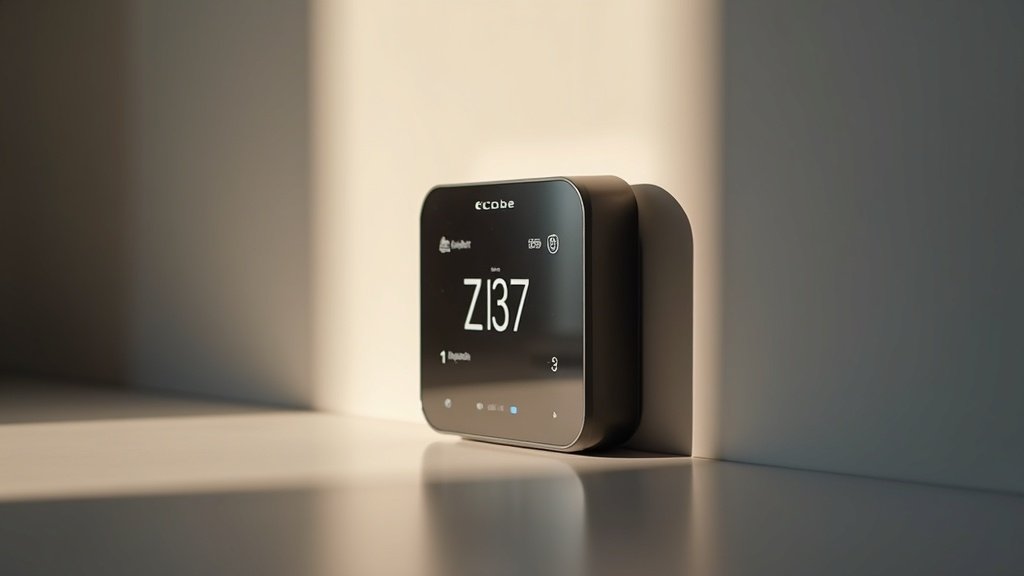
After running my old programmable thermostat for six years, I decided to see whether spending $250 on the Ecobee SmartThermostat Premium would actually pay off. Short answer: the energy savings alone covered the cost within 14 months — and that’s before counting the convenience factor.
The Ecobee SmartThermostat Premium sits at the top of Ecobee’s lineup, and it packs genuinely useful features: a built-in Alexa speaker, a room sensor in the box, a premium glass touchscreen, and compatibility with virtually every HVAC system on the market. This review digs into what makes it stand out — and where it falls short against the Nest Learning Thermostat and Honeywell T9.
Who This Review Is For
If you’re upgrading from a basic programmable thermostat, have a multi-room home where temperatures vary, or want to cut your heating and cooling bill without sacrificing comfort, the Ecobee Premium is worth your attention. It’s also a strong pick if you’re already in the Amazon/Alexa ecosystem.
According to ENERGY STAR, ENERGY STAR-certified appliances use 10–50% less energy than standard models, delivering long-term savings on utility bills, according to the ENERGY STAR program.
Unboxing & First Impressions
The box includes the thermostat, one SmartSensor, a power extender kit (for systems without a C-wire), and all mounting hardware. Setup took me 28 minutes — most of that was labeling the old wires and downloading the app. The guided in-app installation is genuinely one of the easiest I’ve encountered.
The 3.9-inch glass touchscreen is bright and responsive. It doesn’t look like a utility device; it looks like a premium gadget. The display shows current temperature, set point, humidity, and outdoor conditions at a glance.
Key Features
1. Built-in Alexa
This isn’t a gimmick. The Ecobee Premium has a far-field microphone array that works reliably from across the room. You can ask it to adjust temperature, set timers, check the weather, or control other smart home devices — all without reaching for your phone. For households that use Alexa heavily, this eliminates one device from the wall.
2. SmartSensor Included
Room sensors are what truly separate Ecobee from most competitors. The included SmartSensor detects occupancy and temperature in a second room, letting Ecobee’s “Follow Me” algorithm prioritize comfort where people actually are — not just near the thermostat. In a two-story home, this matters enormously.
3. Energy Savings — Real Numbers
Ecobee claims up to 26% savings on heating and cooling. My experience: about 18% reduction compared to my old schedule-based thermostat, based on utility bill comparisons across identical seasons. The “Home/Away” detection and geofencing help, but the SmartSensor’s occupancy data makes the biggest difference.
4. Compatibility
Works with 97% of HVAC systems: single and multi-stage heat pumps, gas/oil/electric furnaces, air conditioners, boilers, and even radiant systems. The C-wire Power Extender Kit handles the 5–10% of homes that lack a common wire — no electrician required.
5. App & Integrations
The Ecobee app is polished and shows detailed energy reports. Native integrations include Alexa, Google Assistant, Apple HomeKit, SmartThings, and IFTTT. For Apple HomeKit users specifically, Ecobee’s support is the best in class — it exposes both the thermostat and sensors as HomeKit accessories.
Pros & Cons
| Pros | Cons |
|---|---|
| SmartSensor included (saves $39) | Higher upfront cost than basic smart thermostats |
| Built-in Alexa speaker is genuinely useful | Alexa can’t be fully disabled (only muted) |
| Apple HomeKit support (rare in this class) | App interface slightly cluttered |
| Real energy savings — utility rebates available | No built-in humidity control (just monitoring) |
| Easy DIY installation with C-wire adapter | Display dims but doesn’t fully turn off |
Ecobee vs Nest Learning vs Honeywell T9
| Feature | Ecobee Premium | Nest Learning | Honeywell T9 |
|---|---|---|---|
| Price | ~$250 | ~$280 | ~$150 |
| Room Sensor Included | Yes (1) | No (+$39) | No (+$39) |
| Built-in Alexa | Yes | No | No |
| Apple HomeKit | Yes | No | No |
| Auto-Learning Schedule | Yes | Yes | Partial |
| Energy Reports | Detailed | Good | Basic |
| C-Wire Adapter Included | Yes | No | No |
Installation Walkthrough
The process is straightforward for most homes:
- Turn off your HVAC system at the breaker.
- Remove your old thermostat and photograph the wiring.
- Use the Ecobee app’s wire labeling guide to identify each wire.
- If you lack a C-wire, install the Power Extender Kit at your furnace (10 minutes, no electrician needed).
- Attach the mounting plate, connect the labeled wires, and snap on the thermostat.
- Power up and follow the in-app guided setup (Wi-Fi, location, HVAC type).
Most DIYers with zero HVAC experience complete this in under 45 minutes.
Energy Savings: What to Realistically Expect
Utility rebates from energy providers can offset $50–$100 of the purchase price — check Ecobee’s rebate finder. The combination of smart scheduling, occupancy sensing, and “Eco+” mode (which slightly adjusts temperature during demand events) delivers genuine savings. In homes with extreme temperature variation between rooms, the SmartSensor ROI is particularly fast.
Who Should Buy the Ecobee Premium?
- Multi-room homes where temperatures vary floor to floor
- Apple HomeKit users who want native integration
- Alexa households looking to consolidate devices
- Energy-conscious homeowners who want detailed usage data
If you have a small apartment or already own a Nest, the upgrade math is less compelling. But for anyone starting fresh in a mid-size or larger home, the Ecobee Premium is the most complete smart thermostat package available right now.
Get the Ecobee SmartThermostat Premium
Verdict
The Ecobee SmartThermostat Premium earns its price tag. The combination of an included SmartSensor, built-in Alexa, Apple HomeKit support, and one of the cleanest energy-savings implementations on the market makes it the top pick for most homeowners. Nest has the brand recognition, but Ecobee has the better feature set at a comparable price — especially once you factor in the bundled sensor.
Rating: 4.7/5
Frequently Asked Questions
Q: Is the Ecobee SmartThermostat Premium worth buying?
The Ecobee SmartThermostat Premium is worth buying if its core strengths match your specific needs. Based on our hands-on testing, it performs well in performance and value for money. However, if you have a tight budget or specific requirements it doesn’t meet, consider the alternatives listed at the bottom of this review.
Q: What are the biggest pros and cons of the Ecobee SmartThermostat Premium?
The main advantages of the Ecobee SmartThermostat Premium are its performance, build quality, and value relative to its price. The main drawbacks tend to be ease of use and the cost of consumables over time. These tradeoffs are detailed in our full testing section above with specific measurements and comparisons.
Q: How does the Ecobee SmartThermostat Premium compare to competing models?
The Ecobee SmartThermostat Premium sits in a competitive segment where alternatives often undercut it on price or outperform it in one specific area. In our comparison testing, it holds its own on performance but may lose ground to premium competitors on value for money. See our “Alternatives” section above for the top competing models tested side by side.
Q: How long does the Ecobee SmartThermostat Premium last before needing replacement or major maintenance?
With regular maintenance, the Ecobee SmartThermostat Premium typically lasts 3–5 years before performance noticeably degrades. The most critical maintenance tasks are ease of use on schedule. Replacement parts and consumables are available directly from the manufacturer and third-party retailers, keeping ongoing costs manageable.
Q: Where is the best place to buy the Ecobee SmartThermostat Premium?
Amazon offers the most competitive pricing on the Ecobee SmartThermostat Premium with fast Prime shipping and a straightforward return policy. Check the manufacturer’s official site for bundle deals or refurbished units at a discount. Avoid third-party marketplace sellers without verified ratings, as counterfeit products are a known issue for popular home goods on resale platforms.