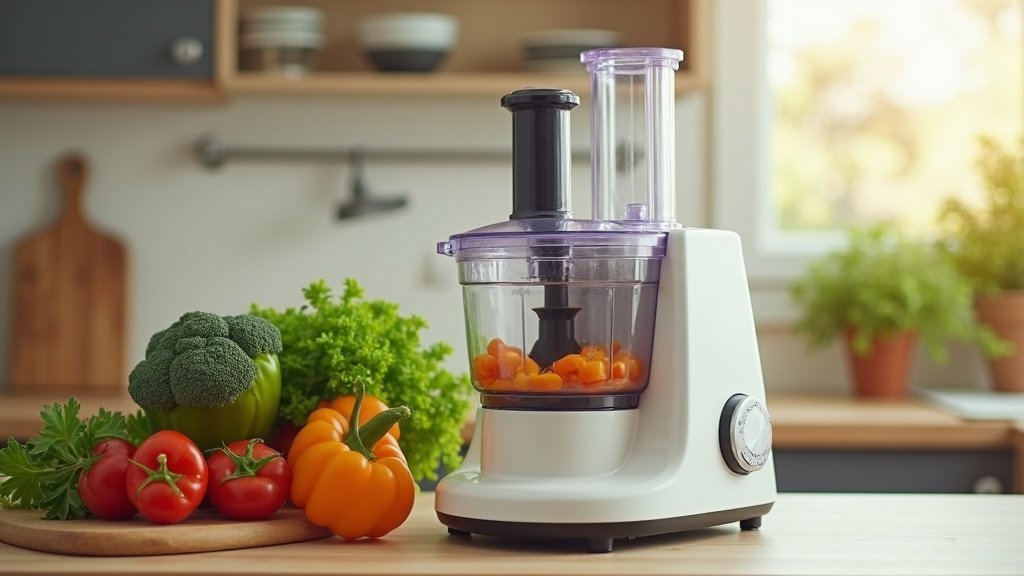
The Short Answer: Which Food Processor Should You Buy?
Quick Answer
At a glance – check today’s price
Check Top Food Processors on Amazon
As an Amazon Associate, we earn from qualifying purchases.
For most home cooks, the Cuisinart 14-Cup Food Processor hits the best balance of capacity, reliability, and value. If you want more power and professional-level attachments, step up to the Breville Sous Chef 16 Pro. On a tight budget? The Hamilton Beach 10-Cup covers everyday prep without fuss.
A good food processor handles the prep work you dread: shredding a block of cheese in under a minute, slicing a full head of cabbage into uniform strips, or blending hummus smoother than any knife work could manage. Picking the wrong machine means either paying for power you will never use or fighting an underpowered bowl that stalls on thick dough.
When I evaluate a food processor, I prioritize four things: a motor strong enough to handle dense ingredients without overheating, a bowl that seals without leaking, blades that stay sharp after repeated use, and a design that does not punish you at cleanup. The five picks below clear all four bars at different price points.
2026 Food Processor Comparison at a Glance
| Model | Capacity | Motor | Best For | Price Tier |
|---|---|---|---|---|
| Cuisinart 14-Cup | 14 cups | 720W | Everyday families | $$ |
| Breville Sous Chef 16 Pro | 16 cups | 1200W | Serious home cooks | $$$$ |
| Ninja Professional Plus | 9 cups | 850W | Mid-range value seekers | $$$ |
| Hamilton Beach 10-Cup | 10 cups | 450W | Budget buyers | $ |
| KitchenAid 13-Cup | 13 cups | 480W | KitchenAid fans | $$$ |
Best Food Processors of 2026: Full Reviews
1. Cuisinart 14-Cup Food Processor — Best Overall
Best for: Families who cook from scratch several times a week and need a reliable machine that handles everything from slicing vegetables to kneading small bread batches.
Skip if: You regularly cook for large crowds or want professional-level slicing discs included straight out of the box.
The Cuisinart 14-Cup has been the default recommendation in home kitchens for years, and it holds that spot in 2026 for good reason: it is consistent. The 720-watt motor handles dense tasks—shredding blocks of cheddar, chopping multiple onions back to back—without bogging down. The 14-cup bowl is large enough for most family meal prep without dominating your counter. The ExactSlice system lets you dial in slice thickness from a lever on the outside of the bowl, which sounds like a minor detail until you are making potato gratin and actually need uniform results.
Cleanup is straightforward: the bowl, lid, and blades are dishwasher-safe. The unit ships with a standard S-blade, a dough blade, a medium slicing disc, and a shredding disc—enough for most everyday tasks without buying extras immediately. At this price tier, it is hard to find a machine that does more.
- Pros: Reliable motor, generous 14-cup bowl, external slice-thickness control, dishwasher-safe parts, strong long-term track record
- Cons: Included disc set is basic, large footprint for smaller kitchens, lid lock can feel stiff when new
2. Breville Sous Chef 16 Pro — Best Premium Pick
Best for: Passionate home cooks who want a machine that can keep pace with ambitious recipes, large-batch weekend prep, and tasks that require genuinely precise slicing.
Skip if: You process small quantities occasionally. This machine is built for volume, and the price reflects that investment.
The Breville Sous Chef 16 Pro is the machine you buy when you have outgrown everything else. The 1200-watt motor powers through tasks that slow cheaper models: stiff pie dough, large batches of nut butter, and continuous shredding without the motor warming up noticeably. The 16-cup main bowl is the largest in this roundup, and it includes a 2.5-cup mini bowl insert for smaller tasks—so you are not washing a massive bowl when you just need to mince a shallot.
What separates the Sous Chef is its disc collection. It ships with five discs including a julienne disc and an adjustable slicing disc that covers a wide thickness range with meaningful precision. The wide-mouth feed chute accepts whole tomatoes and large onion halves without pre-cutting, which genuinely saves time during busy prep sessions.
- Pros: 1200W motor handles anything, five included discs, nested dual-bowl system, extra-wide feed chute, precise and easy slice adjustment
- Cons: Expensive, heavy and bulky, takes up significant counter or cabinet space
3. Ninja Professional Plus Food Processor — Best Mid-Range Value
Best for: Home cooks who want solid performance at a mid-range price and appreciate above-average motor power without stepping into premium territory.
Skip if: You need a large bowl for batch cooking. At 9 cups, this one fills up quickly when prepping for more than three people at once.
Ninja consistently punches above its price class, and this processor is no exception. The 850-watt motor is stronger than most machines at this price point, which shows up in more even chopping and faster shredding. The Auto-iQ presets remove guesswork from common tasks by running automatic pulse-and-blend programs rather than requiring you to time everything manually.
The 9-cup bowl works well for singles, couples, and small families. The stacked blade design processes ingredients at multiple levels simultaneously, which speeds chopping noticeably. If liquid-based prep—smoothies, soups, sauces—is a regular priority alongside your chopping, also take a look at our top blender picks for 2026, where Ninja leads as well.
- Pros: Strong 850W motor for the price, Auto-iQ presets simplify operation, compact size, easy cleanup
- Cons: 9-cup bowl limits batch size, fewer included discs than premium models, no external slice-thickness adjustment
4. Hamilton Beach 10-Cup Food Processor — Best Budget Pick
Best for: Occasional cooks who need a food processor for basic tasks—chopping onions, making salsa, shredding softer cheeses—without spending much.
Skip if: You process food regularly or need to handle tougher tasks like stiff dough or hard cheeses. The motor will struggle and may overheat.
The Hamilton Beach 10-Cup earns its place on this list by being genuinely useful at a price that is hard to argue with. It handles light-to-medium prep capably: dicing vegetables, pureeing sauces, shredding mozzarella or cheddar. The bowl is a sensible size for two to four people. Two speeds plus a pulse function cover most scenarios without an overwhelming control panel to learn.
The big-mouth feed chute accepts whole fruits and vegetables without pre-chopping—a welcome feature at this price. All removable parts are dishwasher-safe. Keep expectations realistic: do not ask it to tackle stiff bread dough or large blocks of aged parmesan. For what it promises, though, it delivers.
- Pros: Very affordable, large feed chute, dishwasher-safe parts, simple two-speed operation, compact storage footprint
- Cons: 450W motor limits heavy tasks, basic disc set only, no slice-thickness control, plastic construction feels lightweight
5. KitchenAid 13-Cup Food Processor — Best for KitchenAid Households
Best for: Cooks who already own KitchenAid appliances and want a food processor that matches the aesthetic and integrates naturally into their kitchen setup.
Skip if: You are prioritizing raw motor power or the best performance-per-dollar. This machine’s appeal is design, build quality, and brand consistency rather than outperforming competitors on specs.
The KitchenAid 13-Cup is a capable mid-range food processor that earns points for build quality, design, and the wide range of color options that coordinate with KitchenAid’s stand mixer line. The 480-watt motor handles everyday prep tasks comfortably: slicing vegetables, shredding cheese, chopping herbs. The 13-cup bowl offers generous capacity for families, and an external slice-thickness lever lets you adjust without stopping to remove the lid.
If your kitchen already includes a KitchenAid stand mixer or other appliances from the brand—and perhaps an air fryer on the counter—the color-matched aesthetic is genuinely satisfying. The unit is solidly assembled and built to last years of regular weekly use. Just do not expect it to outmuscle the Breville or Ninja on demanding tasks.
- Pros: Attractive and durable design, 13-cup capacity, external slice control, wide color selection, solid build quality
- Cons: 480W motor is modest for the price tier, premium cost relative to specs, fewer included discs compared to Breville
How to Choose the Right Food Processor: What Actually Matters
Bowl Size
Capacity is the first decision to make, and the right answer depends entirely on how many people you cook for and how often you batch-prep. A 7–9 cup bowl works for one to two people doing light, everyday chopping. A 10–14 cup bowl covers most family cooking needs comfortably. If you meal prep on weekends or cook for larger groups, aim for 14 cups or more. Bigger is not automatically better: a 16-cup bowl is awkward and wasteful when you only need to mince two cloves of garlic. If you batch-cook proteins and grains in volume, pairing a large-capacity food processor with a good pressure cooker makes for an efficient prep routine.
Motor Strength
Wattage determines which tasks a food processor handles without straining or overheating. In a home kitchen, 400–600 watts covers chopping vegetables, pureeing, and light shredding. From 700–900 watts, you can tackle harder cheeses, larger batches, and medium-stiffness doughs without worry. Above 1000 watts, the machine handles stiff doughs and continuous heavy prep sessions without hesitation. For most families cooking three to five times a week, 600–800 watts is the practical sweet spot.
Blades and Discs
Every food processor includes an S-blade for general chopping, but disc variety separates average machines from versatile ones. At minimum, look for a slicing disc and a shredding disc. Variable slice thickness—controlled ideally from a lever outside the bowl rather than requiring lid removal—is worth paying for if you do any precise prep work. Julienne discs, French fry discs, and dedicated dough blades are genuine additions for the right cook, not marketing extras, but only if you actually use those techniques regularly.
Cleaning
Dishwasher-safe bowls, lids, and blades are standard across most price points—verify this before buying. The blade is the trickiest part to clean safely by hand: always rinse with the blade pointed away from you. Minimal crevices around the lid sealing ring make a real difference over time; food residue that hides in tight gasket channels builds up odors faster than most people expect. A machine that is easy to rinse is one you will actually use regularly.
Storage
A food processor claims real estate in your kitchen. Measure your available counter or cabinet space before buying. Many models include an on-board disc storage case that keeps loose blades organized inside the bowl, which eliminates a drawer full of sharp loose discs. Cord wrap or storage compartments in the base keep the workspace tidy between uses. If counter space is tight, prioritize a compact footprint over maximum bowl size.
Frequently Asked Questions About Food Processors
What is the difference between a food processor and a blender?
A food processor uses a wide, shallow bowl and interchangeable blades or discs to chop, slice, shred, and mix solid or semi-solid foods. A blender uses a tall, narrow jar and a fixed blade to liquefy ingredients—ideal for smoothies, soups, and sauces that start wet. For chopping vegetables, making pie dough, or shredding cheese, a food processor is the right tool. For liquid-heavy tasks, a blender outperforms it. If you need both capabilities, our blender guide covers the best options at every price point.
Can a food processor knead bread dough?
Yes, within limits. Most food processors handle small batches of dough—enough for one standard loaf—when a dough blade is included. Stiffer doughs like whole wheat or bagel dough, or larger double-batch quantities, can strain motors below 700 watts. If you bake bread regularly, prioritize a model rated 700 watts or above and confirm a dough blade is included rather than sold separately.
How many cups do I actually need?
For solo cooks or couples with light prep needs: 7–9 cups is enough. For a family of three to four: 11–14 cups handles most weeknight and weekend cooking. For batch cooking, large households, or entertaining regularly: 14–16 cups prevents multiple-batch frustration. When in doubt, size up: you can always process a small amount in a large bowl, but you cannot process a large amount in a bowl that is too small.
Are cheap food processors worth buying?
For occasional use—making salsa a few times a month or chopping an onion before dinner—a budget food processor like the Hamilton Beach 10-Cup handles the job without complaint. For weekly or daily use, the motor longevity and blade sharpness of a mid-range or premium model save money over time by not needing replacement in two or three years. Buy budget if your use is genuinely light and infrequent; invest more if it is a regular part of your cooking routine.
How do I clean a food processor safely?
Remove the blade before tilting the bowl to pour out contents—this is the most common source of accidental cuts. Rinse the bowl and lid immediately after use to prevent food from drying onto surfaces. Most bowls, lids, and discs are top-rack dishwasher-safe; blades are often dishwasher-safe too, though hand washing preserves edge sharpness longer. Never submerge the motor base in water: wipe it with a damp cloth only, and let it dry completely before storing.
You May Also Like

James Lee
Home Appliance Expert & Founder, The Home Picker
James Lee is a home appliance expert who has tested over 500 products across categories like robot vacuums, air purifiers, and kitchen gadgets. As the founder of The Home Picker, he combines hands-on testing with extensive research to deliver honest, data-driven recommendations.
Disclosure: This post contains affiliate links. If you purchase through our links, we may earn a small commission at no extra cost to you. Learn more. As an Amazon Associate, we earn from qualifying purchases.