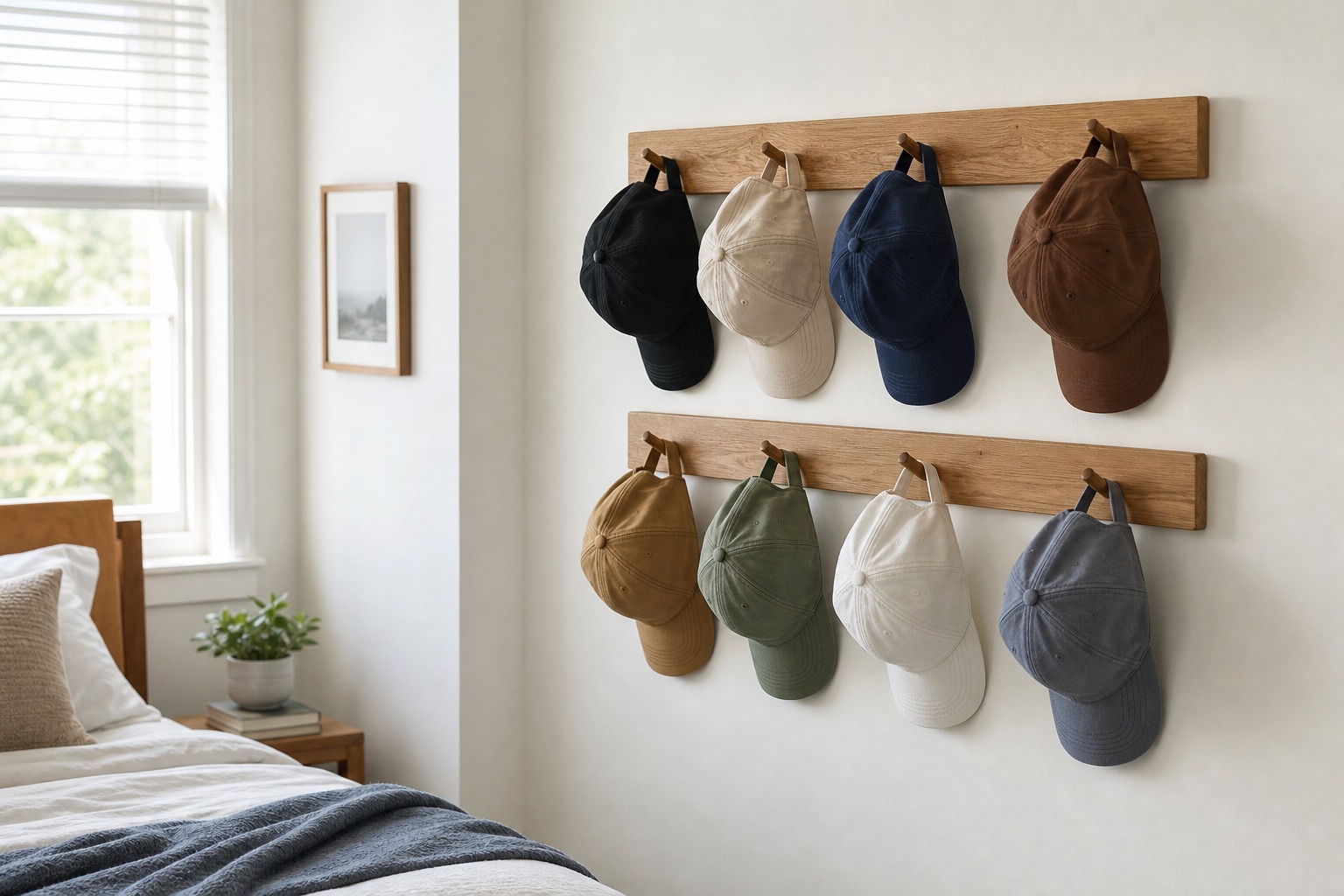
If you have ever pulled a favorite cap out of a drawer and found the brim bent sideways, the problem usually is not the hat. It is the storage method. Baseball caps are light, but the brim and crown do not like pressure, heat, or damp fabric. A few weeks in the wrong bin can undo years of careful wear.

The good news is simple: you do not need an expensive display wall to keep caps in shape. You need a method that keeps weight off the brim, lets sweat dry fully, and stops caps from pressing into each other. Below are the storage methods that make the most sense for normal homes, small closets, and growing collections.
Quick Answer
The safest way to store baseball caps without warping the brim is to hang each cap individually by the back strap on a hook, peg, or rack. The brim should hang free with no pressure from another hat, shelf, drawer, or clip. If you have more than ten caps, a wall-mounted rack or over-the-door organizer is usually the best balance of protection, price, and space.
Method Comparison Table
| Storage Method | Best For | Brim Protection | Space Needed | Cost |
|---|---|---|---|---|
| Wall-mounted hat rack | Daily caps and visible collections | Excellent | Wall space | $ |
| Over-the-door organizer | Renters and small rooms | Excellent | Door back | $ |
| Closet rod hanger | Closets with spare rod space | Very good | Closet rod | $ |
| Individual hat box | Collectible or rarely worn caps | Best | Shelf space | $$ |
| Drawer with dividers | Flat-brim caps only | Good | Drawer | $ |
| Acrylic display case | Signed or vintage caps | Best | Wall or shelf | $$$ |
12 Practical Ways to Store Baseball Caps
1. Wall-Mounted Hat Rack
A wall rack is the cleanest everyday answer because every cap gets its own hook and the brim hangs in open air. Put the rack somewhere away from direct sun, leave a little space between caps, and hang them by the strap rather than the brim. This works especially well if you rotate caps often and want to see everything at a glance.
If you are comparing wall, door, and closet options, our separate hat organizer ideas guide breaks down the main storage styles by capacity and room type.
2. Over-the-Door Cap Organizer
This is the rental-friendly version of a wall rack. It gives you vertical storage without screws, and it keeps caps off shelves and out of bins. The one thing to watch is door swing. If the rack bangs against the wall every time the door opens, the front cap can get rubbed or flattened. A small felt bumper fixes most of that.
3. Closet Rod with Clip Hangers
If you have extra closet rod space, clip hangers are cheap and effective. Clip the back strap, not the brim, and keep heavier caps spaced apart. This method hides the collection neatly, but it can crowd shirts and jackets if the closet is already full.
4. Command Hooks in a Straight Row
For fewer than ten caps, adhesive hooks are hard to beat. They cost little, install in minutes, and can be removed without drilling. Use one hook per cap. Doubling up seems harmless, but the weight and pressure are what slowly bend brims and pull hooks loose.
5. Pegboard Wall
A pegboard is not only for tools. It lets you move hooks as the collection changes, which is useful if you mix snapbacks, fitted caps, beanies, and visors. It looks more utilitarian than decorative, so it fits garages, laundry rooms, and hobby rooms better than bedrooms.
6. Individual Hat Boxes
For signed caps, limited editions, or anything you rarely wear, a rigid hat box is the safest option. It protects the crown, supports the brim, and keeps dust off the fabric. It is not efficient for a big daily collection, but it is perfect for two or three hats you would hate to damage.
7. Clear Stackable Cap Cases
Clear cases are useful when you want protection and visibility. The key is choosing boxes tall enough that the crown is not compressed. If a box forces you to press the cap down to close the lid, it is too small.
8. Floating Shelf with Spaced Pegs
This is the polished version of a wall rack. A shelf adds a little design value, while pegs underneath hold caps by the strap. Keep the pegs far enough apart that brims do not overlap. Overlap is where slow warping starts.
9. Drawer with Dividers
A drawer can work for flat-brim caps, but it is risky for curved brims. If you use a drawer, add dividers, keep the caps in a single layer, and do not stack crowns into each other. This is more of a last resort than a best practice.
10. Travel Cap Case
Most cap damage happens during travel, not at home. A hard-sided cap case keeps brims from being crushed in luggage. If you ever pack hats in a duffel or suitcase, this is the one accessory that actually earns its place.
11. Acrylic Display Case
Acrylic cases are expensive, but they make sense for display pieces. Look for UV-resistant acrylic if the cap will sit near a window. Sunlight fades dark colors faster than people expect, especially navy, black, and red fabric.
12. Seasonal Rotation Bin
If you own more caps than you wear, split them into active and seasonal groups. Keep the current group on hooks or a rack. Store the off-season group in breathable cotton bags or rigid boxes. Do not use sealed plastic bags unless the caps are completely dry and the room is climate controlled.
Mistakes That Warp a Cap Fastest
- Stacking caps inside each other. It saves space, but the outer cap pushes against the inner crown and brim.
- Clipping the brim. Any holder that pinches the brim can leave pressure marks or flatten the curve.
- Storing caps damp. Sweat and humidity make fabric easier to deform. Let caps dry before putting them away.
- Leaving caps in a hot car. Heat softens the internal brim structure and can lock in a bad shape.
- Overfilling bins. If you have to press the lid closed, the hats are already under too much pressure.
How to Fix a Slightly Warped Brim
If the brim is only mildly bent, lightly mist it with water, shape it by hand, and let it dry around a curved object such as a mug or rolled towel. Do not soak the brim and do not use high heat. Deep creases are much harder to recover, which is why good storage matters more than repair tricks.
FAQ
Should baseball caps be stored brim up or brim down?
Hanging by the back strap is better than either. If you must place a cap on a shelf, brim down is safer than crown down because it keeps the crown from flattening.
Is it okay to stack baseball caps?
Stacking is fine for short-term travel, but not for long-term storage. Over time, the pressure changes the curve of the brim and dents the crown.
What is the cheapest brim-safe method?
A row of adhesive hooks or basic wall pegs is usually the cheapest. The important part is one cap per hook.
How should I store fitted caps?
Fitted caps benefit from rigid support because they cannot hang by an adjustable strap. Use a shelf with enough spacing, a hat form, or an individual box.
Can sunlight damage baseball caps?
Yes. Direct sunlight fades fabric and can dry out sweatbands. Avoid hanging valuable caps in a window-facing spot.
Best Setup by Collection Size
If You Own 3 to 6 Caps
Keep it simple. A short row of adhesive hooks behind a bedroom door or closet door is enough. You do not need a full organizer yet, and buying one too early often creates more visual clutter than the hats themselves. The only rule is still one cap per hook.
If You Own 7 to 15 Caps
This is the point where drawers and bins start failing. A two-row wall rack or over-the-door organizer is the sweet spot because you can keep the daily caps at eye level and the seasonal caps higher or lower. It also makes it obvious when the collection is getting too large for the space.
If You Own 20+ Caps
At this size, treat caps like a collection instead of loose accessories. Split them into daily wear, seasonal wear, and display pieces. Daily caps belong on hooks. Seasonal caps can go in breathable boxes. Display pieces deserve individual support so the crown and brim do not slowly collapse.
How to Store Caps in Small Apartments
Small spaces punish bulky storage, so the best cap setup is usually vertical. The back of a closet door, a narrow strip of wall beside a dresser, or the inside wall of a wardrobe gives you storage without stealing shelf depth. Avoid deep bins under the bed unless every cap has its own divider. Under-bed storage looks convenient, but it encourages stacking and pressure.
If the room already feels busy, choose hooks or a rack that matches the wall color. The hats become the visual element, not the hardware. That small design choice is the difference between a useful setup and a wall that looks like a sporting goods clearance shelf.
Material Matters More Than People Think
Cotton twill caps tolerate normal hanging well. Wool caps need more breathing room because they hold moisture. Structured fitted caps need crown support if they sit on a shelf for long periods. Suede or leather-brim caps should never be stored in direct sun or damp closets. The storage method can be the same, but the spacing and climate matter more with premium materials.
A Simple Monthly Cap Care Routine
Once a month, pull down the caps you wear most, check the sweatband, brush away dust, and let each one air out for a few hours. If a brim is starting to flatten, reshape it before the bend becomes permanent. This takes less than ten minutes and keeps storage from becoming a place where small damage goes unnoticed.
When to Buy a Hat Organizer Instead of DIY Storage
DIY hooks and shelves work when you own a few caps. Once the collection grows, a dedicated organizer usually protects the brim better and makes the hats easier to rotate. The right organizer depends on whether you need visibility, dust protection, or maximum capacity.
Best for dedicated hat organizers
- 7 to 15 caps: an over-the-door or closet organizer usually gives the best capacity for the price.
- Collectible caps: clear stackable cases protect shape and keep dust off the crown.
- Small apartments: vertical wall or door storage saves more space than drawer dividers.
Skip buying an organizer if
- You own fewer than 5 caps: simple hooks or a small shelf may be enough.
- You rotate only seasonal hats: a labeled bin can work better than visible display storage.
- Your closet system is already the bottleneck: compare small-space closet organizer systems first.
Buying path by collection size
| Collection | Best storage direction | Next step |
|---|---|---|
| 3 to 6 caps | Hooks or shelf display | Keep it simple |
| 7 to 15 caps | Door or wall organizer | Best hat organizer ideas |
| 20+ caps | Clear cases plus rotation bin | Protect shape and dust control |
| Shared closet | Closet system upgrade | Closet organization system guide |
If this is part of a larger decluttering project, use the home organization buying guide. For related storage zones, see our closet shoe organizer picks and desk organizer guide.
Bottom Line
The best storage method is the one that removes pressure from the brim. For most people, that means hooks, pegs, or a dedicated rack. Give each cap space, let damp hats dry, and keep collectibles out of heat and sun. Do that, and your caps will hold their shape far longer.