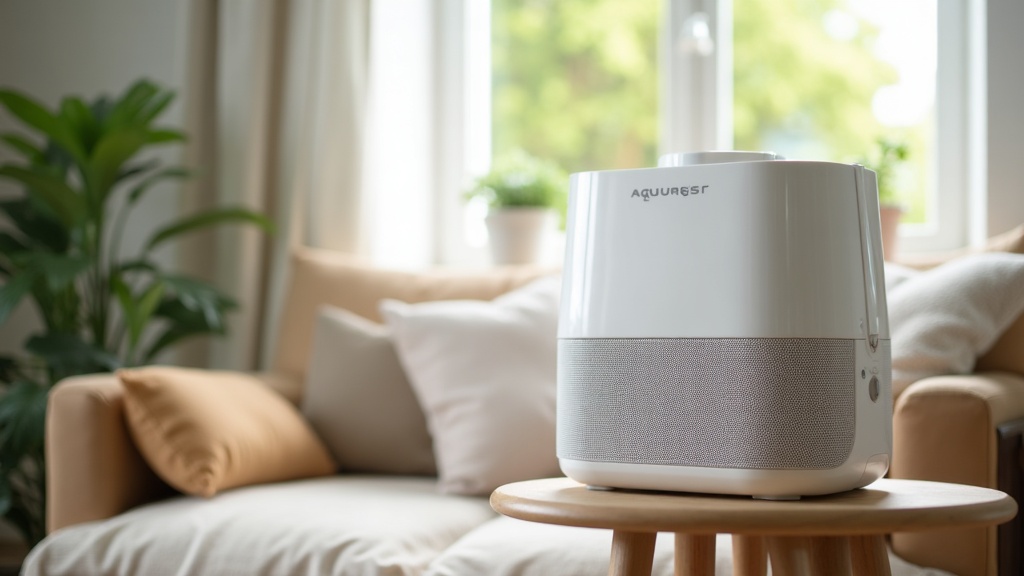
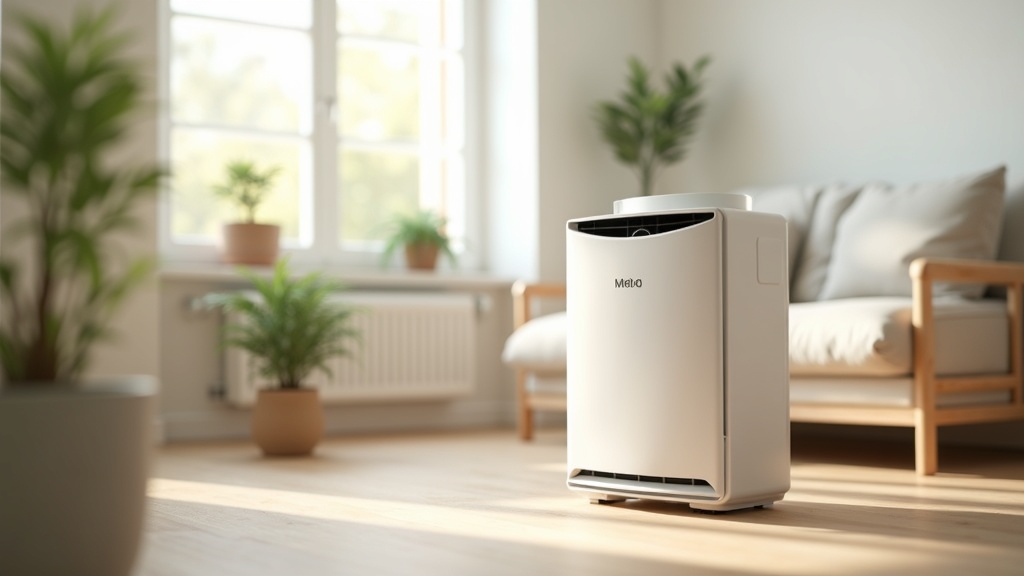
Four appliances that look vaguely similar, sit on the same shelf at Target, and solve completely different problems. The confusion between air purifiers, humidifiers, dehumidifiers, and diffusers costs consumers millions in wrong purchases every year. I own and operate all four in different rooms of my house, and after two years of daily use, the differences are crystal clear. Let me break them down so you never buy the wrong one.
The 4-Way Comparison Chart
| Feature | Air Purifier | Humidifier | Dehumidifier | Diffuser |
|---|---|---|---|---|
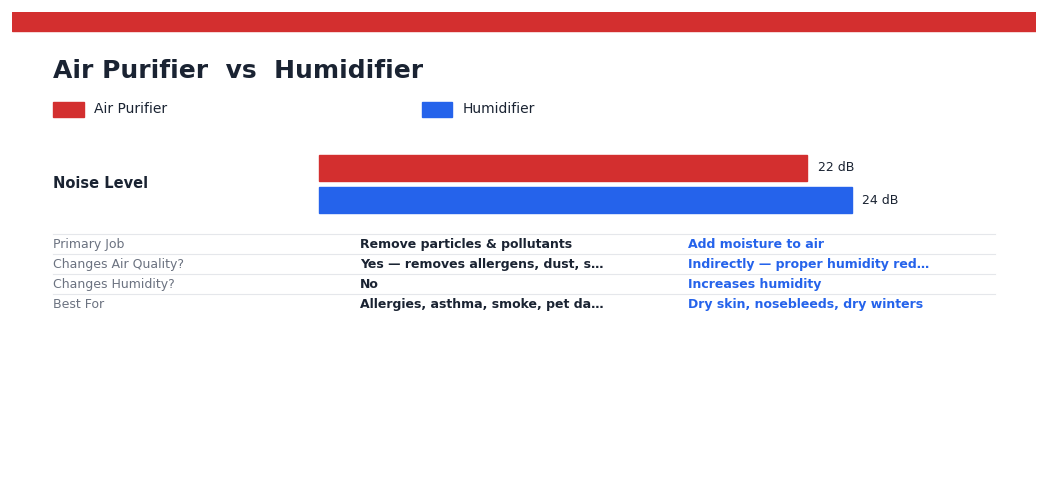
| Primary Job | Remove particles & pollutants | Add moisture to air | Remove moisture from air | Disperse essential oil scent |
| Changes Air Quality? | Yes — removes allergens, dust, smoke | Indirectly — proper humidity reduces irritation | Indirectly — prevents mold and dust mites | No — adds fragrance only |
| Changes Humidity? | No | Increases humidity | Decreases humidity | Minimally (tiny mist volume) |
| Best For | Allergies, asthma, smoke, pet dander | Dry skin, nosebleeds, dry winters | Damp basements, mold, muggy rooms | Aromatherapy, relaxation |
| Typical Price | $50–$600 | $20–$200 | $100–$400 | $15–$60 |
| Ongoing Costs | Filter replacement ($20–$80/yr) | Distilled water, occasional filters | Electricity ($10–$40/mo) | Essential oils ($10–$30/mo) |
| Noise Level | 22–55 dB | 24–40 dB | 38–55 dB | 15–30 dB |
| Health Claims | EPA-supported for particle removal | Helps with dry airways | Reduces mold/mite triggers | No proven medical benefits |
Air Purifier: Your Indoor Pollution Shield
What It Does
An air purifier draws room air through filters — typically a pre-filter, HEPA filter, and activated carbon layer — trapping particles as small as 0.3 microns. This captures dust, pollen, mold spores, pet dander, bacteria, and smoke particles. Higher-end models add UV-C light or photocatalytic oxidation for gas-phase pollutants.
When You Need One
- Seasonal allergies that flare up indoors
- Asthma triggered by airborne particles
- Living near highways, construction, or wildfire zones
- Pet owners dealing with dander (not just fur)
- Homes with smokers or strong cooking odors
When You Do NOT Need One
If your main complaint is dry air, stuffy humidity, or you simply want a pleasant scent — an air purifier will not help with any of those. It cleans particles from air but does not change temperature, humidity, or add fragrance.
Humidifier: Moisture for Dry Environments
What It Does
A humidifier adds water vapor to indoor air, raising the relative humidity. Types include ultrasonic (vibrates water into micro-droplets), evaporative (blows air through a wet wick), and steam (boils water). Each has trade-offs in noise, mineral dust, and energy use.
When You Need One
- Winter months when heating systems dry indoor air below 30%
- Dry climates (Southwest US, mountain regions)
- Chronic dry skin, cracked lips, nosebleeds
- Hardwood floors cracking or static electricity problems
- Babies and young children with dry coughs
When You Do NOT Need One
If your humidity is already above 45%, adding more moisture feeds dust mites and mold. Never run a humidifier without monitoring humidity — over-humidification creates the exact conditions a dehumidifier is designed to fix.
Dehumidifier: Moisture Removal for Damp Spaces
What It Does
A dehumidifier pulls moist air over cold coils, condensing the water vapor into a collection tank (or draining it continuously). This lowers relative humidity, which directly prevents mold growth and kills dust mite populations that need 70%+ humidity to thrive.
When You Need One
- Basement or bathroom humidity consistently above 55%
- Visible condensation on windows
- Musty smells (strong indicator of mold growth)
- Coastal or tropical climate homes
- After flooding or water damage
When You Do NOT Need One
In dry climates or during winter heating season, running a dehumidifier will make already-dry air even drier, aggravating respiratory issues. Check your humidity with a $10 hygrometer before purchasing.
Diffuser: Aromatherapy Only
What It Does
A diffuser disperses essential oils into the air using ultrasonic vibration, heat, or evaporation. The tiny water tank (typically 100–300ml) produces a scented mist. Despite looking like a humidifier, the water volume is too small to meaningfully change room humidity.
When You Need One
- You enjoy aromatherapy scents like lavender, eucalyptus, or peppermint
- You want ambient mood lighting (many diffusers include LED lights)
- Relaxation rituals before sleep
When You Do NOT Need One
If you expect health benefits like allergen removal, humidity control, or air purification — a diffuser provides none of these. Marketing claims about “purifying” essential oils have no EPA or FDA support. Never use a diffuser as a substitute for an air purifier or humidifier.
Can You Combine Them?
Yes, and certain combinations are highly effective:
- Air purifier + humidifier — ideal for dry winter months with allergy issues. The purifier cleans particles while the humidifier prevents airway dryness.
- Air purifier + dehumidifier — best for humid climates with mold and allergen problems. We explored this pairing in depth in our air purifier for allergies guide.
- Humidifier + diffuser — some 2-in-1 units combine these functions, but dedicated devices perform each job better.
For specific product recommendations, browse our best air purifiers for large rooms or check the HEPA filter comparison guide to understand filtration differences before you shop.
Decision Flowchart
Ask yourself these three questions:
- Is your air dusty, smoky, or triggering allergies? → Air purifier.
- Is your humidity below 35% (dry skin, static, cracking wood)? → Humidifier.
- Is your humidity above 55% (dampness, musty smell, condensation)? → Dehumidifier.
- Do you just want a nice scent? → Diffuser.
If you answered yes to questions 1 AND 2 or 1 AND 3, you need two devices working in tandem.
Wildfire smoke in your area? See our air purifiers tested specifically for smoke-particle removal →
Frequently Asked Questions
Can a humidifier replace an air purifier?
No. A humidifier adds moisture but does not filter or remove any particles. If you have allergies or asthma, a humidifier will not remove the pollen, dust, or pet dander triggering your symptoms. You need a HEPA air purifier for particle removal.
Is a diffuser the same as a humidifier?
They look similar but serve different purposes. A diffuser disperses essential oils using a small water tank (100–300ml), which is too small to meaningfully change room humidity. A humidifier holds 1.5–4 liters and is designed to raise humidity levels. If you need moisture, buy a humidifier.
Do I need a dehumidifier if I have an air conditioner?
Air conditioners do remove some moisture as a side effect of cooling, but they are not optimized for humidity control. In very humid climates or poorly ventilated spaces, a dedicated dehumidifier is far more effective at maintaining the 40–50% humidity sweet spot.
Which one helps most with sleep quality?
An air purifier with a quiet sleep mode (under 28 dB) improves sleep most for allergy sufferers by removing airborne irritants. A humidifier helps most in dry winter climates by preventing throat and nasal dryness. Combine both for the best results. A diffuser with lavender oil may promote relaxation but has no proven effect on measurable sleep metrics.
Disclosure: This post contains affiliate links. If you purchase through our links, we may earn a small commission at no extra cost to you. Learn more.
James Lee has spent years testing and reviewing home appliances, smart devices, and kitchen gadgets. Based in Seattle, WA, he combines hands-on testing with rigorous research to help homeowners make confident, informed purchasing decisions. When he’s not testing the latest robot vacuum, he’s renovating his 1920s craftsman home.
#2. Humidifier Dehumidifier Diffuser
As an Amazon Associate, we earn from qualifying purchases.