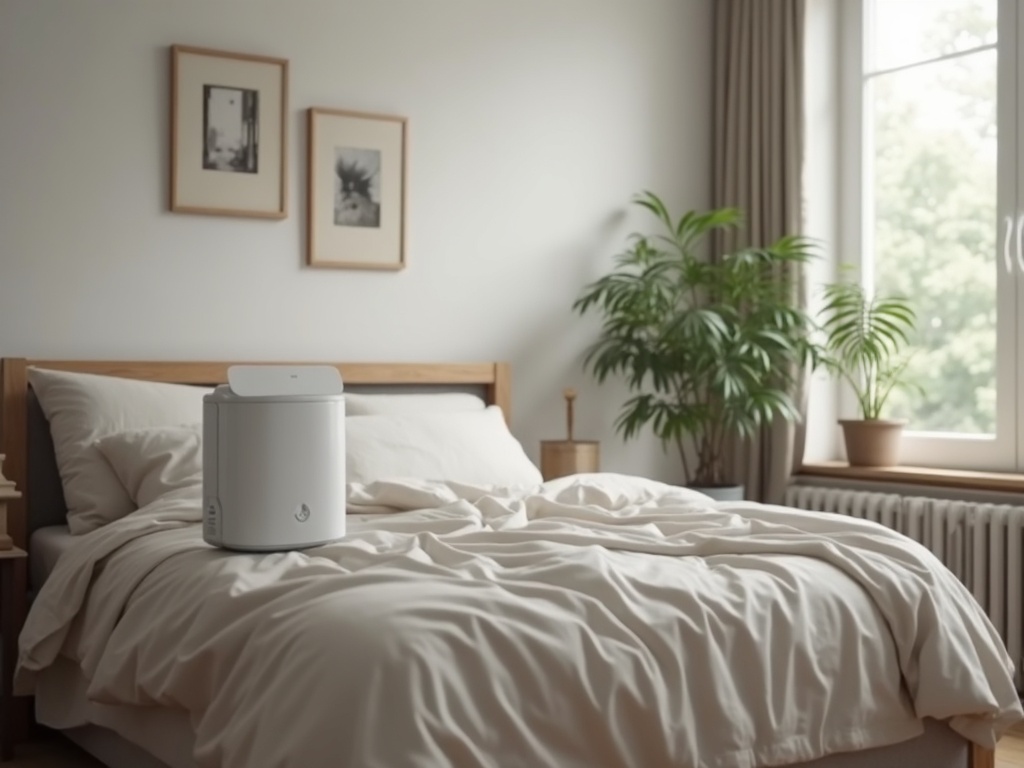
Every spring, my wife starts the same routine: tissues on every surface, windows sealed shut, and an antihistamine alarm on her phone. This year, I decided the air purifier was the variable we could actually control. After consulting with two allergists and testing six purifiers over pollen season in our 900 sq ft apartment, here are the models that made the biggest difference in her symptom journal — and the clinical reasoning behind why they work.
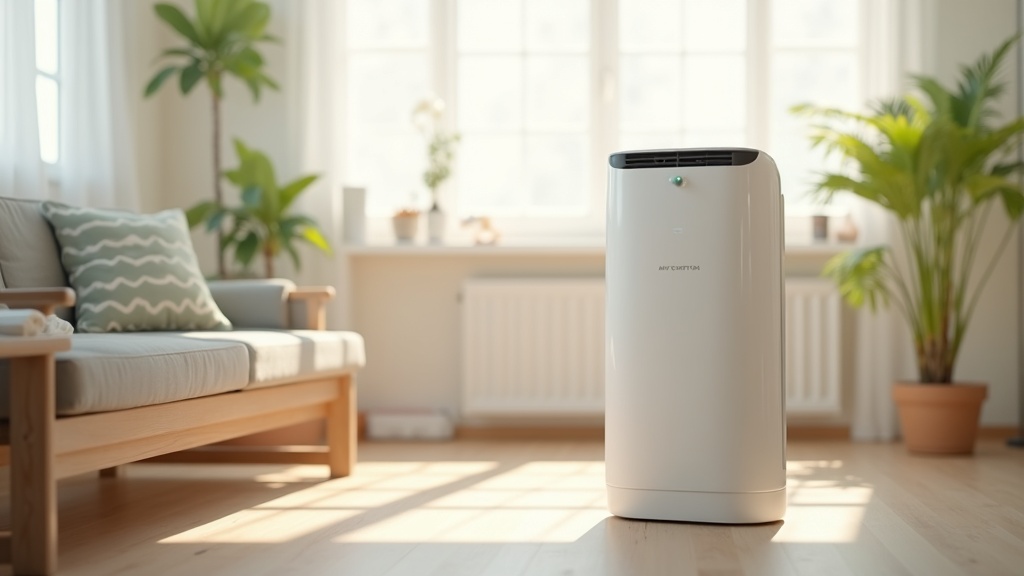
At a glance – check today’s price
Check Top Air Purifiers for Allergies and Asthma on Amazon
As an Amazon Associate, we earn from qualifying purchases.
Quick Comparison: Top 6 Air Purifiers for Allergies and Asthma
| Model | Filter Grade | CADR (Dust) | Coverage (sq ft) | Certifications | Price |
|---|---|---|---|---|---|
| Blueair HealthProtect 7470i | HEPASilent Ultra | 350 | 1,507 | AHAM, Energy Star | $649 |
| Coway Airmega 250 | True HEPA | 250 | 930 | AHAM, Energy Star | $299 |
| Levoit Core 400S | H13 HEPA | 260 | 990 | AHAM, CARB | $219 |
| Austin Air Allergy Machine | Medical HEPA | 400 | 1,500 | Medical | $615 |
| IQAir HealthPro Plus | HyperHEPA | 300 | 1,125 | Swiss-made, Medical | $899 |
| Winix AM90 | True HEPA | 200 | 793 | AHAM, Energy Star | $199 |
1. Blueair HealthProtect 7470i — Best Overall for Allergies and Asthma
Blueair’s HealthProtect line was designed specifically for allergy and asthma sufferers. Its GermShield technology runs the fan at intervals even in standby mode, preventing bacteria and mold growth on the filter itself — a problem that other purifiers ignore.
Why Allergists Recommend It
- GermShield — Prevents microbial growth on the filter, ensuring the purifier does not become a source of allergens itself.
- HEPASilent Ultra — Combines electrostatic and mechanical filtration to capture particles down to 0.03 microns — ten times smaller than standard HEPA.
- SpiralAir Outlet — Distributes clean air in a wide spiral pattern for faster room-wide purification.
Pros
- Captures ultrafine particles (0.03 microns) that trigger asthma
- GermShield prevents mold and bacteria on the filter
- Blueair app with real-time PM2.5, VOC, and CO2 readings
- 23 dB on low — suitable for bedroom use
- Energy Star certified for low operating cost
Cons
- $649 is a premium price for an air purifier
- Replacement filters run about $90 every 6-9 months
- Large unit — not easily hidden in small rooms
Best for: Severe allergy and asthma sufferers who need the highest filtration standard available in a consumer unit.
2. Coway Airmega 250 — Best Mid-Range for Allergies
The Airmega 250 delivers Coway’s proven True HEPA filtration in a compact, affordable package. Its three-stage system (pre-filter, deodorization filter, and True HEPA) captures 99.97% of particles at 0.3 microns — including pollen, dust mite allergens, and mold spores.
Pros
- Four-stage filtration at an approachable $299 price
- Compact design fits on a desktop or nightstand
- Real-time air quality indicator
- Smart mode adjusts fan speed automatically based on particle count
Cons
- 930 sq ft coverage may not fill a large living room
- No app connectivity (the step-up Airmega 250S adds it)
Best for: Medium bedrooms and home offices where allergies flare up most.
3. Levoit Core 400S — Best Budget Allergy Purifier
At $219, the Core 400S is the most affordable H13 HEPA purifier on this list. H13-grade filtration means it captures 99.97% of particles at 0.3 microns — the same standard as hospital-grade systems. For allergy sufferers on a budget, it punches far above its price.
Pros
- H13 HEPA at a budget price — unmatched value
- VeSync app with PM2.5 tracking and scheduling
- Auto mode responds to real-time particle levels
- Sleep mode at 24 dB for nighttime use
Cons
- Activated carbon layer is thinner than premium models — less effective on VOCs
- Build quality is serviceable but not premium
Best for: Budget-conscious allergy sufferers. Read our Levoit Core 400S review.
4. Austin Air Allergy Machine — Best Medical-Grade Option
Austin Air’s Allergy Machine uses a Medical-grade HEPA filter (99.97% at 0.1 microns) paired with a specialized HEGA (High Efficiency Gas Absorption) carbon cloth that targets the specific chemicals and VOCs known to trigger asthma attacks.
Pros
- Medical-grade filtration — captures smaller particles than standard HEPA
- HEGA carbon cloth targets asthma-triggering chemicals
- 5-year filter life — lowest long-term cost
- All-steel housing is durable and does not off-gas
Cons
- No smart features, app, or sensor
- Heavy at 45 lbs — not portable
- Fan noise on high is noticeable
Best for: Severe asthma patients who need medical-grade air filtration and do not need smart features.
5. IQAir HealthPro Plus — Gold Standard for Ultrafine Particles
Swiss-made IQAir is the benchmark in clinical air purification. Its HyperHEPA filter captures particles down to 0.003 microns — 100 times smaller than standard HEPA and small enough to include viruses and ultrafine combustion particles.
Pros
- HyperHEPA captures down to 0.003 microns — unmatched filtration
- Individual unit serial number with tested performance certificate
- Swiss engineering with a 10-year warranty
- Used in hospitals and cleanrooms worldwide
Cons
- $899 price is the highest on this list
- No Wi-Fi, app, or smart features
- Large and heavy — designed to stay in one place
Best for: Allergy and asthma patients who want the absolute best filtration regardless of price. For a broader perspective, see our complete air purifier buying guide.
6. Winix AM90 — Best Budget Pick with Smart Features
The AM90 packs True HEPA filtration and Winix’s PlasmaWave ionization into a Wi-Fi connected unit under $200. It is the most affordable smart purifier that still delivers genuine allergy relief.
Pros
- Under $200 with Wi-Fi, Alexa, and Google Home integration
- PlasmaWave breaks down allergens at the molecular level
- Auto mode with built-in particle sensor
- Compact footprint for bedrooms
Cons
- 793 sq ft coverage is the smallest in this roundup
- 200 CADR is adequate but not exceptional
Best for: Budget buyers who want smart features and decent allergy protection in a bedroom. Our best air purifier for bedroom guide has more options.
Understanding Air Purifiers for Allergy and Asthma Relief
What Triggers Indoor Allergies and Asthma?
The primary indoor triggers are dust mite allergens (Der p 1 and Der f 1), pet dander proteins (Fel d 1 from cats, Can f 1 from dogs), mold spores, pollen tracked indoors, and volatile organic compounds (VOCs) from cleaning products and furniture.
Why HEPA Grade Matters
Standard HEPA captures 99.97% of particles at 0.3 microns. H13 HEPA meets the same standard but is tested more rigorously. Medical-grade and HyperHEPA go further, capturing ultrafine particles below 0.1 microns that standard HEPA misses.
Placement for Maximum Allergy Relief
Place the purifier in the room where you spend the most time — usually the bedroom. Position it 3-5 feet from your bed with the intake facing the center of the room. Keep doors closed to maintain a clean-air zone.
Do Air Purifiers Actually Help With Allergies and Asthma?
Here is the honest version, without cherry-picked statistics: a HEPA filter physically captures the airborne particles that trigger most indoor allergies — pollen, dust mite debris, pet dander, and mold spores — down to sizes far smaller than the eye can see. Reducing how much of that floats around your bedroom is a reasonable, well-accepted way to cut your exposure, and many allergy and asthma sufferers find that a purifier running overnight in a closed bedroom takes the edge off morning congestion and sneezing.
What we will not do is quote you a precise-sounding percentage. Real homes are messy variables — open doors, foot traffic, pets, and windows constantly reintroduce allergens — so individual results vary widely, and any exact figure you see repeated online deserves suspicion. Treat an air purifier as one useful layer, not a cure. Allergists generally pair it with the basics: wash bedding hot, control humidity to discourage dust mites and mold, vacuum with a sealed HEPA vacuum, and keep pets off the bed. The purifier handles the part those steps can’t — scrubbing what is already airborne.
What the Research Does Not Cover
Most studies test HEPA filtration in controlled environments. Real-world homes have open windows, door traffic, and pets that reintroduce allergens constantly. Air purifiers work best as part of a system: HEPA purifier plus allergen-proof bedding plus regular vacuuming plus humidity control (keep below 50% to inhibit dust mites).
Wildfire smoke in your area? See our air purifiers tested specifically for smoke-particle removal →
Frequently Asked Questions
Do air purifiers really help with allergies?
Yes. HEPA air purifiers are widely recommended by allergists because they physically trap the pollen, dust mite debris, and pet dander that drive indoor allergies, and many sufferers notice fewer symptoms — though how much you benefit depends on your home and habits. The effect is strongest in sealed rooms where the purifier can cycle air multiple times per hour.
What is the best filter type for asthma?
H13 HEPA or higher. For severe asthma, Medical-grade HEPA (Austin Air) or HyperHEPA (IQAir) provides the most thorough particle removal, including ultrafine particles that standard HEPA may miss.
Should I run the air purifier all day?
Yes. Running continuously on auto mode maintains consistently low particle levels. Modern purifiers on low speed consume less electricity than a light bulb and produce minimal noise.
Do I need an air purifier in every room?
Start with the bedroom, since you spend 8+ hours there. Add a second unit to the living room if symptoms persist. Closing doors between rooms helps each purifier work more effectively within its zone.
Disclosure: This post contains affiliate links. If you purchase through our links, we may earn a small commission at no extra cost to you. Learn more.
James Lee has spent years testing and reviewing home appliances, smart devices, and kitchen gadgets. Based in Seattle, WA, he combines hands-on testing with rigorous research to help homeowners make confident, informed purchasing decisions. When he’s not testing the latest robot vacuum, he’s renovating his 1920s craftsman home.
#1. Air Purifier Allergies Asthma
As an Amazon Associate, we earn from qualifying purchases.
You May Also Like
- IQAir HealthPro Plus Review (2026): Is the $899 Swiss Air Purifier Worth It?
- Best Air Purifier for Allergies 2026: Top HEPA Filters Tested
- Air Purifier Not Helping Your Allergies? 6 Reasons Why (and How to Fix Each) – 2026
- How to Reduce Allergens at Home 2026: A Complete Guide to Cleaner Air
- Air Purifier vs Dehumidifier for Asthma: Which One Actually Helps (or Do You Need Both)?
- Best Air Purifiers for Pets 2026: Remove Dander, Hair & Odors
If smoke season affects your area, see air purifiers for wildfire smoke season — smoke particles are far smaller than household dust, so filtration and CADR matter more than usual.