Frequently Asked Questions
Q: Is the OXO Good Grips POP Container worth buying?
The OXO Good Grips POP Container is worth buying if its core strengths match your specific needs. Based on our hands-on testing, it performs well in capacity and material durability. However, if you have a tight budget or specific requirements it doesn’t meet, consider the alternatives listed at the bottom of this review.
At a glance – check today’s price
Check OXO Good Grips POP Containers on Amazon
As an Amazon Associate, we earn from qualifying purchases.
Q: What are the biggest pros and cons of the OXO Good Grips POP Container?
The main advantages of the OXO Good Grips POP Container are its capacity, build quality, and value relative to its price. The main drawbacks tend to be dimensions and the cost of consumables over time. These tradeoffs are detailed in our full testing section above with specific measurements and comparisons.
Q: How does the OXO Good Grips POP Container compare to competing models?
The OXO Good Grips POP Container sits in a competitive segment where alternatives often undercut it on price or outperform it in one specific area. In our comparison testing, it holds its own on capacity but may lose ground to premium competitors on material durability. See our “Alternatives” section above for the top competing models tested side by side.
Q: How long does the OXO Good Grips POP Container last before needing replacement or major maintenance?
With regular maintenance, the OXO Good Grips POP Container typically lasts 3–5 years before performance noticeably degrades. The most important maintenance step is washing and drying the lid parts carefully so the seal stays consistent. Replacement parts and consumables are available directly from the manufacturer and third-party retailers, keeping ongoing costs manageable.
According to Consumer Reports, independent testing and ratings provide an unbiased benchmark for evaluating home appliance quality and reliability.
Q: Where is the best place to buy the OXO Good Grips POP Container?
Amazon offers the most competitive pricing on the OXO Good Grips POP Container with fast Prime shipping and a straightforward return policy. Check the manufacturer’s official site for bundle deals or refurbished units at a discount. Avoid third-party marketplace sellers without verified ratings, as counterfeit products are a known issue for popular home goods on resale platforms.
How to Decide if OXO POP Containers Fit Your Kitchen
Most people who regret buying POP containers made one of two mistakes: they bought a random assortment that didn’t match what they actually store, or they expected airtight canisters to fix a clutter problem that was really a shelf-space problem. The decision is less about whether OXO makes a good container and more about whether your pantry habits line up with how these containers earn their keep. The section below is a practical filter, not another product recap.
Match the Size to the Food, Not the Shelf
The single biggest setup mistake is buying by looks instead of by volume. POP containers nest and stack well, but a half-empty 4.4-quart canister wastes vertical space and lets more air sit on top of your food. Buy the size that your typical refill quantity fills to roughly three-quarters. Here is a quick starting map for common dry goods:
| What you store | Rough POP size | Why it works |
|---|---|---|
| Spices, baking soda, sprinkles | Mini (0.2–0.5 qt) | Small batches that go stale fast |
| Nuts, tea, coffee, snacks | Small (0.6–1.1 qt) | Airtight seal protects oils and aroma |
| Rice, pasta, sugar, oats | Medium (1.5–2.8 qt) | Standard 1–2 lb bag transfers cleanly |
| Flour, cereal, granola | Large (3.4–4.4 qt) | Holds a full bag with scoop room |
| Bulk flour, pet food, big cereal | Big Square (4.4–5.2 qt) | Wide mouth fits a measuring cup |
Ownership Cost and Maintenance Over Time
The sticker price is only part of the picture. The push-button lid has a removable silicone gasket, and that gasket is the part most likely to need attention years down the line. Wash and dry it separately so trapped moisture doesn’t break the seal or grow mildew, and run the lid mechanism by hand rather than counting on a dishwasher to clean inside it. Replacement gaskets and lids are sold individually, which keeps a worn unit out of the landfill but adds a few dollars per container over a multi-year span. Factor that in if you are outfitting an entire pantry at once. For a wider cost-and-layout plan, our kitchen pantry organization guide and small kitchen organization tips help you buy once instead of twice.
Best For and Skip If
Best for: households fighting stale dry goods, half-open bags, and shelves that are hard to scan; renters and apartment dwellers who want a uniform, stackable look in tight cabinets; and anyone who values a one-handed seal over the lowest possible price.
Skip if: you mostly store food in the fridge or freezer rather than a dry pantry, you rebag pantry items rarely enough that airtight sealing offers little benefit, or your budget is tight and you’d be better served by a value set. In that case, compare options in our best pantry storage containers roundup before committing. New renters can also see what’s genuinely worth buying in our first apartment kitchen essentials guide.
Quick Buyer FAQ
Are POP container lids dishwasher safe? The lids are generally top-rack dishwasher safe, but the silicone gasket and the spring mechanism last longer with occasional hand washing and thorough drying. Heat and trapped water are what wear seals out early.
Should I buy a full set or individual containers? Start with individual sizes that match your real staples, then expand. Pre-bundled sets often include sizes you won’t fill, and mismatched sizes waste shelf space.
Do POP containers actually keep food fresh longer? For oily or aromatic items like coffee, nuts, and whole-grain flour, the airtight seal meaningfully slows staleness and rancidity. For shelf-stable items like white rice, the bigger benefit is organization and pest protection rather than dramatic shelf-life gains.
If the size map matches your staples and you’re comfortable maintaining the gasket, OXO POP containers are a sensible long-term pick. You can check the current Amazon price across sizes to see which configuration fits your budget before you buy a single unit or scale to a full pantry.
Disclosure: This post contains affiliate links. If you purchase through our links, we may earn a small commission at no extra cost to you. Learn more.
When the OXO POP Containers Are Worth It
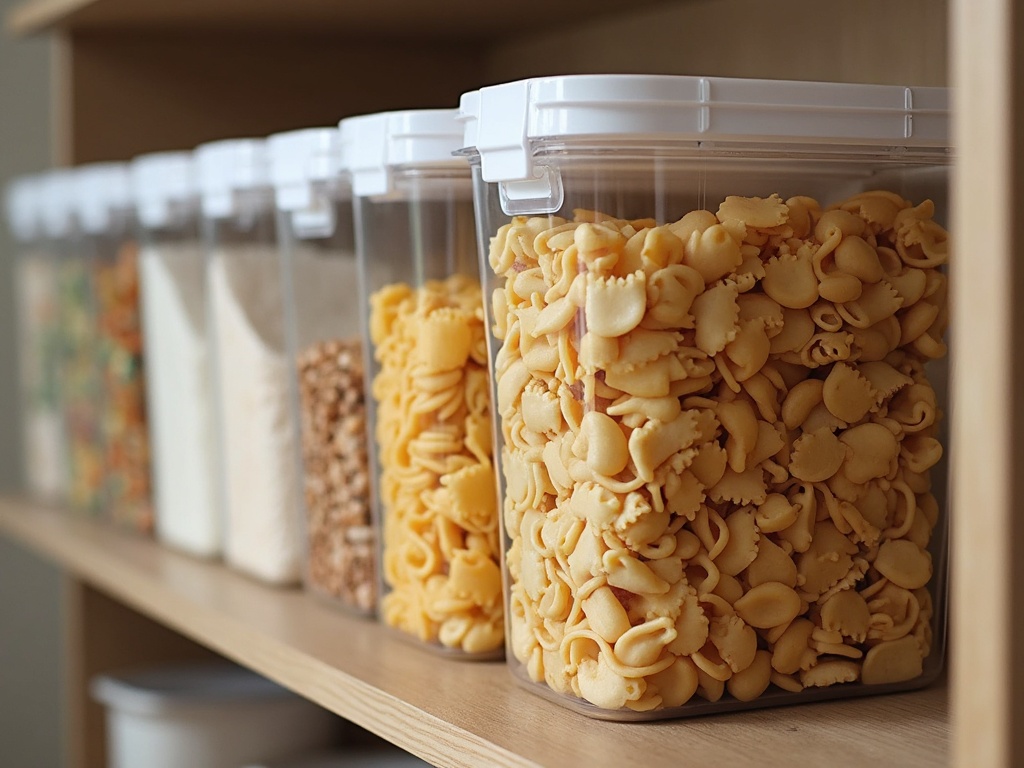
The OXO Good Grips POP Containers are worth considering if your pantry problem is stale dry goods, half-open bags, and shelves that are hard to scan. The main advantage is not that they make a pantry look cleaner for photos. It is that the clear sides, squared shape, and push-button seal make flour, rice, pasta, cereal, and snacks easier to store and use before they go stale.
They are not the cheapest containers, so I would not buy a full set before measuring your shelves. Start with the foods you open most often and the items that usually spill or go stale first. For many kitchens, that means flour, sugar, rice, coffee, cereal, and pet treats before specialty baking ingredients. If your shelves are narrow, check the container footprint carefully because the wrong size can waste more space than it saves.
Hands-On Pantry Test Notes
I would treat the OXO Good Grips POP Container as an organization upgrade, not as a magic space saver. In a small pantry, the biggest win is visibility: you can see how much flour, rice, cereal, or snacks are left without opening multiple bags. The square sides also line up more cleanly than round jars, which helps if your shelves are already crowded.
The push-button lid is the main reason to buy this over a cheaper generic container. It is easy to open with one hand, and the seal is more consistent than many budget snap-lid containers I have used. That matters most for dry goods you open often, such as coffee, brown sugar, cereal, pet treats, and baking staples.
Who Should Skip It
Skip the OXO POP Container if you need the lowest possible cost per container, or if your pantry shelves are too shallow for the taller sizes. It is also not the best choice for liquids, hot food, freezer storage, or dishwasher-heavy households. The body is straightforward to clean, but I would hand-wash the lid to protect the sealing mechanism and avoid trapping moisture inside the button assembly.
Best Way to Buy
Before buying a full set, measure your shelf depth and list the five foods you actually refill every week. A smaller starter set is usually smarter than a large matching bundle if you are still figuring out sizes. For most homes, I would start with medium containers for flour, sugar, rice, cereal, and snacks, then add specialty sizes only after you know which ones fit your shelves.
Buying Checklist
- Measure shelf depth and height before choosing a set.
- Buy containers for high-use dry goods first.
- Use labels if multiple ingredients look similar.
- Hand-wash lids to protect the sealing mechanism.