Disclosure: TheHomePicker is reader-supported. When you buy through links on our site, we may earn an affiliate commission at no extra cost to you. Learn more
The Ring Video Doorbell 4 and Google Nest Doorbell (Battery) are the two most popular smart doorbells in 2026, and choosing between them usually comes down to one thing: which smart speaker is already sitting on your kitchen counter. But beyond ecosystem loyalty, there are real differences in video quality, detection features, and long-term costs that matter more than which voice assistant you prefer.
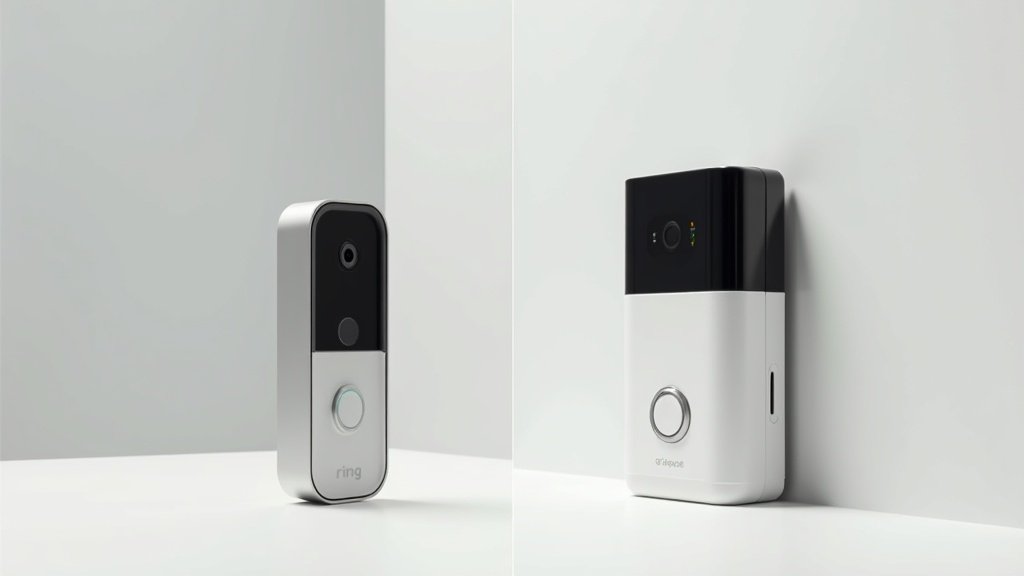
We installed both doorbells on the same front porch (side by side, yes it looked ridiculous) and ran them for 30 days. Here’s every difference that actually affects daily use.
Quick Verdict
Ring Video Doorbell 4: Better for Alexa households, renters who need easy installation, and anyone who wants Pre-Roll video to see what happened before the motion trigger.
Google Nest Doorbell: Better for Google Home users, sharper video quality, and free on-device person/package/animal detection without a subscription.
Specifications Side by Side
| Feature | Ring Doorbell 4 | Nest Doorbell (Battery) |
|---|---|---|
| Resolution | 1080p HD | 960 x 1,280 (HDR) |
| Field of View | 160° horizontal | 145° diagonal (3:4 ratio) |
| HDR | No | Yes |
| Night Vision | 1080p infrared + color | HDR night vision |
| On-Device AI | No (cloud-based) | Yes (person, package, animal, vehicle) |
| Pre-Roll Video | Yes (4 seconds color) | No |
| Battery Life | 6-12 months | 2.5-6 months |
| Free Cloud Storage | No (requires Ring Protect) | Yes (3 hours event history) |
| Subscription Cost | $3.99/mo (Basic) or $12.99/mo (Plus) | $6.99/mo (Nest Aware) or $12.99/mo (Plus) |
| Price | ~$200 | ~$180 |
Video Quality: HDR Makes a Real Difference
The Nest Doorbell’s HDR capability is its biggest advantage in daily use. On our south-facing porch with harsh afternoon shadows, the Ring consistently blew out the sky while darkening the person at the door. The Nest balanced both, keeping faces recognizable even with bright backlighting.
That said, the Ring’s wider 160° field of view captures more of the porch area. We could see packages placed to the far left that the Nest’s 145° view occasionally cropped out. If your porch is wide, the Ring shows you more.
At night, both perform well with infrared, but the Nest’s HDR night vision produced slightly clearer facial details in our tests. Neither is perfect in complete darkness from 15+ feet away.
Ready to shop? Our How to Set Up a Reliable WiFi Network for Smart Home Devices in 2026 breaks down the best options available right now.
Smart Detection: Free vs Paid
This is where the Nest Doorbell pulls ahead significantly. Its on-device AI can distinguish between people, packages, animals, and vehicles without any subscription. You get a labeled notification that says “Person detected” or “Package detected” for free.
The Ring Doorbell 4 sends generic “Motion detected” notifications unless you pay for Ring Protect ($3.99/month). Even then, its person detection is cloud-based and slightly slower than the Nest’s on-device processing.
For free users, this difference is massive. The Nest sends you fewer but smarter notifications. The Ring without a subscription floods you with every motion event, including passing cars and swaying trees.
Pre-Roll: Ring’s Secret Weapon
Ring’s Pre-Roll feature captures 4 seconds of color video before the actual motion trigger. This matters more than you’d expect. When someone walks up to your door, the Ring shows them approaching from the sidewalk. The Nest starts recording only after it detects motion, so you sometimes miss the first few seconds.
During our 30-day test, Pre-Roll proved useful at least a dozen times for identifying delivery drivers who triggered the camera, dropped the package, and walked away within the Nest’s detection-to-recording lag.
Still deciding? Browse our Best Robot Vacuum for Pet Hair 2026: Top Picks That Actually Work for side-by-side comparisons and top picks.
Battery Life & Maintenance
The Ring Doorbell 4 lasts noticeably longer on a single charge: 6-12 months in our experience, depending on activity level. The Nest Doorbell’s battery depleted faster, lasting 2.5-4 months with moderate traffic (around 15-20 events per day).
If you hate recharging, the Ring wins this category handily. Both support hardwired installation, which eliminates battery concerns entirely.
Ecosystem & Compatibility
The Ring Doorbell 4 works with Alexa natively. “Alexa, show me the front door” on an Echo Show is seamless. Google Assistant integration exists but is limited.
The Nest Doorbell integrates deeply with Google Home. Stream to Nest Hub displays, use Google Assistant voice commands, and get smart alerts on all Google devices. It also supports Apple HomeKit (through Matter) for basic features.
Both support IFTTT and basic smart home automations. Neither offers full cross-ecosystem feature parity, so your existing smart home platform should guide this decision.
“Ring Video Doorbell 4” on Amazon
“Google Nest Doorbell” on Amazon
Who Should Buy the Ring Video Doorbell 4
- Alexa-based smart home households
- Renters who want the longest battery life and easiest installation
- Anyone who values Pre-Roll video for capturing those first crucial seconds
- Users with wide porches who need the widest field of view
Who Should Buy the Google Nest Doorbell
- Google Home users who want seamless ecosystem integration
- Budget-conscious buyers who want smart detection without paying for a subscription
- HDR video quality matters to you (backlighting, shadows)
- Anyone who gets annoyed by false motion alerts from cars and trees
Frequently Asked Questions
Do I really need a subscription for either doorbell?
The Nest Doorbell is far more useful without a subscription, offering free person/package detection and 3 hours of event history. The Ring Doorbell 4 without Ring Protect loses video history entirely and sends generic motion alerts. We’d say Ring Protect is nearly essential for the Ring.
Can I install these myself without wiring?
Yes. Both have battery-powered versions that mount with screws or adhesive. No wiring required. Installation takes about 15-20 minutes for either one.
Which handles extreme cold or heat better?
The Ring operates from -5°F to 120°F. The Nest operates from -4°F to 140°F. Both handle most US climates, but battery life drops significantly below freezing for both units.
Can I view these doorbells on my TV?
Ring streams to Fire TV and Echo Show devices. Nest streams to Chromecast with Google TV and Nest Hub displays. Neither natively streams to the other ecosystem’s displays.