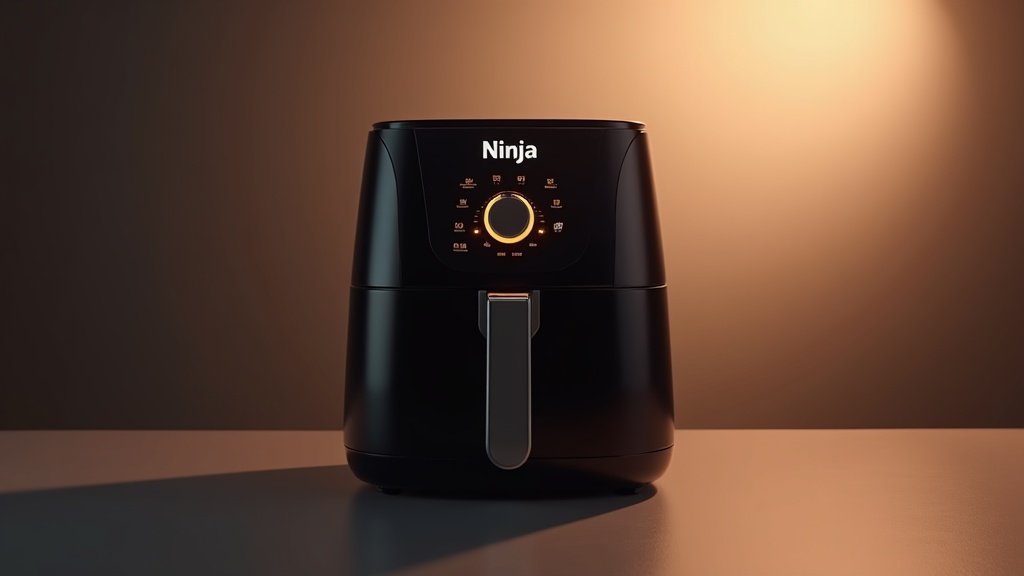
I bought my first Ninja Air Fryer Max XL almost two years ago because my old convection oven finally died mid-chicken-wing. The plan was simple: find something cheap that could handle frozen fries while I shopped for a real oven replacement. That “temporary” air fryer is still on my counter, and the oven replacement never happened.
Over the past 20 months, this machine has cooked north of 200 meals in my kitchen. Weeknight salmon fillets, Saturday morning bacon batches, dehydrated mango slices for trail mix, and more reheated pizza than I care to admit. Some nights it runs twice. It has survived a three-year-old yanking the basket out at full tilt and a college student who thought aluminum foil on the heating element was a good idea (it was not).
So here is the deal: the Ninja Max XL is not the newest air fryer on the shelf, and Ninja themselves have released flashier models since. But it keeps selling — and there are good reasons for that. There are also real limitations that the marketing copy will never mention. I am going to walk through both, with actual temperatures, cook times, and results from my own kitchen counter.
⭐ Rating: 8.5/10 | 💰 Best for: Singles, couples, and small families who want crispy results fast | ⚠️ Weakest at: Batch cooking for 4+ people, baking delicate items
Key Specs: Ninja Air Fryer Max XL (AF161)
| Spec | Detail |
|---|---|
| Model | AF161 |
| Capacity | 5.5 quart |
| Temperature Range | 105°F – 450°F (Max Crisp technology) |
| Cooking Functions | 7 — Max Crisp, Air Fry, Air Roast, Air Broil, Bake, Reheat, Dehydrate |
| Wattage | 1,750W |
| Dimensions | 11.26 × 14.72 × 13.5 inches |
| Weight | 11.68 lbs |
| Basket | Ceramic-coated, non-stick, dishwasher safe |
| Timer | Up to 60 minutes |
| Display | Digital touchscreen |
| MSRP | $119.99 (frequently $89–$99 on sale) |
| Included Accessories | Multi-layer rack (for dehydrating), recipe book |
Max Crisp vs Regular Air Fry: What’s the Difference?
Most air fryers top out at 400°F. The Ninja Max XL goes to 450°F in its Max Crisp mode, and that extra 50 degrees makes a noticeable difference on specific foods — mostly frozen items that need a hard sear to get that deep-fried texture.
I ran a side-by-side test with two batches of frozen crinkle-cut fries. One batch at 390°F for 20 minutes on Air Fry, one batch at 450°F for 12 minutes on Max Crisp. The Max Crisp batch came out with a darker, crunchier exterior and a fluffier inside. The Air Fry batch was good — perfectly edible — but noticeably softer on the outside, more like baked fries.
The same pattern held with frozen chicken wings. Max Crisp at 450°F for 22 minutes produced skin that actually crackled when you bit into it. Regular Air Fry at 390°F for 26 minutes gave me wings with chewy, rubbery skin — the kind you have to tear with your teeth.
Where Max Crisp does not help much: fresh vegetables, fish, and anything already thawed. At 450°F, broccoli florets went from raw to charred in about 7 minutes with very little middle ground. Salmon at Max Crisp dried out the edges before the center finished. For those foods, the standard Air Fry or Air Roast modes between 350–400°F are clearly better.
The bottom line: Max Crisp is a genuine differentiator for frozen foods and anything you want aggressively browned. It is not a universal “make everything better” button, and Ninja does not market it that way to their credit.
Curious how it stacks up? Our Instant Pot vs Ninja Foodi 2026: Which Multi-Cooker Should You Buy? puts the top contenders head to head.
10 Foods We Tested (and Honest Results)
Over the last 20 months, these are the foods I have cooked most often, with the settings that produced the best results after multiple rounds of trial and error.
| Food | Mode | Temp | Time | Result |
|---|---|---|---|---|
| Frozen French Fries (crinkle-cut) | Max Crisp | 450°F | 12 min | ★★★★★ Rivals deep-fried. Shake basket at 6 min. |
| Chicken Wings (frozen, bone-in) | Max Crisp | 450°F | 22 min | ★★★★★ Skin actually cracks. Flip at 12 min. |
| Salmon Fillet (fresh, 6 oz) | Air Fry | 380°F | 10 min | ★★★★ Flaky inside, slight crust. Do not overcook. |
| Broccoli Florets | Air Roast | 370°F | 8 min | ★★★★ Crispy tips, tender stems. Toss with oil first. |
| Frozen Pizza (personal size, 7″) | Air Fry | 375°F | 8 min | ★★★ Crust gets crispy but cheese can slide. Only fits personal size. |
| Bacon (thick-cut, 4 strips) | Air Fry | 350°F | 10 min | ★★★★★ Perfectly flat, evenly crispy. Drain grease at 5 min. |
| NY Strip Steak (1″, room temp) | Air Broil | 450°F | 14 min | ★★★ Medium-rare achievable. Sear is decent, not cast-iron level. |
| Toast (sourdough, 2 slices) | Reheat | 330°F | 4 min | ★★★★ Better than a toaster, honestly. Both sides even. |
| Chocolate Chip Cookies (from dough) | Bake | 325°F | 8 min | ★★★ Edges brown fast, centers stay doughy. Fit 6 max. |
| Mango Slices (dehydrating) | Dehydrate | 135°F | 8 hrs | ★★★★ Chewy, sweet. Use the multi-layer rack. Check at 6 hrs. |
A few observations that surprised me. Bacon is the single best thing this air fryer does. Four strips of thick-cut bacon at 350°F for 10 minutes produces restaurant-quality results with zero splatter and no standing over a hot pan. I make bacon in this thing at least three times a week.
The steak result was the most disappointing. At 450°F Air Broil, you can get a medium-rare center on a 1-inch strip, but the exterior sear cannot compete with a ripping-hot cast iron skillet. The Maillard reaction needs direct contact heat that circulating air simply cannot replicate. If steak is your primary motivation, skip the air fryer and buy a Lodge skillet for $25.
Baking is the weakest overall function. The 5.5-quart basket is not designed for even heat distribution the way an oven cavity is. Cookies brown unevenly — the edges facing the heating element get dark while the centers stay pale. You can fit maybe six cookies at a time, making it impractical for any real batch baking.
The 5.5 Quart Capacity: Enough for a Family?
Ninja advertises the Max XL as a “family-size” air fryer, and that depends entirely on your definition of family. For two adults, it is perfect. A full pound of frozen fries fits in a single layer with room to shake. Two chicken breasts sit side by side comfortably. Four pork chops — no problem.
For three people, it still works, but you start compromising. A pound and a half of wings needs to stack slightly, which means the bottom layer does not crisp as well. You will want to shake or flip more often.
For four or more people, you are doing two batches on most proteins. Two batches of chicken thighs, two batches of fish fillets. A full frozen pizza does not fit at all — only personal-size 7-inch pies. If you regularly cook for four or more, the Ninja Foodi Dual Zone (8 quart total, two independent 4-quart baskets) is a significantly better option, even though each individual basket is smaller.
The basket dimensions internally are roughly 9 inches across and 3.5 inches deep. Tall items like a whole small chicken or a Cornish hen will not fit. A 2-pound pork tenderloin fits if you curl it slightly. Anything larger and you are looking at an air fryer oven form factor.
For more options in this category, check out our How to Organize a Small Kitchen in 2026: 15 Storage Hacks That Actually Work.
7 Cooking Functions Ranked
The Max XL markets seven distinct cooking functions. After extensive use, here is how I rank each one honestly.
1. Max Crisp — Grade: A+
The flagship feature and it delivers. 450°F transforms frozen foods in ways that standard 400°F air fryers cannot match. This is the function that justifies choosing the Max XL over cheaper alternatives. I use it 3-4 times per week.
2. Air Fry — Grade: A
The workhorse mode, ranging from 250°F to 400°F. Handles fresh proteins, vegetables, and most daily cooking. Responsive, consistent, and the temperature accuracy is solid — my probe thermometer reads within 5°F of the displayed temp at the basket level.
3. Reheat — Grade: A
Underrated. Leftover pizza at 340°F for 4 minutes comes out with a crispy crust and melted cheese — better than any microwave and faster than preheating a full oven. Day-old fried chicken regains its crunch at 360°F for 5 minutes. This mode alone saves food waste.
4. Air Roast — Grade: B+
Works well for vegetables and larger cuts that need gentler, more even heat. Brussels sprouts, sweet potato cubes, and cauliflower steaks come out well. The difference between Air Roast and Air Fry is subtle — slightly lower fan speed for more uniform browning — but it is there if you pay attention.
5. Dehydrate — Grade: B+
Functional and useful, especially with the included multi-layer rack. Mango, apple slices, and beef jerky all turn out well. The limitation is time — dehydrating takes 6-10 hours, and the machine is loud enough that running it overnight in an apartment is not ideal. Dedicated dehydrators are quieter and hold more.
6. Bake — Grade: B
It works for small batches of cookies, mini muffins, and individual portions. But the uneven heat distribution and tiny capacity make it impractical compared to a real oven. I use it maybe once a month when I want four cookies and cannot justify heating the big oven.
7. Air Broil — Grade: B-
High heat from the top element, designed for melting cheese and finishing dishes. The problem is that the 5.5-quart basket puts food too close to the element, so things go from browned to burnt in a very tight window. You need to watch it closely, which defeats the “set it and forget it” appeal. Usable, but the margin for error is thin.
Build Quality and Cleanup
After 20 months of near-daily use, the Ninja Max XL is holding up remarkably well. The exterior housing is matte gray plastic that does not show fingerprints or grease stains easily. The touchscreen panel still responds on the first tap — no dead zones or lag. The basket slides in and out smoothly on its tracks, with no wobble or looseness developing over time.
The ceramic-coated basket is the standout component. Unlike Teflon-coated baskets that start peeling within a year (I have had this happen with two cheaper air fryers), the Ninja’s ceramic coating shows zero signs of degradation. No chips, no flaking, no sticky spots. Food still slides right off after a light spray of avocado oil.
Cleaning is straightforward. The basket and crisper plate are both dishwasher safe, and I run them through the dishwasher 3-4 times a week with no issues. For daily cleaning between uses, a quick wipe with a damp paper towel handles most residue. The only area that requires attention is the heating element at the top — grease splatter accumulates there and needs a gentle wipe with a damp cloth every couple of weeks. Neglect it and you will get smoke on your next high-temperature cook.
The one build quality concern: the power cord is only about 30 inches long. If your outlet is behind the counter, you may need a heavy-duty extension cord rated for 1,750W. This is a safety issue Ninja should address — a 36-inch cord would solve most kitchen placement problems.
Ninja Max XL vs Cosori Pro II vs Ninja Dual Zone
These three models occupy the most competitive price segment for basket-style air fryers. Here is how they compare on the specs that actually matter in daily use.
| Feature | Ninja Max XL (AF161) | Cosori Pro II (CAF-P583S) | Ninja Foodi Dual Zone (DZ201) |
|---|---|---|---|
| Capacity | 5.5 qt | 5.8 qt | 8 qt (2 × 4 qt) |
| Max Temp | 450°F (Max Crisp) | 450°F | 400°F |
| Wattage | 1,750W | 1,700W | 1,690W |
| Functions | 7 | 12 (with presets) | 6 |
| Basket Coating | Ceramic non-stick | Teflon non-stick | Ceramic non-stick |
| Dishwasher Safe | Yes | Yes | Yes |
| WiFi / App | No | Yes (VeSync app) | No |
| Dual Basket | No | No | Yes (independent zones) |
| Weight | 11.68 lbs | 12.17 lbs | 17.6 lbs |
| Typical Price | $89–$120 | $90–$120 | $130–$170 |
| Best For | Frozen foods, crispy results | App users, preset convenience | Families, multi-dish meals |
Ninja Max XL vs Cosori Pro II: These two are close competitors at nearly identical price points. The Cosori offers WiFi connectivity and 12 one-touch presets through the VeSync app, which appeals to people who like guided cooking. However, its Teflon coating is a durability concern — multiple user reports cite peeling after 8-12 months. The Ninja’s ceramic coating has proven more durable in my experience. If you value app control and presets, go Cosori. If you prioritize build quality and Max Crisp performance, the Ninja wins.
Ninja Max XL vs Ninja Dual Zone: The Dual Zone is a significant upgrade for families. Two independent 4-quart baskets let you cook proteins and sides simultaneously at different temperatures. The trade-off is that each individual basket is smaller than the Max XL’s single basket (4 qt vs 5.5 qt), and the Dual Zone tops out at 400°F — no Max Crisp. If you cook for one or two people and want the highest temperature ceiling, the Max XL is better. If you cook for three or more and want meal flexibility, the Dual Zone justifies its $40-50 premium.
Energy and Preheating
I measured the Ninja Max XL’s energy consumption against my conventional oven using a Kill-A-Watt meter over a two-week period. The results strongly favor the air fryer for small-batch cooking.
The Max XL draws 1,750W at peak, but its average consumption during a typical 15-minute cook session is closer to 1,200W because the heating element cycles on and off to maintain temperature. That works out to about 0.3 kWh per cooking session, or roughly 3-4 cents at the US average electricity rate of $0.12/kWh.
My full-size oven draws 2,500W and takes 12-15 minutes to preheat to 400°F. The Ninja reaches 400°F in about 3 minutes. For the same 15-minute cooking task, the oven consumes approximately 0.9 kWh including preheat — three times the air fryer’s consumption.
Over a month of daily use, switching from oven to air fryer for small meals saved roughly $8-12 on my electricity bill. Not life-changing money, but it adds up over a year, and the time savings from the fast preheat are worth more than the energy savings for most people. On a hot summer day, the air fryer also does not heat up your kitchen the way a full oven does — a genuine quality-of-life improvement if you lack central air.
Who Should Buy the Ninja Air Fryer Max XL
Buy it if you are:
- A single person or couple who cooks daily and wants faster, crispier results than a conventional oven
- A frozen food enthusiast — the Max Crisp mode at 450°F is specifically designed for frozen-to-crispy cooking and it excels there
- Someone replacing a failing toaster oven — the Max XL handles toast, reheating, and small baking tasks while adding air frying capability
- A college student or apartment dweller with limited kitchen space and no full oven access
- A health-conscious cook looking to reduce oil usage — most foods need only a light spray or no oil at all
Skip it if you are:
- Regularly cooking for 4+ people — you will spend too much time running batches. Look at the Ninja Dual Zone or an air fryer oven instead
- A serious baker — the uneven heat distribution and tiny capacity make it a poor substitute for a real oven
- Looking for smart home integration — no WiFi, no app, no voice assistant compatibility. The Cosori Pro II is better for that
- A steak fanatic — air fryers cannot replicate the direct-contact sear of cast iron. Save your money and buy a good skillet
- Someone who needs a quiet kitchen — at peak fan speed during Max Crisp, the unit produces about 65 dB, louder than a normal conversation
- 450°F Max Crisp mode genuinely outperforms standard air fryers on frozen foods
- Ceramic-coated basket shows zero degradation after 20 months of daily use
- Dishwasher-safe basket and crisper plate make cleanup effortless
- 7 cooking functions cover the vast majority of kitchen needs
- 3-minute preheat saves significant time vs a conventional oven
- Competitive pricing: $89–$119 for a well-built, powerful unit
- Digital touchscreen remains responsive after extended use
- 5.5-quart capacity limits you to 2-3 servings on most proteins
- No WiFi or app connectivity — manual controls only
- Bake function produces uneven results compared to a proper oven
- Air Broil has a very narrow window between browned and burnt
- 65 dB fan noise at Max Crisp is noticeable in small kitchens
- 30-inch power cord may not reach outlets behind deeper counters
- No window or light to check food without opening the basket
Ninja Air Fryer Max XL
As an Amazon Associate, we earn from qualifying purchases.