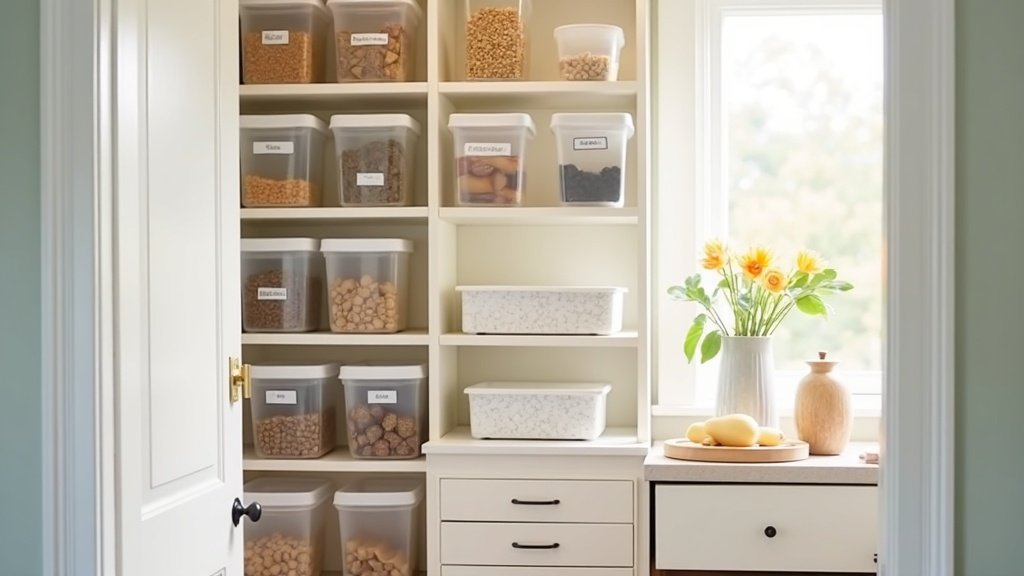
You’ve got 30 minutes to make a decision on a kitchen pantry organization before the sale ends. Here’s exactly what you need to know to make the right call.
Step 1: The Complete Purge
Before buying any containers or organizers, remove everything from your pantry. Every item. Then:
- Check expiration dates — discard expired items without guilt
- Consolidate duplicates (three half-empty bags of rice become one container)
- Identify items that belong elsewhere (cleaning supplies, tools)
- Donate non-perishables you genuinely won’t use
Most households discover they have 30–40% less food than they thought after removing duplicates and expired items. This is the data you need before buying organizers.
According to FDA, proper food handling and storage practices in the kitchen significantly reduce the risk of foodborne illness.
Step 2: The Zone System
Divide your pantry into functional zones based on access frequency and category. Here’s a proven layout for a standard pantry:
According to the National Association of Productivity and Organizing Professionals (NAPO), According to the National Association of Productivity and Organizing Professionals (NAPO), clutter is one of the top causes of reduced home productivity and increased stress.
| Zone | Shelf Position | Contents |
|---|---|---|
| Daily Use | Eye level | Coffee, tea, snacks, cooking oils |
| Weekly Use | One shelf up/down | Grains, pasta, canned goods, baking |
| Bulk & Backup | Bottom shelves | Extra inventory, large packages |
| Kids’ Zone | Lowest accessible | Approved snacks (if applicable) |
| Appliance/Gear | Top shelf | Rarely used appliances, serving items |
The key principle: frequency determines height. What you reach for daily should be between hip and eye level. What you use monthly goes to the top or bottom.
Step 3: Containers — What’s Worth the Investment
Airtight Canisters for Dry Goods
The biggest ROI in pantry organization is moving dry goods (flour, sugar, rice, pasta, cereal) from original packaging into airtight containers. Benefits: no more bag clips, easier measuring, pest prevention, and cleaner shelves. The OXO Good Grips POP Containers are the gold standard — the one-button seal works with one hand, they’re dishwasher safe, and they stack reliably.
Shop OXO POP Containers on Amazon
For a basic pantry, start with a 10-piece set covering the staples. Measure your shelf depth before buying — OXO POP containers come in configurations optimized for standard 12″ and 16″ shelves.
Lazy Susans for Corner and Back Shelf Access
Corners and back-of-shelf areas are where pantry organization fails. A turntable lazy susan solves the “stuff gets buried” problem: one spin brings everything to the front. Use them for spices, condiments, oils, and canned goods. A two-tier version doubles the capacity of a standard shelf section.
Shelf Risers for Canned Goods
Standard shelves waste vertical space. A shelf riser lets you stack canned goods in a stadium-style arrangement — every can is visible without moving others. The bamboo and wire options are both durable; choose wire if you want to see through the riser, bamboo if you prefer a cleaner aesthetic.
Step 4: Labeling — A System That Actually Holds Up
Most labeling systems fail because they’re either too elaborate (hand-lettered calligraphy labels that take 20 minutes each) or too vague (“Baking”). Here’s a middle path that works:
Container Labels
- Use a label maker (not handwriting) — it’s faster and cleaner
- Label the container, not the lid — lids move and get mixed up
- Include the item name only — skip the date (you’ll never update it)
- Chalkboard labels work well if you rotate contents frequently
Shelf Labels
Stick zone labels on the shelf edge (not the wall): “GRAINS,” “CANNED,” “SNACKS,” “BAKING.” When someone puts something away in the wrong place, they can self-correct. This is the difference between a system that lasts and one that dissolves in three weeks.
Expiration Tracking
Rather than labeling expiration dates on individual items (tedious), do a monthly “front-to-back” rotation: move older items to the front when restocking. This is the same FIFO (first-in, first-out) system grocery stores use.
Step 5: Realistic Maintenance Routine
The pantry that stays organized is the one with the simplest maintenance rules:
| Frequency | Task | Time |
|---|---|---|
| Weekly | Grocery put-away in correct zones | 5 min |
| Monthly | Front-to-back rotation, remove empties | 10 min |
| Quarterly | Full expiration check, refill containers | 20 min |
| Annually | Full purge and system reset | 60 min |
Common Pantry Mistakes to Avoid
- Buying containers before measuring — always measure shelf depth, height, and width first
- Over-labeling — if a label doesn’t change behavior, it’s just visual noise
- Buying everything at once — start with the daily-use zone, then expand
- Ignoring the door — over-door organizers work well for spices and small packets
- Mixed categories in one container — “miscellaneous” bins become the junk drawer of the pantry
Budget-Friendly Approach
If you’re starting with a tight budget, prioritize in this order:
- Shelf risers (highest impact per dollar for canned goods visibility)
- One lazy susan for the deepest shelf section
- Airtight containers for the 3–4 dry goods you use most
- Label maker or chalkboard labels
A $60–80 investment covering these four items transforms most pantries. Add containers incrementally as budget allows.
The Bottom Line
A well-organized pantry isn’t a one-time project — it’s a system. The zone framework, consistent container and labeling choices, and a simple monthly maintenance routine are the three elements that determine whether it sticks. Start with the purge, build the zones, add the right products where they solve real problems, and keep the maintenance light enough to actually do it.
Shop Pantry Organization Products
Frequently Asked Questions
Q: How do I choose the right home product for my home?
Start by measuring your space and identifying your primary use case. For home products, the most important specs to match to your needs are performance and value for money. Use the buying criteria outlined in this guide to narrow your options, then cross-reference current Amazon reviews to verify real-world performance claims.
Q: What are the most important features to look for in a home product?
The must-have features depend on your situation, but for most buyers the top priorities are performance, value for money, and warranty coverage. Avoid paying premium prices for features you won’t use regularly — smart connectivity, for example, adds cost but only matters if you actively use app or voice control.
Q: How much maintenance does a home product require?
Routine maintenance for a home product typically involves ease of use every 1–6 months depending on usage intensity. Set calendar reminders for filter changes and brush replacements — the biggest cause of early failure is skipping scheduled maintenance. Most manufacturers provide a maintenance schedule in the product manual or app.
Q: Are expensive home products significantly better than budget options?
In most cases, mid-range models (roughly $150–$300) deliver 85–90% of the performance of premium models at half the price. The biggest differences at the top tier are performance and advanced smart features. For light to moderate daily use, a well-reviewed mid-range option is the most cost-effective choice for most households.
Q: What warranty should I expect when buying a home product?
Most reputable home product brands offer a 1-year manufacturer warranty as standard, with premium models sometimes carrying 2–5 years. Extended warranties through retailers like Amazon or Best Buy add 1–3 years of protection for roughly 10–15% of the purchase price — worth it for appliances used daily. Always register your product within 30 days of purchase to activate full warranty coverage.