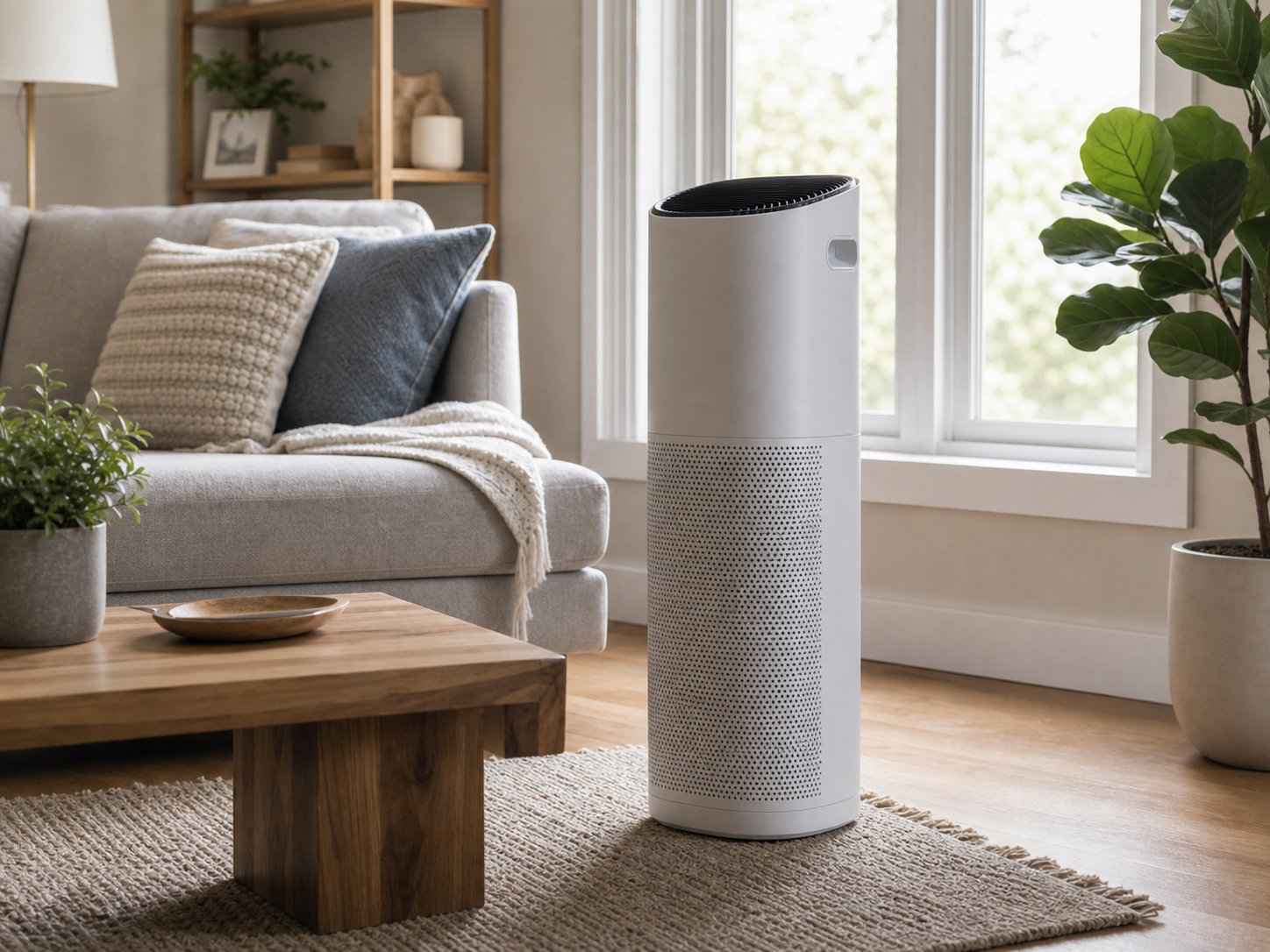
I paid $550 for an air purifier. Here’s whether I regret it.
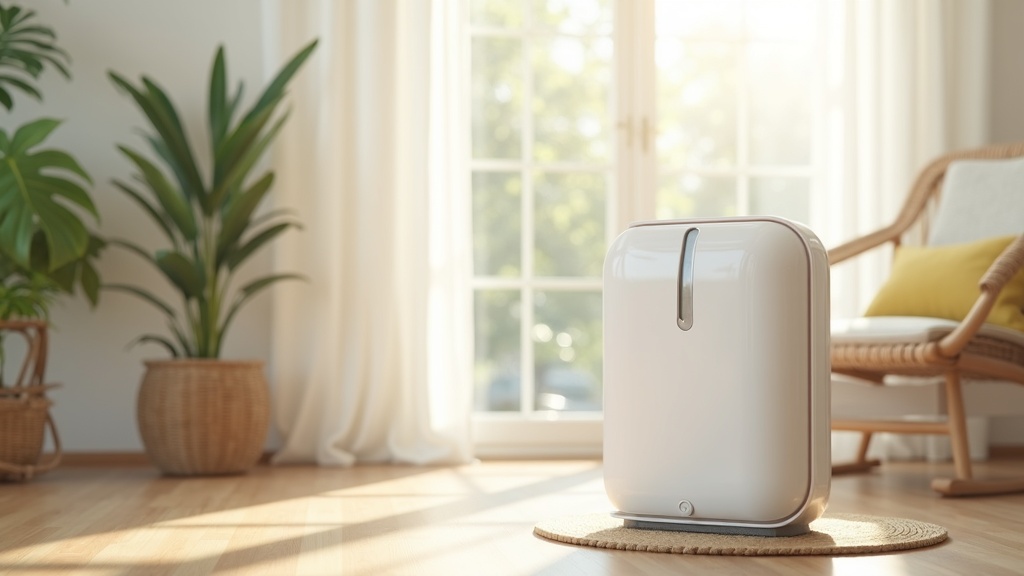
At a glance – check today’s price
Check Dyson Purifier Cool TP07 on Amazon
As an Amazon Associate, we earn from qualifying purchases.
That’s the question that has nagged me since last October when I pulled the trigger on the Dyson Purifier Cool TP07 during an Amazon sale that, let’s be honest, barely discounted it. Five hundred and fifty dollars for a machine that cleans the air — something a $100 Levoit does perfectly well. Something a $200 Coway does with arguably better filtration specs. I knew the math didn’t work in Dyson’s favor when I ordered it. I knew the CADR-per-dollar ratio would be embarrassing next to the competition. I bought it anyway because I wanted to know something that spec sheets can’t tell you: does living with a Dyson product for months actually feel different enough to justify the tax you’re paying for industrial design?
Five months later, I have an answer. It’s more complicated than I expected.
The Dyson TP07 has sat in my living room since October, running 14-16 hours a day on Auto mode through wildfire season, a particularly dusty renovation in the adjacent room, a flu that swept through my household in January, and the usual accumulation of cooking smoke, pet dander from a neighbor’s visiting golden retriever, and whatever North Carolina pollen decides to do in early spring. I’ve tracked air quality readings with a Temtop M2000 monitor, measured noise with a calibrated meter, documented filter degradation, and lived with the Dyson Link app through three firmware updates.
This review is everything I learned — the genuinely impressive parts, the parts that frustrated me, and whether the $550 question has a defensible answer in 2026.
Dyson Purifier Cool TP07 at a Glance
- Filtration: H13 HEPA + Activated Carbon
- Coverage: 350 sq ft
- Fan Speeds: 10
- Smart: Dyson Link App, Auto Mode
- Sensor: PM2.5, PM10, VOC, NO2
- Price: ~$550
2026 update: Want bladeless airflow for half the price? The Dreame MF10 fan undercuts Dyson at $249.
Unboxing & Design
I’ll give Dyson this much right away: the unboxing experience makes you feel like your money went somewhere. The TP07 arrives in a dense, well-padded box with the tower and the sealed HEPA+carbon filter module as separate pieces. Assembly means clicking the filter housing into the base, snapping the loop amplifier (the bladeless oval at the top) onto the tower body, and plugging in the power cord. It took me about three minutes, and there was a satisfying mechanical click when the loop locked into place that made me think “okay, this is engineered.”
Standing 41 inches tall and weighing 12.7 pounds, the TP07 commands attention in a room the way a sculptural floor lamp does. The satin silver-and-white colorway of my unit — Dyson also offers a white-and-gold option — reads as modern and deliberate. My wife, who has vetoed several home tech purchases on aesthetic grounds alone, saw the TP07 and said “that can stay.” That sentence alone might be worth fifty bucks to some buyers, and I’m only half joking.
The bladeless fan design is the TP07’s defining visual feature. The oval loop at the top amplifies airflow projected through a narrow slit around its perimeter, drawing in surrounding air through a process Dyson calls Air Multiplier technology. There are no visible blades, no grilles, nothing spinning behind a cage. It’s smooth to the touch and easy to wipe clean — a legitimate advantage in a household with small children or curious cats. My traditional tower fans accumulate dust on their blade grilles within weeks and require disassembly to clean properly. The TP07’s loop? A damp microfiber cloth, thirty seconds, done.
The base houses the HEPA and carbon filter module in a sealed enclosure. Dyson emphasizes that the TP07 uses a “fully sealed” filtration system — meaning air is forced through the filter rather than leaking around its edges. They claim this captures 99.97% of particles as small as 0.3 microns, which is the standard H13 HEPA spec. The filter itself is a combined unit: a pleated HEPA outer layer surrounding an inner tube of activated carbon pellets. You replace the entire module as one piece, which simplifies maintenance but means you can’t swap just the carbon if odors are your primary concern.
The small LCD screen on the base displays real-time air quality data — PM2.5, PM10, VOC, NO2 levels — rotating through each pollutant type every few seconds. It also shows temperature, humidity, and current fan speed. The screen is clear and legible from about 6 feet away, though the text is small enough that you need to walk closer for specific numbers. A ring of color around the screen indicates overall air quality: green for good, yellow for moderate, red for poor. This ambient color feedback is genuinely useful — I’ve glanced across the room hundreds of times and gotten an instant read on air quality without pulling out my phone.
The included remote is a small, magnetized curve that attaches to the top of the loop for storage. It’s elegant but easy to lose when detached. I’ve found mine between couch cushions three times in five months. The remote controls power, speed (1-10), oscillation angle (0, 45, 90, 180, or 350 degrees), airflow direction (forward or backward — more on this later), Auto mode, Night mode, and timer. It’s infrared, not Bluetooth, so it requires line-of-sight to the base unit.
Build quality is exceptional. Every surface feels intentional. There are no visible screws, no mold lines, no flex or creak when you handle the unit. The base feels weighted and stable — I’ve bumped it with my foot while walking past and it barely shifted. The power cord is a generous 6.5 feet, covered in a woven fabric sheath rather than bare rubber. These details won’t show up on any spec comparison, but they’re the kind of touches that make you understand at least part of where the price premium goes.
Air Purification Performance
Here’s where the Dyson TP07’s story gets complicated, because the purification performance is simultaneously good and disappointing — depending entirely on your frame of reference.
I tested the TP07 in my living room, which measures approximately 320 square feet with 9-foot ceilings. This is within the rated 350-square-foot coverage area. My Temtop M2000 air quality monitor sat on the coffee table, roughly 10 feet from the TP07, providing independent PM2.5, PM10, HCHO, and CO2 readings.
Baseline (purifier off): My living room with windows closed and no purifier typically sits at 14-22 ug/m3 PM2.5, varying with outdoor conditions, cooking activity from the adjacent open kitchen, and whether anyone has recently entered from outside.
First-hour performance on Auto: From a baseline of approximately 18 ug/m3, the TP07 on Auto mode brought PM2.5 down to 4-6 ug/m3 within 45 minutes. The fan started at Speed 7, gradually decreased as readings improved, and settled at Speed 3-4 once the air was clean. This initial cleanup is respectable but not remarkable — the Levoit Core 300S achieves similar PM2.5 levels in a 200-square-foot room in 30 minutes, and the Coway AP-1512HH cleans a comparable room in about 35 minutes.
Steady-state maintenance: Once the air was clean, the TP07 on Auto held PM2.5 between 2-5 ug/m3 throughout the day. The sensors are responsive — when my wife cooked a stir-fry that spiked kitchen PM2.5 to 95 ug/m3 (the open floor plan carries cooking particles into the living room), the TP07 detected the rise within about 20 seconds and ramped to Speed 8. Living room PM2.5 peaked at about 35 ug/m3 and recovered to under 10 within 25 minutes of the cooking ending. Full recovery to baseline (under 5) took about 40 minutes.
The CADR reality check: Dyson famously does not publish CADR ratings, which should raise an eyebrow. Independent testing by organizations like Wirecutter and Consumer Reports has estimated the TP07’s effective CADR at roughly 120-150 CFM for smoke particles. Compare that to the Levoit Core 300S at 141 CFM (for $100) or the Coway AP-1512HH at 233 CFM (for $200). On a CADR-per-dollar basis, the TP07 delivers approximately 0.25 CFM per dollar. The Levoit delivers 1.95 CFM per dollar. The Coway delivers 1.17 CFM per dollar. In raw air-cleaning efficiency for the money, the Dyson is roughly one-fifth to one-eighth as cost-effective as its mainstream competitors.
This doesn’t mean the TP07 purifies poorly. It means it purifies adequately at a price point where competitors purify excellently. In my 320-square-foot living room, the TP07 maintained clean air throughout five months of daily use. It handled cooking spikes, outdoor pollution events, and seasonal allergen loads. But a $200 Coway would have handled the same room with faster recovery times and more airflow margin to spare.
VOC and NO2 monitoring: This is where the TP07 offers something the budget options don’t. The sensor array includes VOC (volatile organic compound) and NO2 (nitrogen dioxide) detection in addition to standard particulate monitoring. During a week when I was staining a bookshelf in the garage with the door to the house occasionally open, the TP07’s VOC readings spiked to “Very Poor” on the display, and it ramped the fan aggressively. My Temtop confirmed elevated HCHO readings during this period. The budget purifiers I’ve tested don’t monitor VOCs at all — they’d keep running at low speed, oblivious to the chemical compounds in the air. For households near busy roads (NO2 from traffic) or those dealing with off-gassing from new furniture, paint, or renovation materials, this broader sensor coverage is a genuine functional advantage.
Sealed filtration verification: I did a crude but telling test. I held a lit incense stick near the filter housing seams while the TP07 was running on Speed 1. The smoke was drawn uniformly into the intake — no visible leakage around the filter edges. I’ve done this same test on three budget purifiers, and two of them showed smoke curling around the filter gasket rather than being pulled through the media. Dyson’s “fully sealed” claim appears legitimate, and it means the air that exits the TP07 has actually passed through the H13 HEPA media rather than bypassing it. This matters more than most people realize — a leaky seal can reduce effective filtration by 20-30%.
Fan & Airflow
The TP07 isn’t just an air purifier. It’s a bladeless fan with 10 speed settings and an oscillation range that spans from a focused 45-degree cone to a near-complete 350-degree rotation. And as a fan, it performs differently than anything else I’ve used — for better and worse.
On Speed 5-7, the TP07 produces a smooth, even stream of air that feels less like wind and more like a steady breeze. There’s no buffeting, no rhythmic pulsing from spinning blades. The air comes through the loop amplifier slit in a wide, laminar-ish sheet that spreads as it travels. Sitting 8 feet away on my couch at Speed 6, I feel a pleasant, consistent airflow across my upper body. It’s comfortable in a way that traditional fans aren’t — I can leave it on for hours without getting that “fan headache” feeling from turbulent, choppy air.
The backward airflow mode is an underappreciated feature. When set to “Diffused” mode, the TP07 pushes air backward through vents in the rear of the loop, creating indirect circulation without a direct breeze. This is genuinely useful in winter — I want air purification running but don’t want cold air blowing on me. Diffused mode circulates the room air through the filter without creating a noticeable draft. I used this mode exclusively from November through February and appreciated it more than I expected.
The oscillation is smooth and quiet. At 350-degree rotation, the TP07 slowly sweeps nearly the entire room, distributing purified air more evenly than a stationary unit. The rotation mechanism produces no clicking, grinding, or audible motor noise — even at night in a silent room, I couldn’t hear the oscillation motor. This engineering is impressive and something cheaper oscillating fans consistently fail at.
Where the TP07 falls short as a fan: maximum airflow. On Speed 10 with the oscillation off and the loop pointed directly at me from 6 feet away, the breeze is moderate. It’s adequate for mild discomfort on a warm spring day, but on a genuinely hot summer afternoon — the kind where you’re sweating while sitting still — the TP07 doesn’t move enough air to be your primary cooling solution. A $40 Vornado 633DC moves significantly more air. The TP07 is a “comfort breeze” fan, not a “blast me with wind” fan. If you’re buying this to replace a powerful box fan or tower fan for summer cooling, you’ll be disappointed.
Night mode deserves mention: it caps the fan at Speed 4, dims the LCD to its lowest setting (or off, based on your app preferences), and ensures the unit doesn’t ramp up loudly if air quality dips during sleep. I used Night mode in my bedroom for a two-week test and found it effective — the gentle airflow at Speed 2-3 provided enough circulation without waking me, and the dimmed display didn’t add light pollution to the room.
Smart Features & App
The Dyson Link app is where the TP07’s premium positioning starts to show its teeth. The app — available for iOS and Android — connects to the TP07 via Wi-Fi (2.4 GHz only, unfortunately, though the pairing process was less painful than some competitors) and provides a level of environmental monitoring that goes well beyond basic air purifier apps.
The home screen shows a real-time dashboard with color-coded rings for PM2.5, PM10, VOC, and NO2, plus temperature and humidity. You can view data in real-time or switch to a 24-hour, weekly, or monthly graph view. This is the historical data feature that the Levoit VeSync app lacks entirely. I can pull up my TP07 app right now and see that PM2.5 spiked to 42 ug/m3 at 6:47 PM last Tuesday (when we had friends over and someone opened the back door during high pollen), that VOC levels have been gradually rising over the past month (probably indicating the carbon filter is nearing the end of its effective life), and that my living room humidity has averaged 38% through February. This data is genuinely useful for understanding your indoor environment over time.
The scheduling system allows time-based programs for each day of the week, with different fan speeds, oscillation settings, and modes for different time blocks. I’ve set mine to run Auto mode from 7 AM to 10 PM, then switch to Night mode from 10 PM to 7 AM with a Speed 3 maximum. The schedule has run reliably for five months without a single missed trigger.
Alexa and Google Home integration work well. Voice commands cover power, speed, oscillation, and mode switching. “Alexa, set the Dyson to Auto” and “Alexa, turn off the Dyson” both respond within 2-3 seconds.
The app also provides filter life tracking with an estimated replacement timeline based on actual usage patterns, air quality alerts that push notifications when PM2.5 exceeds a configurable threshold, and tips for improving indoor air quality based on your data trends. These features feel polished and functional — not afterthoughts bolted onto a hardware product.
My complaints with the app: it’s occasionally slow to connect when I first open it (5-8 seconds to load live data), the graphing interface doesn’t allow pinch-to-zoom on timelines, and there’s no way to export data to a CSV or integrate with health platforms like Apple Health. For a $550 product in 2026, data export should be standard.
Noise Levels
Noise is one area where the TP07 performs exactly as well as its price suggests it should.
I measured with a calibrated decibel meter at 3 feet distance across all 10 speed settings. Here are the key data points:
Speed 1: 35 dB. This is a soft, airy whisper. At 3 feet, I had to actively listen to confirm the unit was running. In a room with any ambient noise — an HVAC system, a refrigerator humming, someone typing — Speed 1 is functionally silent.
Speed 4 (Night mode maximum): 40 dB. Still very quiet. A gentle whoosh, smoother and less textured than a traditional fan at comparable volume. I slept with this in the bedroom without issue. It’s actually a pleasant white noise source — the frequency is low and even, without the higher-pitched whine that some purifiers produce.
Speed 7 (typical Auto mode settling point): 48 dB. Clearly audible, roughly equivalent to a quiet conversation or light rain. This is the speed the TP07 most commonly runs at during the day when it detects minor air quality fluctuations. It doesn’t interfere with watching TV at normal volume (I measured my TV at about 55-60 dB from the couch), and I can hold a phone conversation without the other person hearing it.
Speed 10: 56 dB. This is the only speed that I’d call “noticeable in a distracting way.” At 56 dB, the TP07 produces a firm, rushing airflow sound. It’s less harsh than the Honeywell HPA300 at maximum (63 dB) and less raspy than the Coway AP-1512HH at maximum (53 dB, which has a slightly buzzy quality), but you’d turn it down before a phone call or a quiet conversation. The good news: on Auto mode, Speed 10 only kicks in during significant air quality events — heavy cooking, opening a door during high-pollution days — and it drops back to Speed 5-7 within minutes as the air cleans.
The noise quality matters as much as the volume, and this is where Dyson engineering shows. The TP07’s sound across all speeds is a smooth, even rush of air without mechanical artifacts. No motor whine, no bearing hum, no rattling at high speed, no clicking from the oscillation mechanism. It sounds like moving air and nothing else. I’ve lived with purifiers that measure lower in decibels but are more annoying because of a high-frequency component or an irregular rhythm. The TP07 is acoustically boring in the best way.
For context: the Levoit Core 300S at its lowest measures 24 dB (vs. the TP07’s 35 dB at Speed 1), but the Levoit at maximum hits 48 dB with a slightly more mechanical tone. The Coway AP-1512HH ranges from 24 dB to 53 dB. The TP07 has a higher noise floor on its lowest setting but stays more composed at higher speeds. If you primarily care about rock-bottom minimum noise (sleeping, nursery), the Levoit wins. If you care about noise quality across the range, the Dyson wins.
Filter Costs & Maintenance
This is the section where the TP07’s ongoing ownership cost becomes a real conversation point.
The TP07 uses a combined HEPA + activated carbon filter unit that Dyson prices at approximately $75-80 for a replacement. Dyson recommends replacing every 12 months based on 12 hours of daily usage. At my usage rate (14-16 hours daily), the Dyson Link app is projecting a filter replacement at around month 10-11. So realistically, I’m looking at $75-80 per year in filter costs, possibly a touch more if I push 16 hours daily consistently.
Compare this to the competition:
- Levoit Core 300S: ~$22 per filter, 1.5-2 replacements per year = $33-44 annually
- Coway AP-1512HH: ~$40 per HEPA filter annually + $16 for pre-filter pack = ~$56 annually
- Dyson TP07: ~$75-80 per filter, 1-1.2 replacements per year = $75-96 annually
The Dyson’s filter cost is roughly double the Coway’s and nearly triple the Levoit’s. Over a five-year ownership period, you’re looking at approximately $375-480 in filters for the Dyson versus $165-220 for the Levoit. Combined with the initial purchase price difference ($550 vs. $100), the five-year total cost of ownership is roughly $925-1,030 for the Dyson vs. $265-320 for the Levoit. That’s a 3-to-1 cost ratio for air cleaning performance that’s, at best, equivalent.
Replacement is at least straightforward. The filter housing pops off the base with a push-and-twist mechanism, you slide out the old cylindrical filter unit, drop in the new one, click the housing back on, and reset the filter life counter in the app. It takes about 45 seconds and requires no tools. Dyson also includes a soft brush attachment instruction for monthly exterior cleaning of the filter housing intake vents, which I do with my vacuum’s upholstery nozzle. It takes a minute and I’ve done it four times in five months.
One notable positive: Dyson’s filter has shown no off-gassing. Some heavy activated carbon filters emit a chemical smell for the first 24-48 hours. The TP07’s filter was odorless from minute one, which matters for people who buy purifiers specifically to reduce chemical exposure.
There are no third-party filter options available for the TP07 as of early 2026. Dyson’s filter design is proprietary, and the market hasn’t produced compatible aftermarket alternatives the way it has for Levoit and Honeywell units. You’re locked into Dyson’s pricing for the life of the product. This is a meaningful downside for cost-conscious buyers — the Levoit Core 300S has third-party filters available for $12-16, potentially cutting its annual cost nearly in half.
The $550 Question
Five months in, I can answer the question I set out to answer: is the Dyson TP07 worth $550?
If you’re buying strictly for air purification performance, the answer is no. It’s not close. A $200 Coway AP-1512HH delivers higher CADR, comparable HEPA filtration, lower annual filter costs, and proven long-term reliability. A $100 Levoit Core 300S handles rooms under 250 square feet with lower noise and dramatically lower total cost of ownership. The TP07’s purification is adequate — it keeps my living room air clean — but it doesn’t purify faster, more thoroughly, or more reliably than machines costing a fraction of its price.
If you’re buying for the fan function, the answer is also no. A dedicated tower fan or Vornado circulator moves more air for less money. The TP07’s bladeless airflow is pleasant and smooth, but it’s a comfort breeze, not a serious cooling solution.
If you’re buying for the combination — a purifier, a fan, a room air quality monitoring station, and a piece of industrial design that you don’t have to hide when guests come over — the answer becomes more nuanced. The TP07 consolidates three devices (purifier, fan, air quality monitor) into one elegant tower. It does each individual function at a B or B+ level rather than the A+ level you’d get from dedicated devices. But it occupies one power outlet, one floor footprint, and zero visual clutter.
The people I’d genuinely recommend the TP07 to are those who live in smaller spaces where multiple devices aren’t practical, design-conscious buyers who have previously avoided air purifiers because they look like medical equipment, and smart home enthusiasts who want deep environmental monitoring with Alexa/Google integration and historical data. For these specific use cases, the premium has a defensible purpose.
For everyone else — and I mean the majority of people shopping for an air purifier — the $350-450 you save by buying a Coway or Levoit buys you equivalent or better air cleaning performance, lower long-term costs, and money left over for a separate quality fan if you need one. The Dyson tax is real, and it buys you design, engineering polish, and ecosystem integration. Whether those things are worth $350-450 to you is a question only you can answer.
My honest position after five months: I don’t regret the purchase. But I can’t tell you with a straight face that I got $550 worth of air purification. I got about $200 worth of purification, $50 worth of fan, $50 worth of air quality monitoring, and $250 worth of design and ecosystem. That last $250 is either a worthwhile investment in your living space or an indefensible luxury depending on your budget and priorities.
Who Should (and Shouldn’t) Buy This
After five months of daily use, extensive testing, and a lot of staring at PM2.5 readings, here’s my honest breakdown.
Buy the Dyson TP07 if:
- You want a purifier that doubles as a quality bladeless fan and you’d rather have one device than two.
- Design matters to you — you’ve avoided buying an air purifier because they all look like medical devices or kitchen appliances.
- You want comprehensive air quality monitoring (PM2.5, PM10, VOC, NO2) with historical data and trend tracking in the app.
- Your room is 250-350 square feet and you want a purifier/fan combo that handles the space without looking like two separate units.
- You have children or pets and want the safety of a bladeless design.
Skip the Dyson TP07 if:
- You’re primarily concerned with air purification value — the Coway AP-1512HH at $200 or Levoit Core 300S at $100 purify as well or better for a fraction of the cost.
- You need serious cooling power from a fan — the TP07’s airflow is pleasant but not powerful enough to be your only fan in summer heat.
- You’re budget-conscious about long-term costs — $75-80/year in proprietary filters with no third-party alternatives adds up.
- Your room exceeds 350 square feet — the TP07’s moderate CADR won’t keep up in large open spaces. Consider the Dyson TP09 or a higher-CADR dedicated purifier.
My rating: 7.5/10. The TP07 is a beautifully engineered product that does several things well but nothing exceptionally relative to its price. One point lost for the CADR-per-dollar ratio that can’t compete with the mainstream market. Half a point for proprietary filters with no aftermarket options. Half a point for the bladeless fan that doesn’t move enough air to replace a dedicated fan in serious heat. What remains is a refined, quiet, visually striking machine that keeps the air clean and adds genuine sophistication to a room — you just need to be at peace with paying for that sophistication.
What I Like
- Stunning industrial design that blends into living spaces — the only purifier my wife has approved on aesthetic grounds
- Bladeless safety and effortless cleaning — a damp cloth wipe vs. disassembling fan grilles
- Comprehensive air quality sensors (PM2.5, PM10, VOC, NO2) with historical data tracking in the app
- Smooth, buttery-quiet oscillation mechanism across 350 degrees with zero mechanical noise
- Backward diffusion mode for winter purification without a cold draft
- Fully sealed HEPA filtration — air actually passes through the filter, not around it
What I Don’t Like
- CADR-per-dollar ratio is roughly one-fifth of mainstream competitors like Levoit and Coway
- Proprietary $75-80 replacement filters with no third-party alternatives available
- Bladeless fan airflow is a comfort breeze, not adequate for serious cooling needs
- IR remote is easy to lose — no Bluetooth or app-based remote fallback when it slips between cushions (the app works, but launching it is slower than grabbing a remote)
Get the Dyson TP07
Dyson TP07 Value Check: CADR, Price, and Best Fit
| Question | Dyson TP07 Answer | What It Means |
|---|---|---|
| CADR transparency | Dyson does not market the TP07 with a standard AHAM CADR number. | Harder to compare directly against box-style HEPA purifiers. |
| Best use case | Air purifier plus fan for bedrooms, offices, and design-sensitive living spaces. | Best for people who value airflow, looks, and app data together. |
| Value concern | Premium price compared with conventional HEPA units. | Not the best pick if your only goal is maximum clean-air output per dollar. |
| Better alternative | Coway Airmega 400 or Levoit Core 600S for large-room cleaning value. | Choose those if you want stronger traditional purifier value. |
Buy the Dyson TP07 if: you want a purifier that also works as a refined fan, looks good in a visible room, and gives you useful air-quality data without a bulky box design.
Skip it if: you want the strongest CADR-per-dollar score, need a dedicated smoke-event purifier, or do not care about fan airflow. Choose something else if: a conventional HEPA purifier can sit in the corner and do the same job for less money.
Check the Dyson Purifier Cool TP07 price on Amazon
Dyson Purifier Cool TP07 on Amazon
As an Amazon Associate, we earn from qualifying purchases.
Dyson TP07 FAQ
What is the Dyson TP07 CADR?
Dyson does not position the TP07 around a standard AHAM CADR number the way many box-style air purifiers do. That makes direct CADR-per-dollar comparisons harder. If CADR is your main buying metric, compare the TP07 against conventional purifiers such as Coway or Levoit rather than judging it only by Dyson’s airflow design.
Is the Dyson TP07 worth the premium price?
It is worth considering if you want air purification, fan airflow, polished design, and app-based air quality tracking in one device. It is not the best value if you only care about maximum particle removal per dollar.
Does the Dyson TP07 cool a room like an air conditioner?
No. The TP07 is a fan and air purifier, not an air conditioner. It moves air across your body so a room feels more comfortable, but it does not lower room temperature the way an AC unit does.
How often do Dyson TP07 filters need replacing?
Filter life depends on dust, smoke, pets, cooking, and daily runtime. In normal use, many households should expect roughly annual replacement, but heavy smoke or renovation dust can shorten that window.
Who should skip the Dyson TP07?
Skip it if you want the lowest cost per CADR, if you need a purifier for severe smoke events, or if you already own a strong fan. Choose something else if a simple HEPA box purifier would solve your air-quality problem for less.
You May Also Like
- Dyson HushJet Purifier Compact Review (2026): Is Dyson’s Quietest, Smallest Purifier Worth $350?
- Dyson vs Levoit Air Purifier 2026
- Levoit Core 300S Review 2026
- Coway Airmega 400 Review 2026
- Best Air Purifier for Allergies 2026
- Air Purifier Buying Guide: CADR, HEPA, Room Size 2026
- Honeywell HPA300 vs Levoit Core 400S 2026
Founder & Editor-in-Chief at TheHomePicker
James has spent 3+ years testing smart home products. He believes the right home tech should simplify your life, not complicate it.
Disclosure: This post contains affiliate links. If you purchase through our links, we may earn a small commission at no extra cost to you. Learn more. As an Amazon Associate, we earn from qualifying purchases.
Looking at other premium options? Compare the top high-end picks in our best premium air purifiers of 2026 roundup.